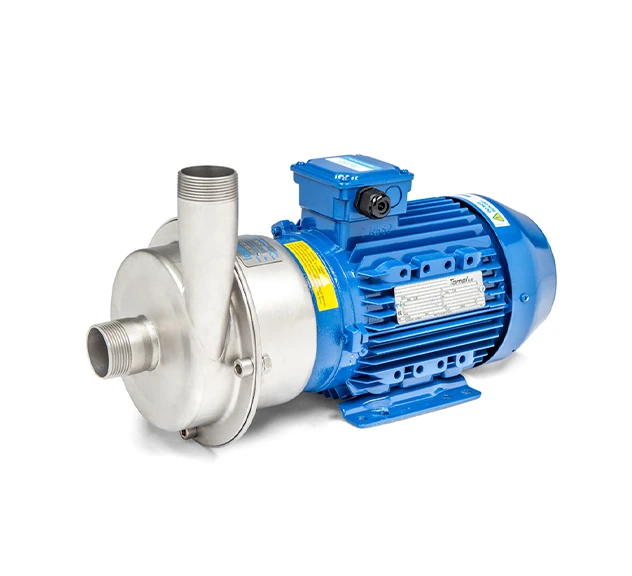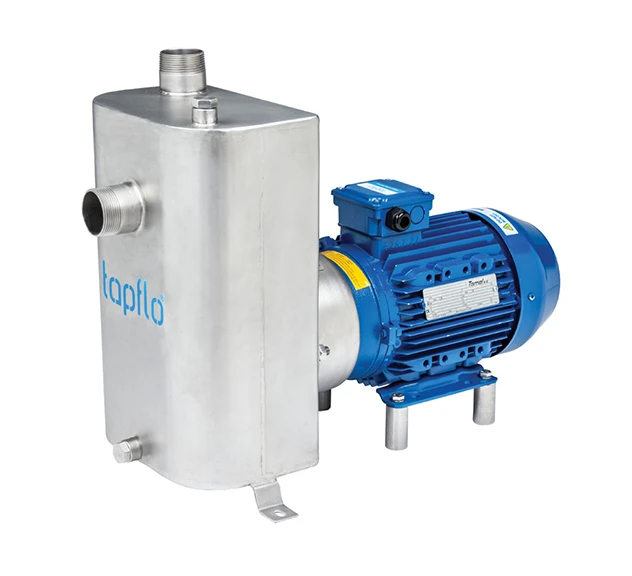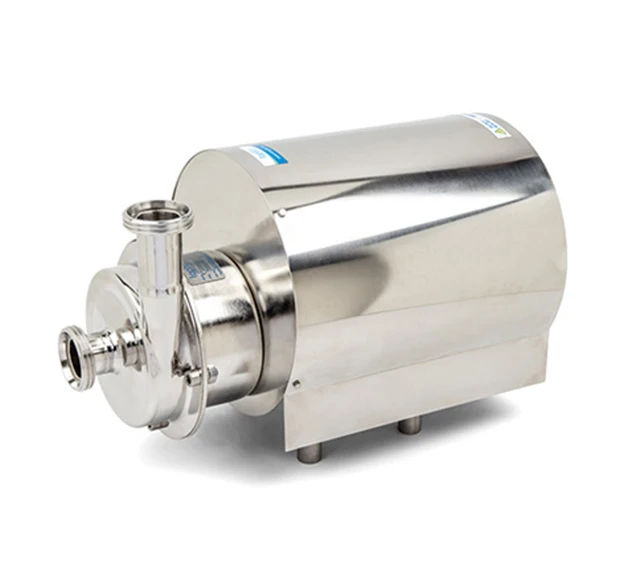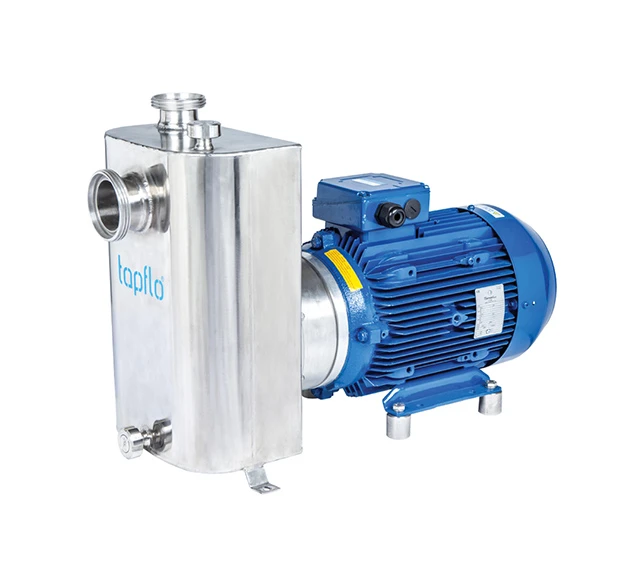






What is a Centrifugal pump? These pumps are among the most widely used in industrial, commercial and domestic settings. It is an effective, versatile pumping solution for most high-flow applications. They use rotational energy from an impeller to move liquids efficiently through a system. In this guide, we’ll explain what a centrifugal pump is, how it works, where it’s used, and how to choose the right model.
What is a Centrifugal Pump?
A Centrifugal Pump is an automatic system consisting of two main parts: a pump and an electric motor. The key component at the heart of a Centrifugal Pump is the impeller, which rotates rapidly on an axis during operation, imparting centrifugal force onto the fluid, enabling it to move through the pump casing and to the suction outlet.
The impeller is made of highly corrosion-resistant cast iron and features curved vanes and shroud plates. Typically, a centrifugal impeller requires full submergence in water to enable priming during operation, unless the pump system already has self-priming capabilities.
As a Centrifugal Pump uses a rotary impeller system and operates at low to medium pressure head, it differs from many other pump operating principles, which usually fall into the Positive Displacement Pump category. These pump types commonly move fluid with a diaphragm pump system or a reciprocating design.
Centrifugal Pumps are highly versatile and widely used in many industries for both domestic and commercial applications, as they can move more fluid than any other pump type on the market. They also come in many different shapes, sizes, and materials, including sanitary, industrial, self-priming, and ATEX executions.
How Does a Centrifugal Pump Work?
The basic operating principle of any Centrifugal Pump begins with fluid entering the pump inlet, travelling towards an impeller shaft and rotating exponentially along the impeller vanes within the pump casing, before forcing the fluid out to the discharge side.
This operation is then repeated with more fluid being directed through the pump inlet for a precise, controlled, and repeatable operation.
Different Types of Centrifugal Impellers
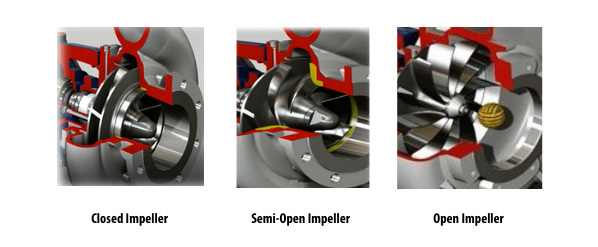
There are typically three different impeller types available for different applications which are open, semi-open, and enclosed impeller pump types.
An open impeller is usually chosen for abrasive applications or those with suspended solids so that the fluid can move through the impeller shaft easily. However, they are a slightly less efficient option as the fluid is almost instantly mixed with the liquid that has already travelled through to the pump casing.
A semi-open impeller type uses a shroud wall to add robustness to the vanes while still having one side open. Similar to the open impeller type, the semi-open version can be used for fluids with partial solids in them.
A closed impeller type has a shroud wall around the back and front of the impeller vanes which makes for a highly robust impeller type. These are typically used for large industrial pumps and applications with a low viscosity without any solids in suspension, due to the increased chance of the fluid becoming clogged during operation.
Centrifugal Casing Types
When it comes to a Centrifugal Pump casing that surrounds the impeller, there are two main options available, including a diffuser and a volute design.
In Volute Centrifugal Pumps, the flow steadily increases and the curved design creates a chamber for the fluid to be directed towards the discharge pipe. A diffuser casing features guide vanes on the outside of the impeller that increase the pressure and diffuse the liquid, making for a much more controlled operation.
Advantages of a Centrifugal Pump
Centrifugal pumps offer many benefits due to their versatility. Other key advantages include:
- Available in many different shapes and sizes
- Can handle a wide variety of installations and requirements, whether you need your pump to be driven electrically or magnetically,
- Self-priming variants can prime up to 6m
- Can handle sanitary fluids and large industrial applications
- Ideal high-flow applications up to 450m³/hr and up to 7,800m³/hr for BBA centrifugal pumps
- Maximum pressure of 16 bar
- Efficient to run
- Easily modified to the user’s requirements using accessories such as heating jackets, self-priming chambers, and hygienic shrouds to achieve the perfect pump solution.
Disadvantages of Centrifugal Pumps
Avoiding Centrifugal Pump Cavitation and Other Common Problems
One of the main concerns when using a Centrifugal Pump is the risk of cavitation. Cavitation occurs when there isn’t sufficient pressure at the suction outlet to discharge the fluid from the piping, causing small gas bubbles to form inside the pump. One of the best ways to prevent this is to maintain a constant “Net positive suction head” (NPSHR) at the pump’s suction port. NPSHR is the required pressure at the pump’s suction port to prevent cavitation at the required duty point and is typically published on pump performance curves.
Most pumps, when working near or at their Best Efficiency Point (BEP), can work satisfactorily with a minimum margin between NPSHA & NPS
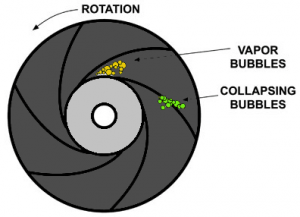
Centrifugal Pump Caviation Example
HR, however, when operating too far to the right or left of its BEP, can result in a much higher margin. A common rule of thumb is that systems should be designed to facilitate at least a 25% margin for all expected flow rates.
Best Efficiency Point is crucial during pump selection; ensuring the pump is matched to the application will support long operating life. When a pump operates at BEP, it is at its most efficient, meaning it uses input power as efficiently as possible and reduces energy costs. When a pump operates at BEP it also produces the lowest vibration readings, meaning that pump longevity is increased and maintenance costs are decreased. Achieving maximum efficiency from your Centrifugal Pump should be an important factor when selecting a pump system to help reduce costs in the long run and reduce cavitation issues.
Safety Recommendations of Centrifugal Pumps
Just like any other pump system, Centrifugal Pumps require precautions in line with health and safety recommendations. For example, Centrifugal Pumps can overheat if not operated correctly or for extended periods. Not only will this likely cause damage to your pump system, but it may also potentially cause damage to people in the workplace. Therefore, as an operator, it is important to be aware of the risks involved and not assume that every pump system will require the same maintenance.
Centrifugal Pump Applications
As mentioned, Centrifugal Pumps can be used in a wide range of sectors for a variety of applications, some of the most common applications we supply for include (but are not limited to):
- Wastewater Treatment
- Surface Conditioning
- Food & Beverage
- Pharmaceutical
- Cosmetics
- Heavy-duty industrial applications
- Advantages of using a Centrifugal Pump
Tapflo UK Centrifugal Pump Range
At Tapflo we offer a wide range of Centrifugal Pumps for various industries and applications; a few of our most popular are mentioned below.
Industrial & Hygienic (CTI & CTH)
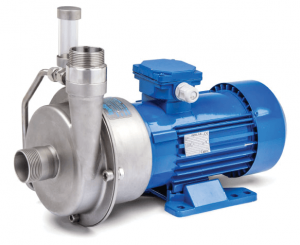
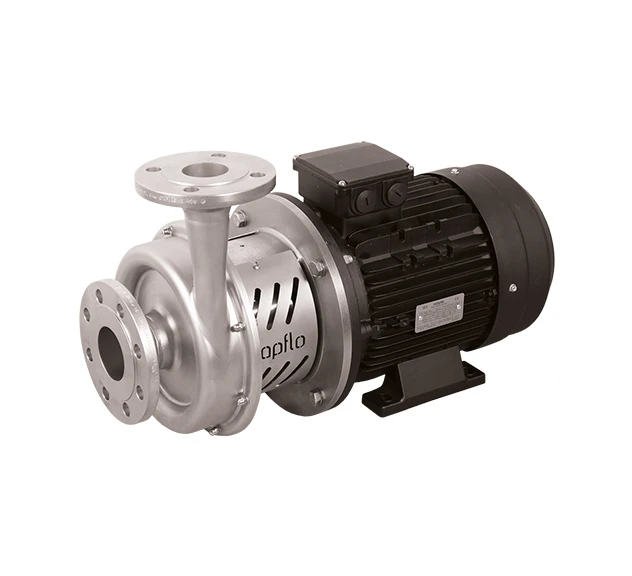
Our industrial and hygienic ranges are Semi-Open Single-Stage Pumps manufactured in Stainless Steel AISI 316L. Our Hygienic Series (CTH) is manufactured with electro-polished pump casing and internals, specifically designed for hygienic and sanitary industries where cleanability is an important factor, particularly in food, beverage and pharmaceutical applications.
Our Industrial Series (CTI) is manufactured with a glass-blasted pump casing, with a range of mechanical seal options and special executions available. This would be suited to a number of industrial applications such as water treatment, surface conditioning, chemicals, tank transfer duties and many more. Both ranges are also available with the option of self-priming (CTS-I & CTS-H).
High-Performance Centrifugal Pump (CTX)
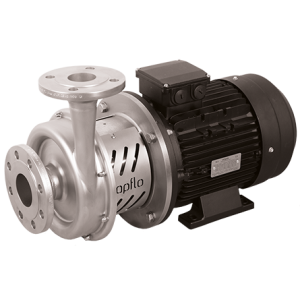
Tapflo’s CTX High-Performance Centrifugal Pump which incorporates the hygienic and industrial ranges with more robust construction for high-performance applications. To find out more about the High-Performance Centrifugal Pump, take a look at our case study where a CTX was used as the perfect solution for a client looking to pump liquid fertiliser.
Magnetically Driven (CTM)
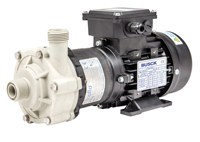
Magnetic Drive Pumps have so many advantages to offer including a sealless design, which is ideal for hazardous applications, as this feature significantly reduces the likelihood of leakage from the pump. Tapflo manufactures the CTM Pump which is a close-coupled, single-stage, Magnetically Driven Centrifugal Pump, featuring either a Semi-Open or Closed Impeller.
BBA Pumps
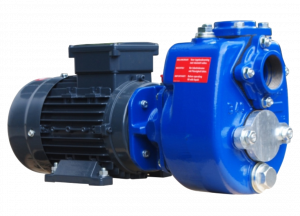
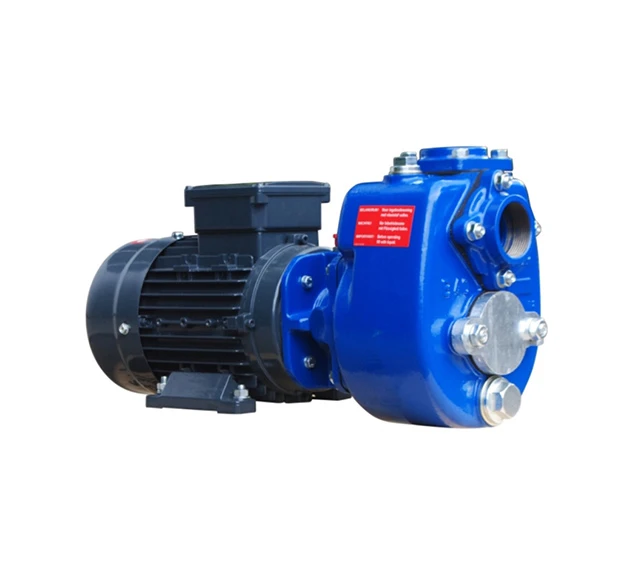
The BBA Pumps B Series is an Industrial, Electrically Driven Self-Priming Centrifugal Pump. The range is fitted with an open impeller, changeable wear plate and non-return valve in the suction port. These pumps are easily maintained and have minimal spare part costs, and offer 2-Pole and 4-Pole options, reaching max flows up to 21 m3/hour for use in industries such as construction, wastewater management, irrigation and agriculture.
Pomac Sanitary Range
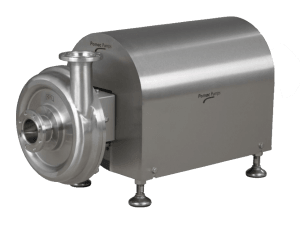
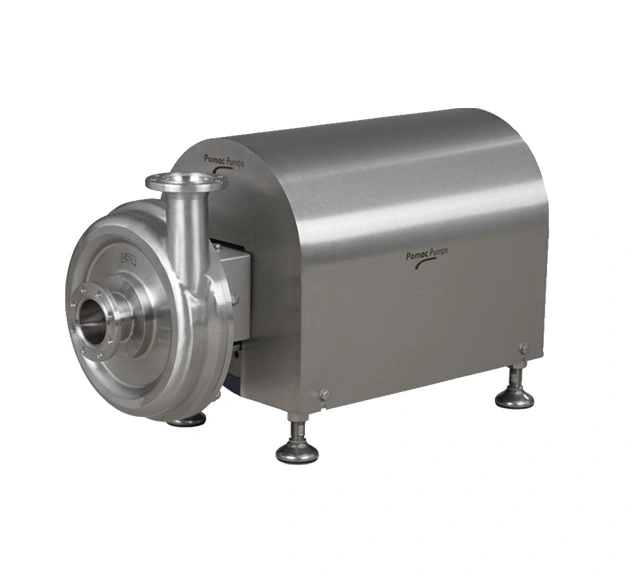
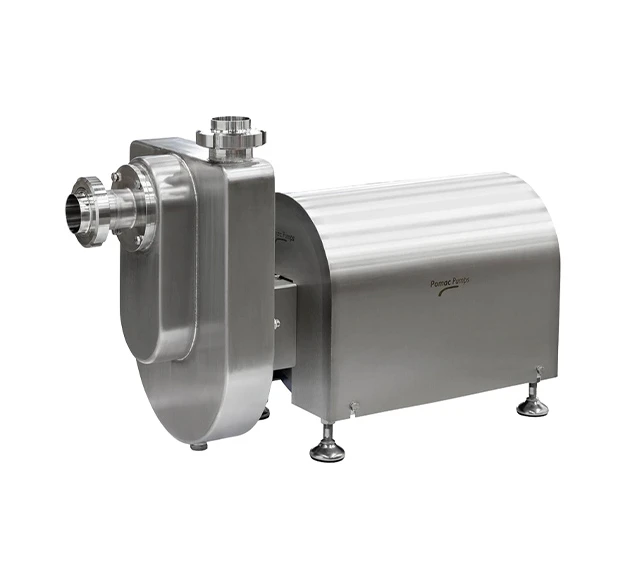
Pomac’s Sanitary Centrifugal Pump range is EHEDG compliant and manufactured from stainless steel AISI 316. Pomac’s pumps are ideal for the food and pharmaceutical industries or CIP processes that need bacteria to be kept to a minimum. Available standard or self-priming, the range offers a high-pressure casing, a balanced stub shaft design and an optional heating jacket.
Centrifugal Pump Case Study
Bespoke Centrifugal Pump trolley System case study
Centrifugal Pump system for sodium silicate solution
Tapflo UK designed and supplied a bespoke centrifugal pump system for a major engineering contractor requiring the reliable transfer and recirculation of abrasive sodium silicate solution used in tunnelling operations. Working closely with the client’s engineering team, Tapflo developed a custom skid-mounted solution featuring heavy-duty close-coupled end-suction pumps with recessed vortex impellers, silicon carbide mechanical seals and low-speed motors to minimise wear, extend service life and reduce maintenance. The tailored system delivered reliable performance under demanding operating conditions while ensuring efficient fluid handling and minimising downtime on this high-profile infrastructure project.
The seamless integration of a Centrifugal Pump into a bespoke CIP Skid System
Tapflo UK worked closely with a customer to supply a bespoke Clean-in-Place (CIP) skid system designed for the portable cleaning and sanitisation of industrial machinery using caustic cleaning solutions. The solution centred on a hygienic self-priming sanitary centrifugal pump, complemented by carefully selected ancillary equipment, including a flow meter, a hygienic strainer, a pressure gauge, and pipework components. Tapflo also provided technical support with pipe sizing and system design to ensure optimum performance. The completed skid delivered reliable, high-pressure CIP cleaning, met stringent hygienic standards, and provided the customer with a compact, efficient and transportable solution for servicing equipment across multiple sites.
Here at Tapflo, we have worked with many customers who require our range of Centrifugal Pumps, as well as custom-made centrifugal pump systems for unusual applications. Do you have an application requiring a Centrifugal Pump? The Tapflo sales team would love to assist you with selecting the right pump system for your business, so don’t hesitate to get in touch! 02380 252 325 / enquiries@tapflopumps.co.uk
FAQs
Are Centrifugal Pumps self-priming?
Most Centrifugal Pumps aren’t self-priming, but we do offer several variants that offer self-priming capabilities.
e.g CTS I Industrial Self-Priming Centrifugal Pump, CTS H Hygienic Self-Priming Centrifugal Pump
What Liquids can Centrifugal Pumps handle?
Water, Chemicals, Food & Beverages, Pharmaceutical, Cosmetic, Paint, Explosive Materials
The EHEDG and Sanitary models are suitable for the food, cosmetic and pharmaceutical industries.
ATEX models include, certain models of:
- CTX Centrifugal Pumps
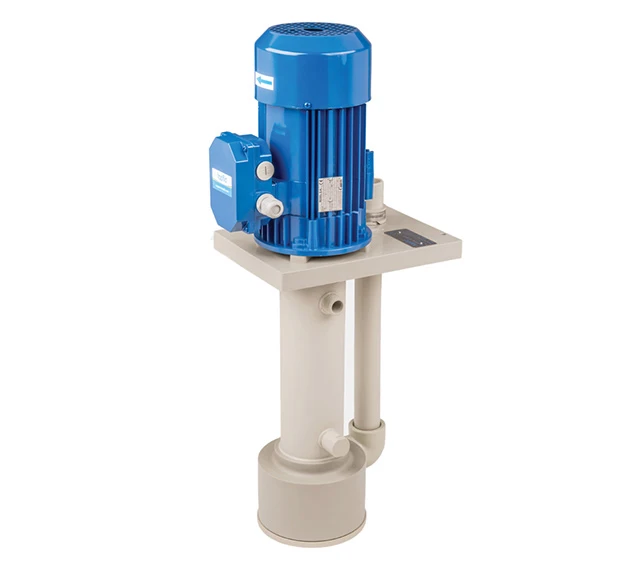
- Injection Moulded Plastic Centrifugal Pumps
- CTI Industrial Centrifugal Pump
- BBA B30 BVMC Centrifugal Pump
- CTS I Industrial Self-Priming Centrifugal Pump
All models of :
- ISO 5199/2858 Mag Drive Centrifugal Pump
- Mag Drive Cast SS316 Centrifugal Pump
- Plastic Mag Drive Centrifugal Pumps
Are Industrial Centrifugal Pumps suitable for highly aggressive chemicals?
Yes, AISI 316L Stainless Steel and mechanical seals ensure excellent resistance to even the most aggressive chemicals used in industrial processes.
Can Centrifugal Pumps Handle Products with Solids?
Yes, the open impeller allows for solids handling and with a heating jacket option, the pump can handle viscous products that can solidify in cooler temperatures.