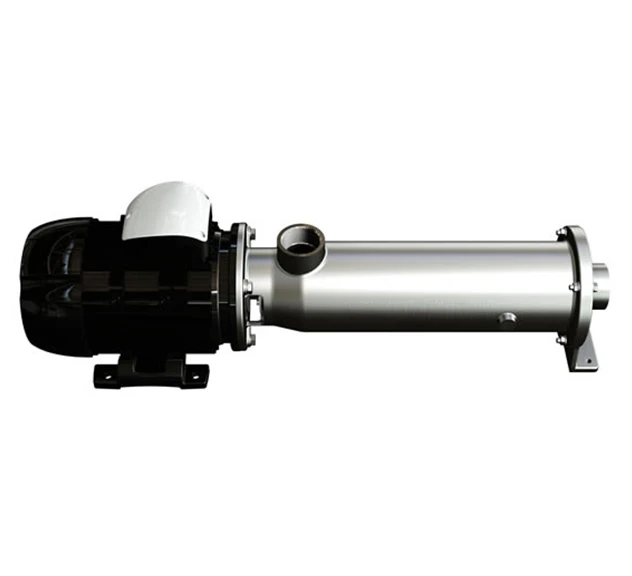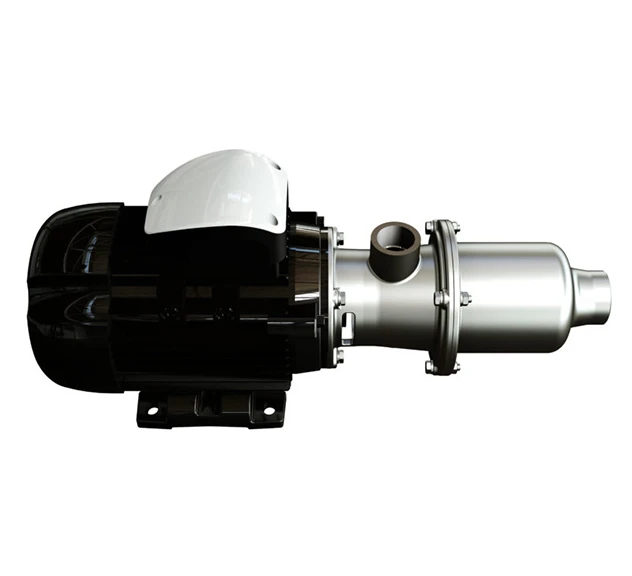






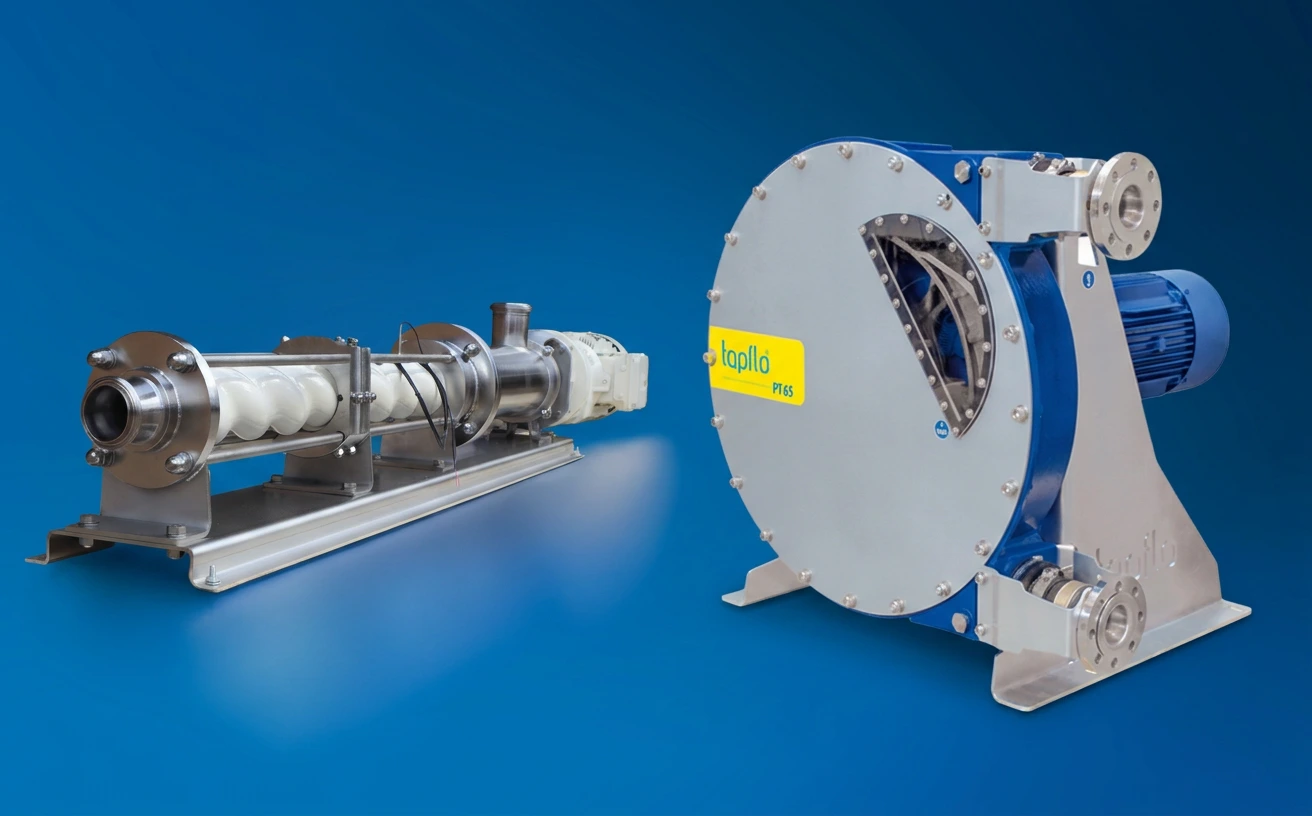
Peristaltic Pumps are more suited to shear-sensitive, abrasive, or aggressive chemical media where the hose is the only wetted part and hose changes are the only maintenance. Whereas Progressive Cavity Pumps are suited to high-solids, high-viscosity, or high-pressure applications, including sludges, pastes and fibrous slurries – where consistent, low-pulsation flow at higher discharge pressures matters more than minimal wetted-part contact. This guide will help you choose between the two pumps when needing the best pump for your application.
How do Peristaltic and Progressive Cavity Pumps work?
What is a Peristaltic Pump?
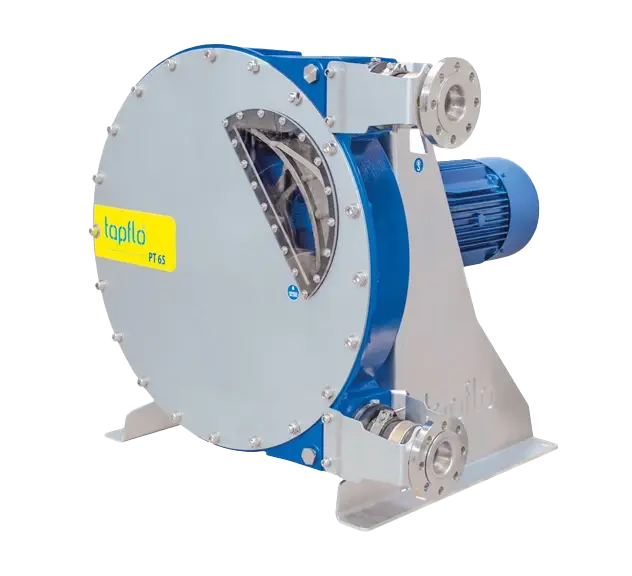
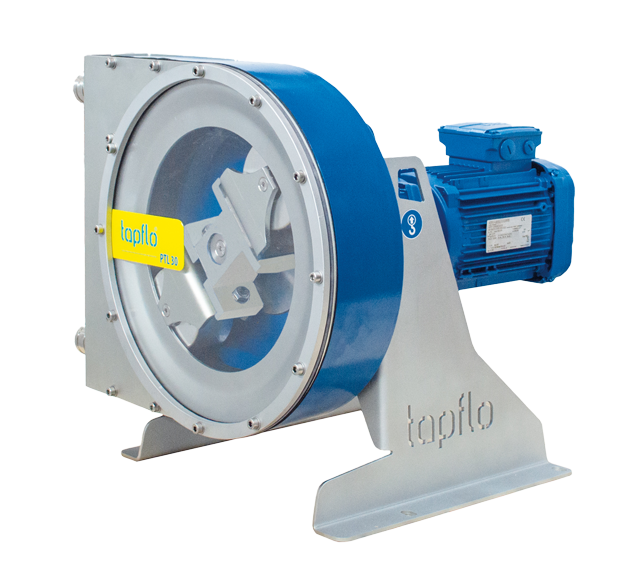
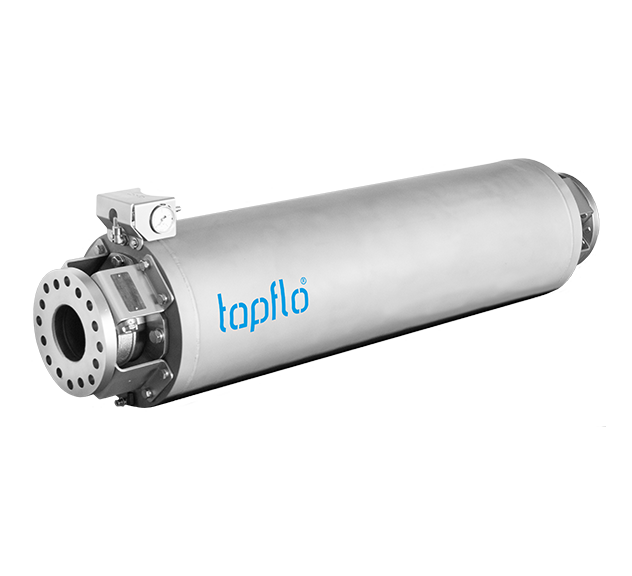
A Peristaltic Pump is a positive-displacement pump that moves fluid by pressing a flexible hose rather than moving it through internal metal components. Rollers or shoes on a rotating wheel press against the hose, and as the compression point moves, it pushes fluid ahead of it. Because the hose is the only part in contact with the fluid (no seal, no diaphragm, no metal touching the media), it’s well-suited to abrasive slurries and aggressive chemicals without the wear that other pumps experience. For a full breakdown on how it works, see our guide: ‘What is a Peristaltic Pump?’.
What is a Progressive Cavity Pump?
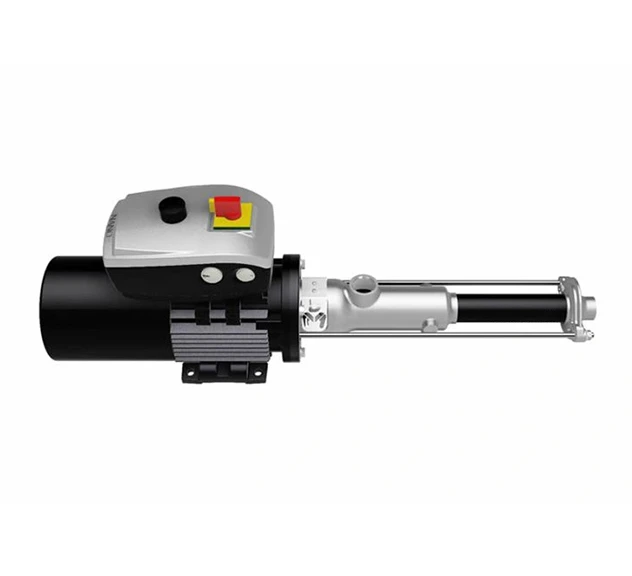
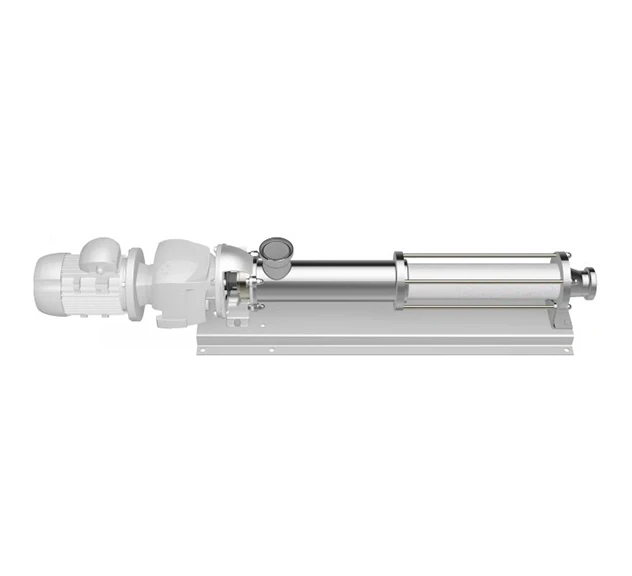
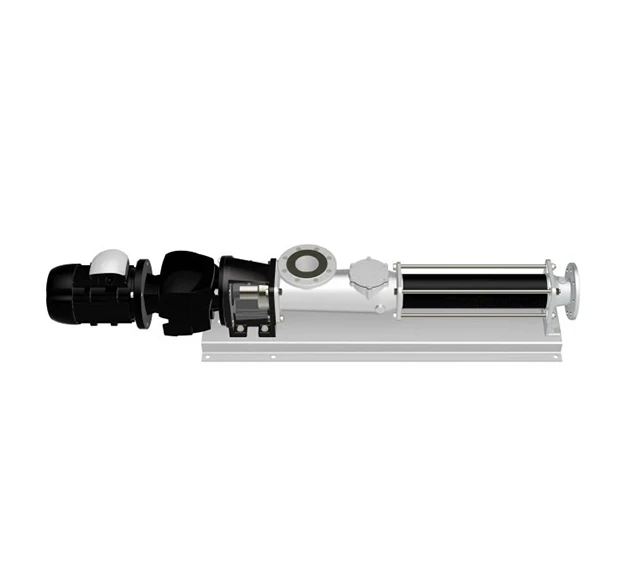
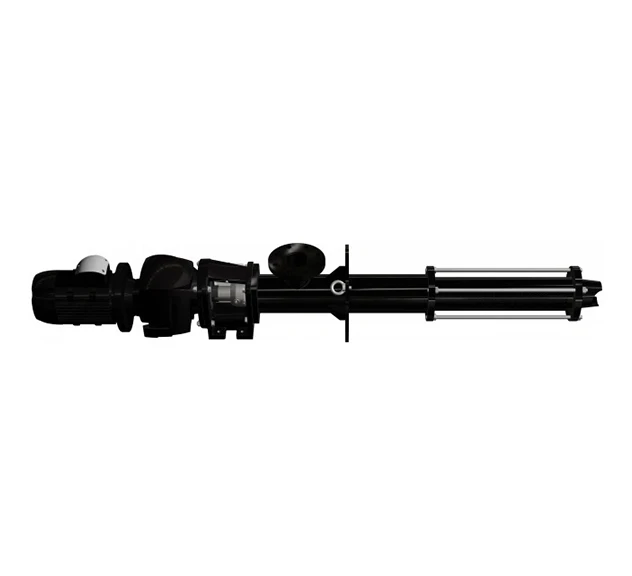
A Progressive Cavity Pump is a rotary positive displacement pump built around a helical metal rotor turning inside a resilient elastomer stator. As the rotor turns, it forms a sequence of sealed cavities that “progress” from the suction side to the discharge side, moving fluid at a steady, near pulsation-free rate. This geometry lets Progressive Cavity Pumps handle highly viscous, heterogeneous fluids containing gas, solids, abrasive particles and fibrous material, and reach higher discharge pressures than most other positive displacement designs.
Pump Specifications
When selecting a pump, compare the application requirements with each pump type’s operating range to ensure it can transport your media consistently.
| Specification | Peristaltic Pump | Progressive Cavity Pump |
| Max Outlet Pressure | Up to 15 Bar | Up to 48 Bar |
| Max Flow Rate | Up to 60m³/h | Up to 420 l/min |
| Max Viscosity Handling | Up to 60,000cPs (12,000 low-pressure) | Up to 1,000,000cPs |
| Max Self-Priming Lift | Up to 9.8m | Up to 8m wetted |
| Dry Running | Safe to run dry | Not designed for sustained dry running |
Contamination Risk
Contact surface matters most in food & beverage, cosmetics, and pharmaceutical applications where hygienic standards are non-negotiable.
Peristaltic: Only the hose is wetted, with no seals. The lowest-contact, easiest-to-clean option of the two, with nothing to disassemble for cleaning.
Progressive Cavity: The wetted parts comprise the rotor, stator, joint and shaft seal. The Hygienic Progressive Cavity Pump range, part of the Diamond Series, addresses many of these requirements. It features stainless steel construction, models designed to minimise dead zones, and full CIP/SIP compatibility, with pumps available to meet EHEDG and 3-A hygienic standards for applications in the dairy, bakery, meat processing, confectionery, pharmaceutical, and cosmetic industries.
For non-abrasive, lubricating products, the open-joint DXO/JXO/FXO design provides optimum sanitisation. For abrasive fluids, the pin-joint DXC/JXC/FXC design is more suitable, as the joint can be independently lubricated.
Application Suitability
It’s important to know whether the pump you select suits the application. Read below to find out the suitability of the pumps for the applications/industries:
| Peristaltic | Progressive Cavity | |
| ATEX-Suitability | The PXTL is an ATEX-rated model | ATEX certification available on request |
| Food & Beverage | Tomato sauce, mashed potatoes, pastes, oils, wine, eggs, cream, dairy | Brewing, distilling, oenological, bakery, dairy, meat and confectionery |
| Pharmaceutical & Cosmetics | Chemicals, vaccines, plasma, shampoos, serums | Pharmaceutical sludges, cosmetic pastes and creams |
| Wastewater/Water Treatment | Lime cream, ferric chloride, sodium bisulphate, fluoride, polymers, coagulants, flocculants, sludge and foams | Sewage sludge, dewatered cake, polyelectrolytes, flocculants and polymers |
| Chemical | Acids, PVDF latex, alcohol, soap, solvents | Industrial detergents and chemicals, emulsion, vegetable and mineral oil |
| Pulp & Paper | Latex, kaolin, paper waste sludge, chemicals | Pulp and paper process sludges |
| Paint & Print | Water-based paints, acrylics, pigments, inks | Heavy pigment pastes, resins, varnishes, high-viscosity ink |
| Surface Treatment | Zinc, copper, nickel, tin, silver, gold plating, chromates, passivation | Not a typical application |
If you don’t see your specific media listed, contact our pump specialists to confirm suitability.
Running Costs and Maintenance
Peristaltic: Usually costs less to run. They’re electrically powered and require little maintenance; the only wear part is the hose, which you can replace quickly, giving you a ‘new’ pump suited to different media in minutes.
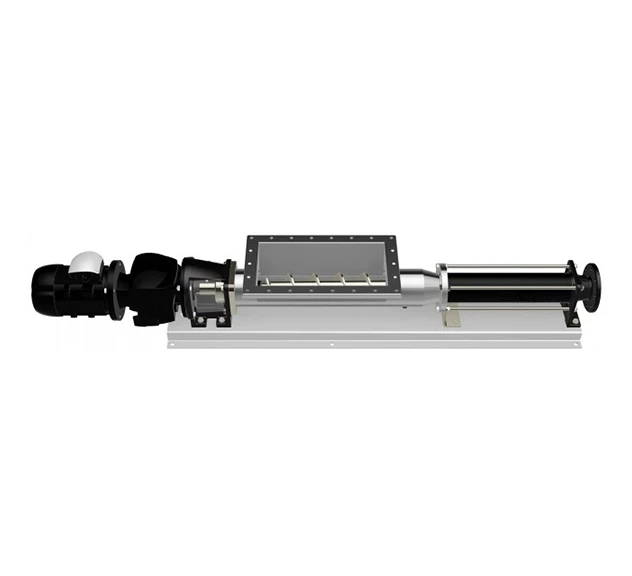
Progressive Cavity: Electrically driven, with running costs largely dependent on motor sizing and discharge pressure. The stator is the main wear part, as the elastomer flexes continuously against the rotor; wear rates depend heavily on media abrasiveness and running speed. On hopper- and auger-fed models, the auger screw feed also needs periodic inspection when running high-solids content media.
Pump Accessories & Configuration Options
Tapflo currently offer the following as optional accessories.
Peristaltic Accessories: A range of hoses and fittings to suit different media and applications, plus a pulsation dampener to smooth the flow.
Progressive Cavity Configuration Options: Open-joint or pin-joint rotor/stator combinations, hopper and auger feed screw inlets for high-solids and poor-flowing media (up to 18–35% dry substance depending on model), close-coupled or bearing-housing-supported drive arrangements, and a wide choice of rotor, stator and sealing material combinations.
Whether you need a hygienic or non-hygienic construction depends on your application, media viscosity and site requirements. Contact our pump specialists to find the right configuration for you.
FAQs
Is a Peristaltic Pump or Progressive Cavity Pump better?
Neither is better outright; the right choice depends on your application. Choose Peristaltic for shear-sensitive or abrasive media where minimal wetted parts and fast, simple maintenance are most important. Choose Progressive Cavity for high-solids, high-viscosity, or high-pressure applications that require consistent flow across multiple stages.
Are Peristaltic Pumps or Progressive Cavity Pumps pulse-free?
Both pump types produce less pulsation than many other pump technologies. Progressive Cavity Pumps are inherently near pulsation-free due to their continuous rotor/stator cavity design. Peristaltic Pumps produce a slight pulse with each roller or shoe pass, which you can further smooth with a pulsation dampener if your application requires fully pulse-free flow.
Are Peristaltic or Progressive Cavity Pumps ATEX-rated?
Yes, both pump types are available in ATEX-rated configurations for hazardous or explosive atmospheres. Tapflo’s PXTL is an ATEX-rated Peristaltic Pump, and ATEX certification is available on request across the Progressive Cavity range, including hopper- and auger-fed biogas models.
Are Peristaltic or Progressive Cavity Pumps better for hygienic applications?
Peristaltic Pumps have the fewest wetted parts (just the hose), making them naturally low risk for contamination. The Hygienic Progressive Cavity range closes much of this gap through EHEDG and 3A-certified design, CIP/SIP compatibility, and a dead-zone-free geometry suited to dairy, bakery, meat processing and pharmaceutical applications.
Can Peristaltic or Progressive Cavity Pumps handle high-solids or highly viscous media?
Both handle high-viscosity, solids-laden media well, but in different ways. Peristaltic Pumps push media through a hose with no internal moving parts in contact with the fluid, so abrasive solids simply wear the hose rather than a metal component. Progressive Cavity Pumps, particularly hopper and auger-fed models, are built specifically for very high-solids content (up to 35% dry substance on some models) and viscosities as high as 1,000,000 cPs, using an auger screw to feed poorly flowing material into the rotor/stator.
Latest Articles

Peristaltic Pump Buying Guide: Specifications & Accessories Explained
What Is a Peristaltic Pump? Industrial & Hygienic Guide
Hygienic to Industrial Applications: Why Choose Nova Rotors Progressive Cavity Pumps