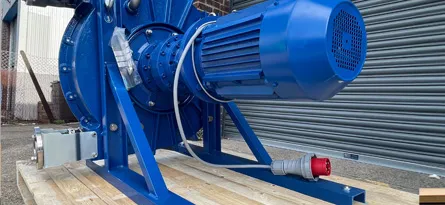





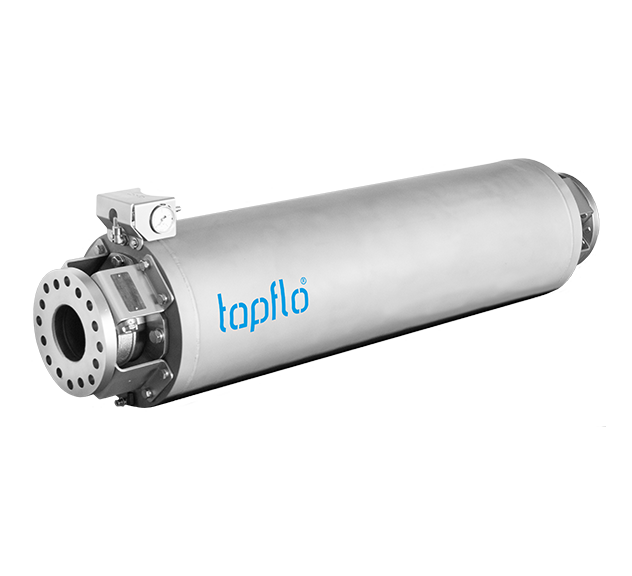
Choosing which Peristaltic Pump is right for you depends on your application’s pressure, capacity, viscosity and duty cycle. Both ranges we offer at Tapflo UK are self-priming and suited to industrial and hygienic applications, including Food & Beverage, Pharmaceutical, Cosmetic, Wastewater Treatment and Chemical processing. Our High Pressure PT Peristaltic handles pressures up to 15 Bar, while our Low Pressure PTL Peristaltic suits lower-pressure applications up to 4 Bar.
This guide covers the operating principle, key features, factors to consider, and full PT vs PTL specifications to help you choose the right pump for your needs.
Operating Principle of Peristaltic Pumps
Peristaltic Pumps use either a roller mechanism (low pressure) or a shoe mechanism (high pressure) to compress the hose and move fluid. For the full mechanical breakdown of how each works, see our guide: Working Principles of Peristaltic Pumps – Roller vs Shoe Design.
Beyond the mechanism itself, Peristaltic Pumps are also self-priming and handle abrasive, viscous, and shear-sensitive fluids without damage, with food-grade hoses available for hygienic applications. The right pump for your application depends on the media, pressure, self-priming requirements, viscosity, and more, as covered below.
Factors to Consider when Purchasing a Peristaltic Pump
Key factors to consider when selecting a Peristaltic Pump include:
- Fluid description
- Viscosity
- % of solids and particle size
- Temperature
- PH level
- The flow rate or range
- Suction and discharge pressures
- Precise duty cycle (continuous or intermittent) and running time
- Power supply available
Pressure: Tailoring the pump selection to your application’s pressure requirements is crucial. For pressures up to 4 Bar, the PTL Low Pressure Peristaltic Pump is recommended, while the PT High Pressure Peristaltic Pump suits applications requiring pressures up to 15 Bar.
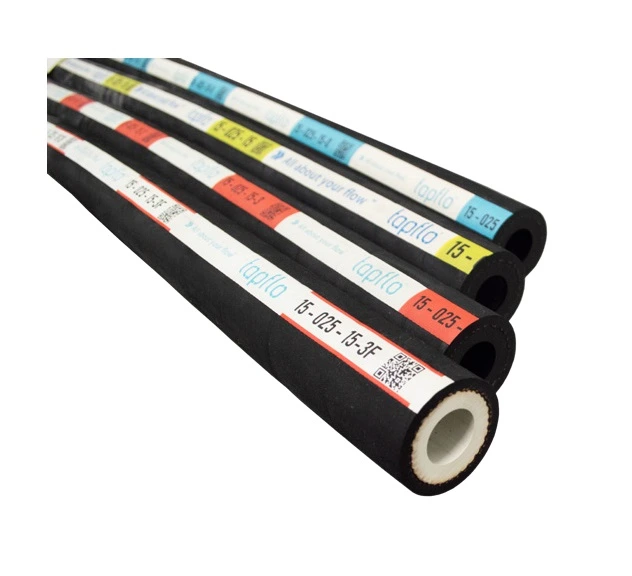
Type of Hose: Hose choice is critical for optimal Peristaltic Pump performance. Tapflo UK offer a range of high-quality hoses, each catering to specific applications. For more information on our hoses, visit our article on Peristaltic Hoses.
Maintenance & Cost of Ownership
Peristaltic Pumps have only one wearing part (the hose), making maintenance simple and predictable compared to pumps with multiple seals or valves. Hose changes are quick and don’t require specialist tools or training, minimising downtime.
Our hoses have been vigorously tested, proving their lifetime can be up to 30% longer than other producers’ when factors such as pump speed, operating time, discharge pressure, and liquid temperature are optimised, reducing both replacement frequency and total cost of ownership over the life of the pump.
Our Range of Peristaltic Pumps & Accessories
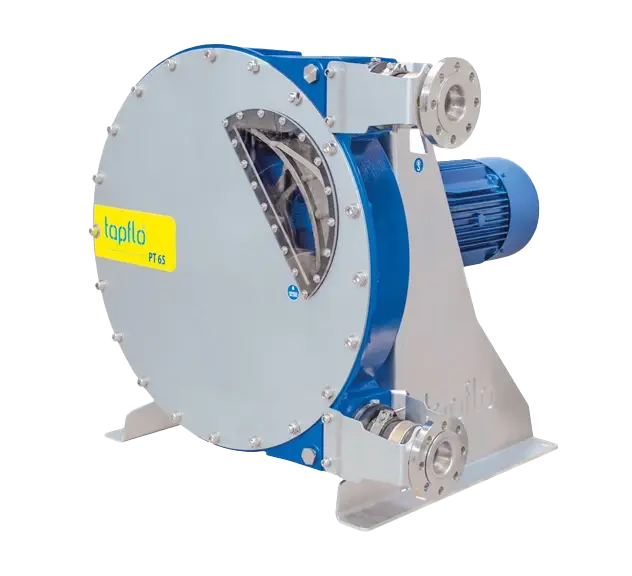
PT High-Pressure Peristaltic Pump:
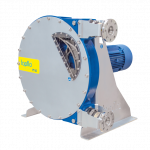
- Shoe design
- Max Capacity of 60m3/h
- Self-priming up to 9.8m
- Viscosities up to 60,000 cPs
- Reversible operation
- 15 sizes available
- PXT is the ATEX-rated variant of this pump
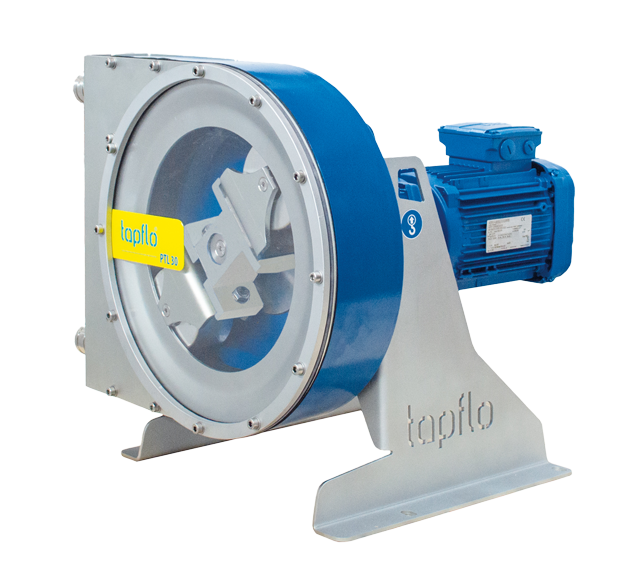
PTL Low-Pressure Peristaltic Pump:
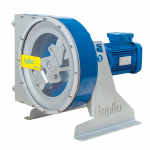
- Roller design
- Max Capacity of 5m3/h
- Self-priming up to 9.8m
- Viscosities up to 12,000 cPs
- 6 sizes available
- PXTL is the ATEX-rated variant of this pump
Accessories
- Designed to reduce pulsation, vibrations and hammering in your pipe system
- Designed for Peristaltic Pumps; can be used for all pump types
- Complies with European PED Directive 2014/68/EU
- Can handle viscous fluids with particles up to 20% of the inner hose diameter
- ATEX-available
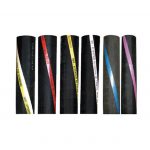
- Our hose range includes Rubber, Suction and Delivery, Oil-Resistant, Chemical, Sanitary, and Food-Grade Hoses, each specific to different media and applications.
- Supports effective operation of your Peristaltic Pump
- Certified and fully traceable
- Complies with European PED Directive 2014/68/EU
- ATEX-available
Learn more about our comprehensive range of Peristaltic Pumps in our dedicated YouTube video:
Navigating the world of Peristaltic Pumps requires careful consideration of factors such as pressure, hose type, CIP capability and applications. With Tapflo UK’s range of pumps and expert guidance, you can confidently select the right Peristaltic Pump tailored to your unique application needs. Explore our guide, What is a Peristaltic Pump? Industrial & Hygienic Guide, for a deeper understanding of Tapflo UK’s Peristaltic Pumps and their applications.