BY TYPE
BY APPLICATION
BY BRAND






Official UK partner of Nova Rotors
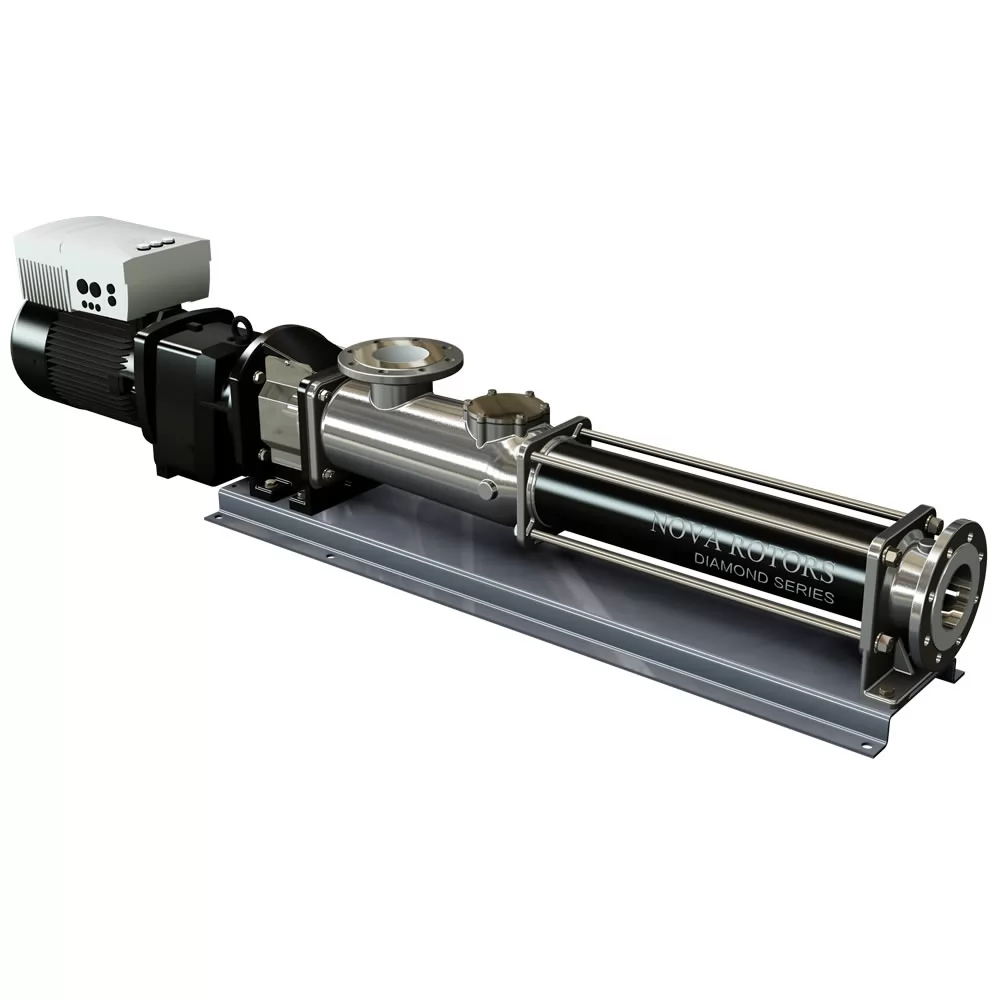
Our Industrial Progressive Cavity Pumps comprise of 3 models: the DN, JN and FN, as part of our robust Industrial pump range. Designed to meet API 676 standards, these close-coupled pumps deliver dependable performance across a broad range of industrial applications, handling both viscous and non-viscous fluids, with or without solids.
These pumps are designed for low NPSHa conditions and provide effective suction lift capabilities of up to 8 metres, making them ideal for low-flow and dosing applications. The DN and FN models feature a drive that is coupled directly to the pump via a flange, while the JN models’ drive is connected to the bare shaft inlet via a flexible coupling.
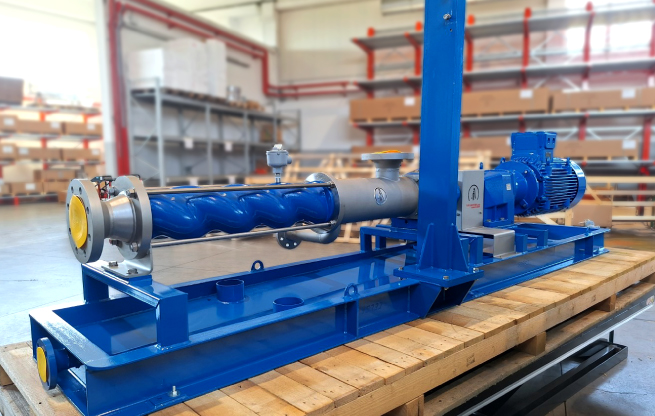
The Diamond Series is designed with high modularity in mind; each element of the pump can be specifically selected based on application requirements. Even if the product use varies over time, the product can be adapted and upgraded to meet renewed process specifications.
Typical applications include:
| Specifications | Description |
|---|---|
| Max Flow | 680m³/hr |
| Max Head | 48 Bar |
| Max Temp | -40°C – 150°C |
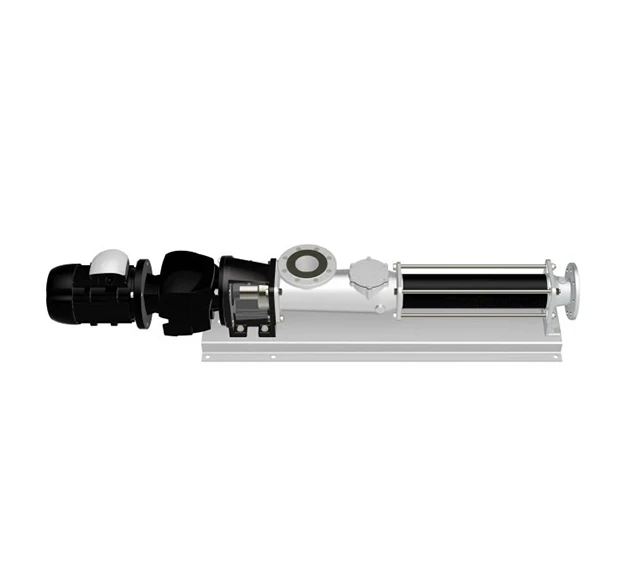
The drive is connected to the pump via a flange of the modular bearing unit. More suited to high-pressure and high-viscosity applications, compared with the DN Series.
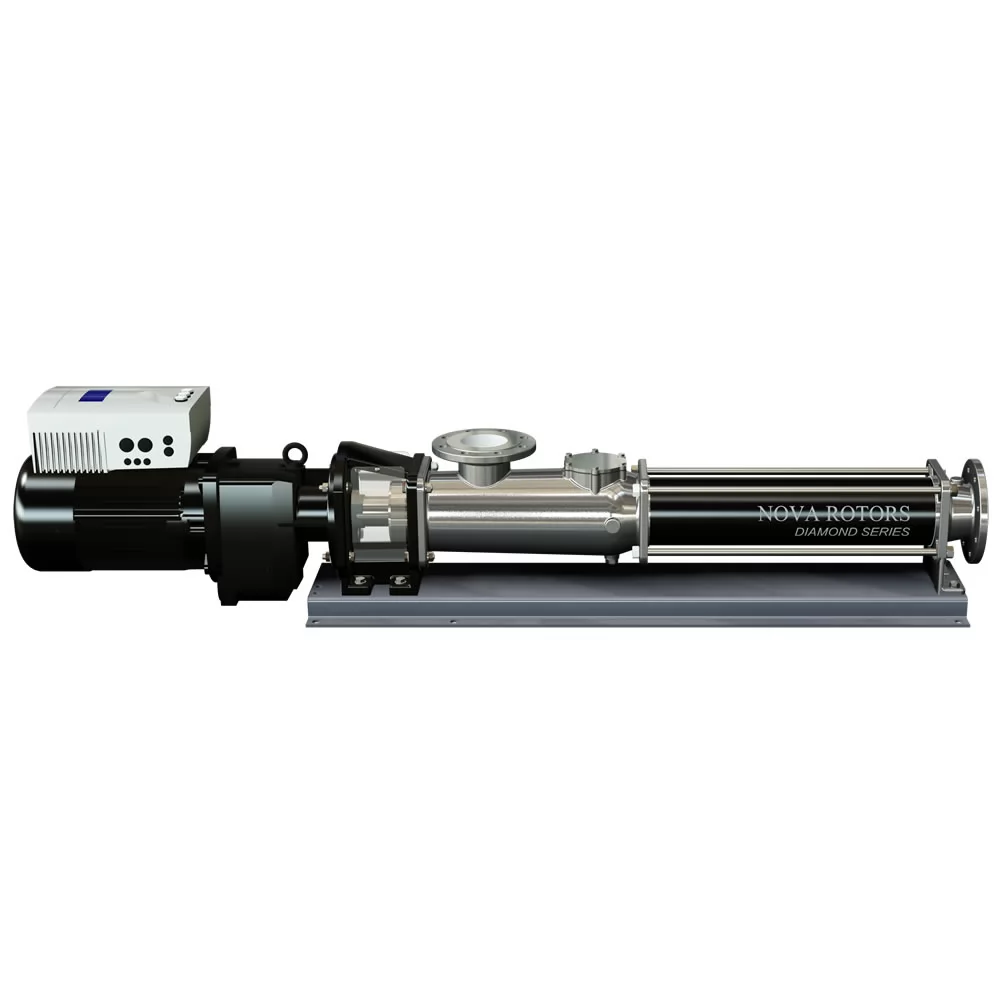
The drive is connected to the free-bare-shaft inlet via a flexible coupling, with the bearings absorbing forces to ensure high load resistance.
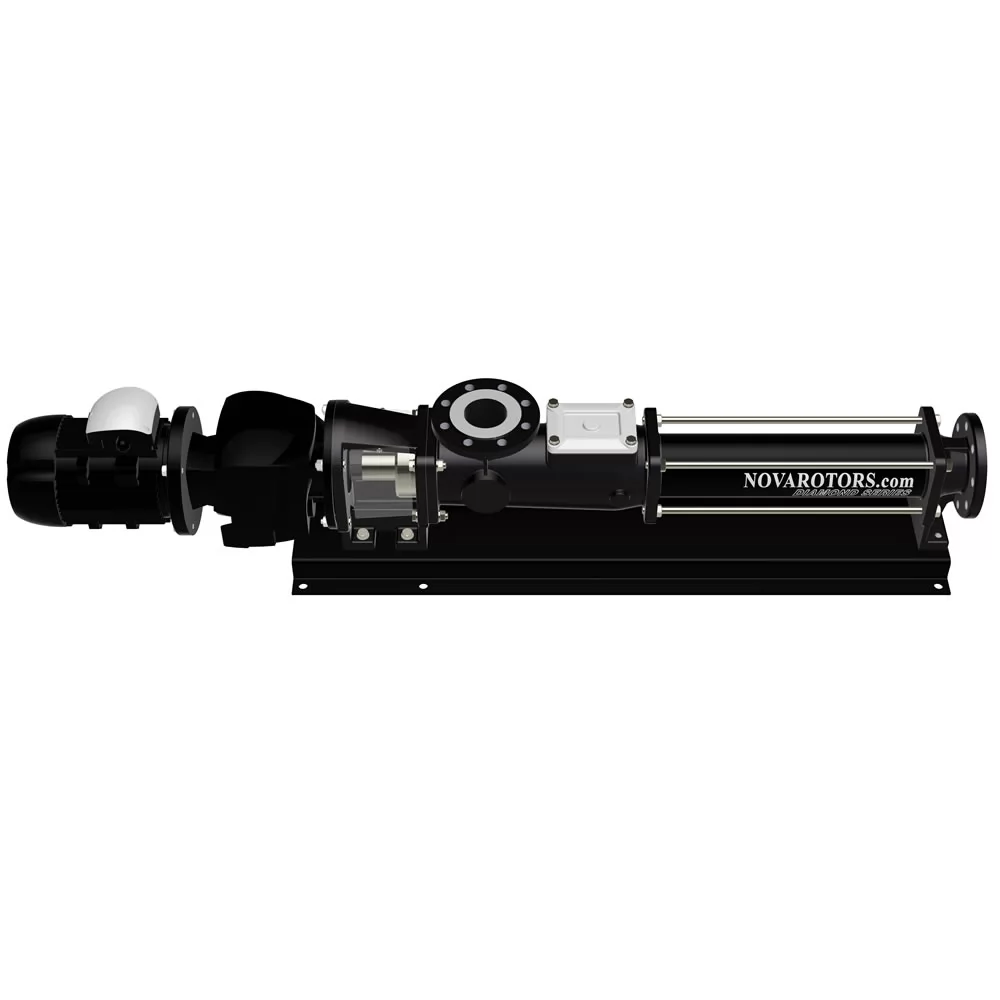
The drive is directly coupled to the pump via a flange, offering superior cost-effectiveness and compactness. The hydraulic stresses supported by the drive make it a popular choice for industrial applications.
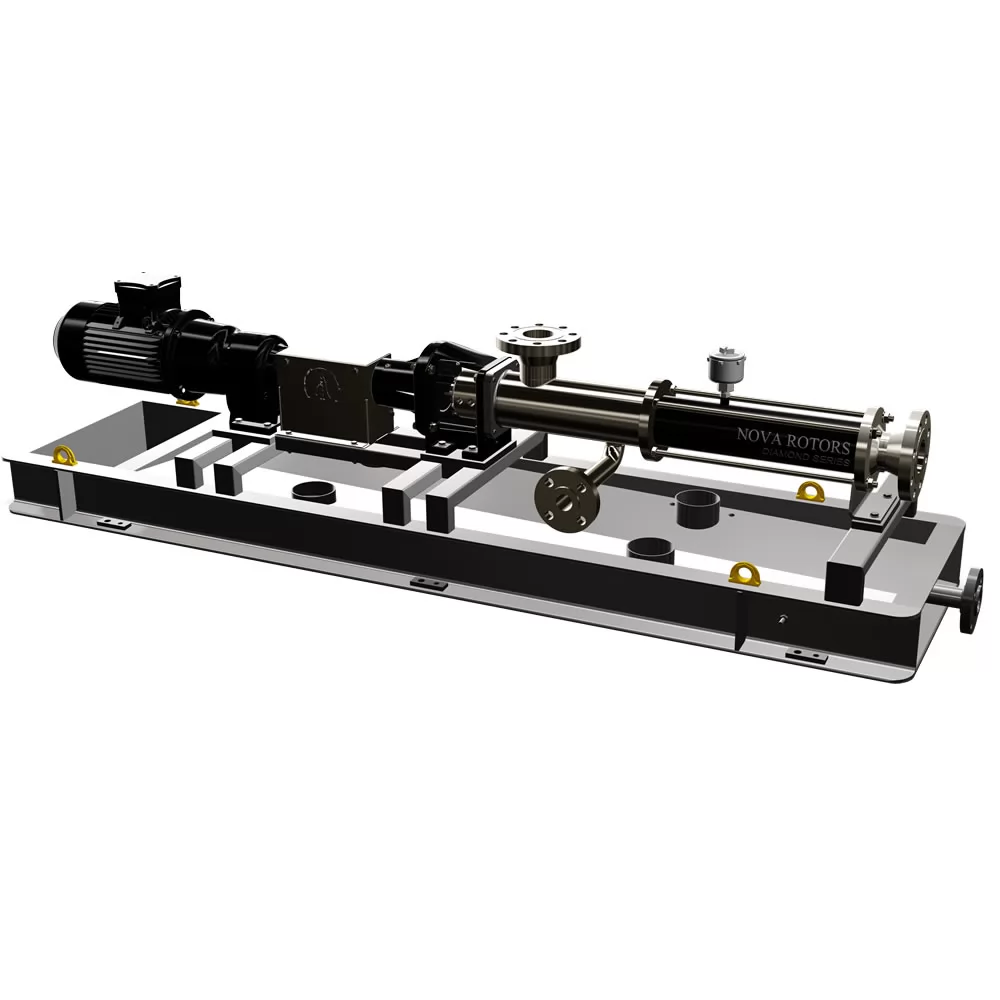
Supplying a custom Progressive Cavity unit for challenging offshore fluids.
How Progressive Cavity Pumps work, what applications they are suited for and the key features.
Taking manual work away from the agriculture sector with a Hopper Pump for egg shells.
Characterised by a modular design covering numerous models and sizes, enabling capacities up to 680m³/hr and discharge pressures up to 48 Bar.
If the product use varies over time, the product can be adapted and upgraded to meet renewed process specifications. As a result, a wide range of combined options and accessories enables our progressive cavity pumps to be easily tailored to almost any site requirement.
Screw pumps usually refer to two-rotor or three-rotor designs and differ from progressive cavity pumps in both construction and application.
Manufactured entirely from metal components, screw pumps are generally used for handling clean, non-abrasive, lubricating fluids.
They are capable of operating at significantly higher discharge pressures than progressive cavity pumps and commonly run at direct motor speeds, making them well suited to demanding industrial applications.
A Progressive and a Progressing Cavity Pump are the same thing; they can be called either name interchangeably.