



Wastewater often contains variable solids content, abrasive grit, stringy fibrous material, and varying flows. Most pump types can wear out, clog, or need constant intervention when faced with this combination. However, Peristaltic Pumps don’t face these problems because the fluid stays within the hose; the hose squeezes shut behind whatever passes through.
Peristaltic Pumps are already used across incinerator ash handling, anaerobic digestion, and muncipal wastewater transfer, precisely because they do not share these failure points.
Peristaltic Wastewater Capabilities
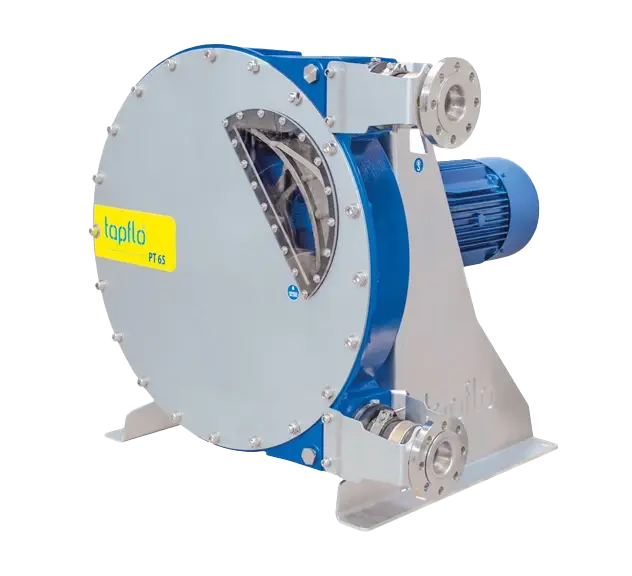
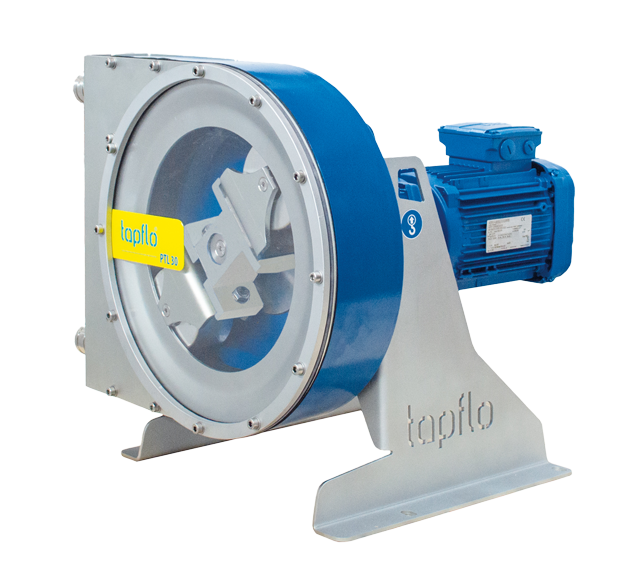
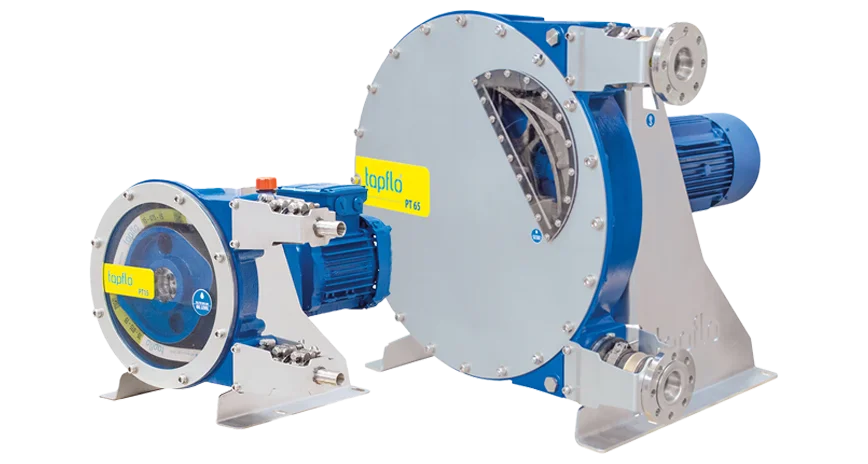
The Peristaltic Pump’s capabilities make it ideal for a range of wastewater and sludge applications; see below for the data for each Peristaltic Pump to suit your application.
| Feature | Low Pressure PTL | High Pressure PT |
| Max Discharge Pressure | Up to 4 Bar | Up to 15 Bar |
| Max Capacity | Up to 5 m³/h | Up to 60 m³/h |
| Max Viscosity | Up to 12,000 cPs | Up to 60,000 cPs |
| Max Solids | Up to 25% of inside hose diameter | Up to 25% of inside hose diameter |
To learn more information about our Peristaltic range, visit the product pages or visit our Peristaltic guide.
Designed for Wastewater & Sludges
Peristaltic Pumps are ideal for wastewater applications due to:
- Large solids passage: Our PTX80 model passes solids up to 20-25% of the internal diameter of the hose without clogging and up to 65% in concentration.
- Infinite dry running: The pump won’t damage itself if a tank is empty.
- Strong self-priming: Up to 9.8m, it lets the pump sit above a tank rather than submerged in it.
- Contained fluid: If a hose ruptures, the fluid stays inside the pump rather than leaking out.
- Reversible: By reversing a pump, it can aid in clearing any blockages or settled media in the pipework
- Easy maintenance: Only one wearing part (hose), which keeps maintenance simple, quick and easy.
Is Your Environment or Fluid Explosive?
If your wastewater contains hazardous or explosive material or you operate in a hazardous environment, the PXT and PXTL Peristaltic models are ATEX-available, and the hose is the only part of the pump that contacts the media; the fluid remains fully contained within it.
Combined with a sealless design, this minimises leakage risk and helps keep hazardous fluids safely contained within the pump.
Which Hose is Best for Wastewater and Sludges?
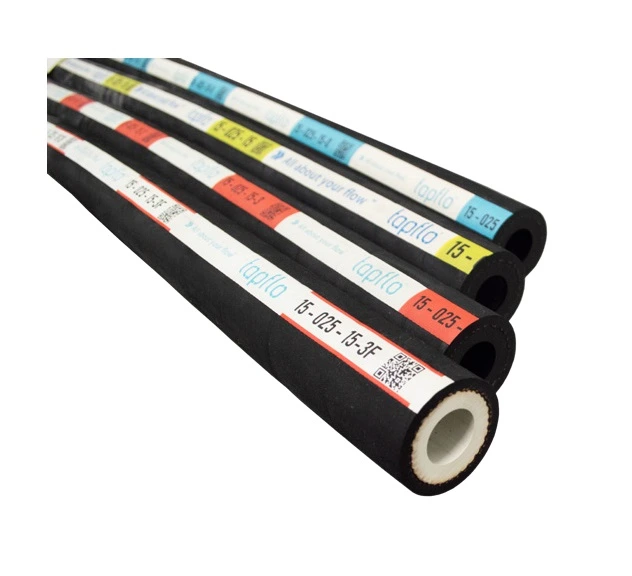
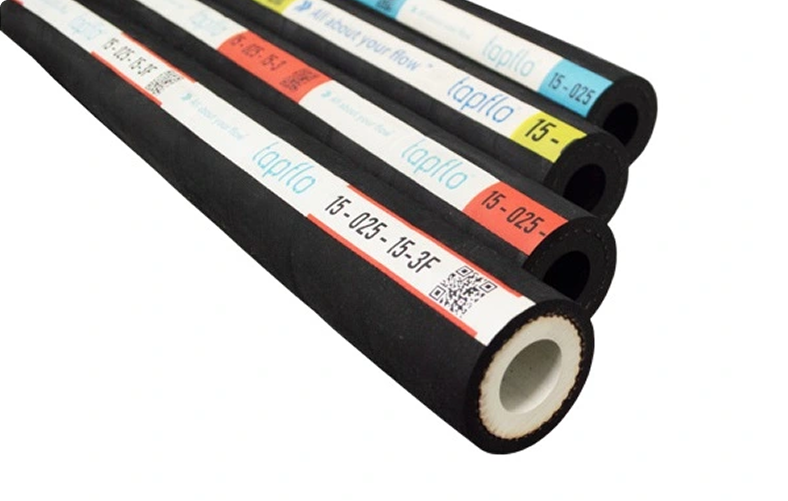
The best-suited Peristaltic hoses for wastewater and sludge are NR and EPDM, as they are also ATEX-rated materials, followed by NBR and CSM which can effectively pump wastewater media. NR offers the highest Mechanical and Abrasion Resistance and is recommended for the highest hose life expectancy.
Find out more about the range of hoses we supply, hose life and maintenance.
Peristaltic Accessories for Wastewater & Sludge
Peristaltic Pumps can be supplied with accessories to aid your exact requirements; these can include:
- Hose rupture sensor: Detects a hose failure and stops the pump, since the pump can’t be visually monitored 24/7.
- Pulsation dampener: Reduces any pulsation, vibration and hammering in the pipe system. The dampener lengths are also tailored to be the required length for Hose Extraction from the pump.
- Revolution Counter: Provides a signal for each revolution the pump makes, enabling easy batch control without a flow meter.
- Vacuum Assist System: If the product being pumped is >12,000 cPs, the pump can be fitted with a vacuum assist system that generates a vacuum within the pump casing to pull the hose back to its original shape faster and ensure reliable pumping and consistent flow rates.
- Single basket strainer with differential pressure indicator: Used on our EfW case study to protect the pump from any oversized debris.
Case Studies
Energy-From-Waste (EfW) Incinerator Bottom Ash Sludge
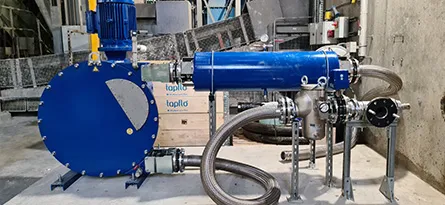
An Energy-from-Waste site needed to move Incinerator Bottom Ash leachate/sludge from a bunker with no access to the bottom, meaning the pump had to draw the sludge up 7 metres from ground-floor level.
| Detail | Specification |
| Fluid | IBA liquid sludge/slurry |
| Temperature | 0°C to +50°C |
| pH | 8 to 14 |
| Solids Content | Very abrasive & high concentration (small stones, metal shrapnel etc.) |
| Flowrate | 12 m³/hr |
| Dry Suction Lift required | < 7 metres |
| Pump Supplied | PTX80 3″ Peristaltic Pump with 90° geared reducer |
| Key Accessories | Capacitive hose rupture sensor, vacuum-assist pump system, ultrasonic flow switch, pulsation dampener, actuated butterfly valve, single basket strainer with differential pressure indicator, bespoke local control cabinet |
The PTX80 pump was chosen specifically for its dry-running capability, strong dry suction lift (0.98 Bar), large solids-handling capability and minimal fluid-contact parts.
Tapflo UK’s engineering team designed, supplied, installed, and commissioned the full turnkey system, including a vacuum-assist unit to prevent the hose from collapsing under high suction lift, and provided five days of on-site operator/maintenance training.
Anaerobic Digestion Plant – Digestate Transfer
An anaerobic digestion plant was struggling with an existing Progressing Cavity Pump that clogged and ran dry on start-up, couldn’t hit the required 30 m³/hr capacity at the plant’s heaviest solids load (25–30%), and had no suitable lifting equipment on site, meaning every inspection required hiring a crane.
| Detail | Specification |
| Fluid | Organic waste sludge with abrasive solids in suspension (25–30%) |
| Pump Supplied | PT-100 heavy-duty Peristaltic Pump |
| Capacity | 30 m³/hr |
| Max Discharge pressure | 5 Bar |
| Required Suction Lift | 4–5 m (pump capable of up to 9 m) |
| Hose | High-pressure natural rubber (20 Bar max), multi-layered & reinforced with braided polyamide |
| Key accessory | PT-100-VAC air-operated vacuum system for increased suction lift on high-viscosity, solids-laden fluid; hose rupture detector |
Switching to the peristaltic pump resolved all three original problems: constant flow and pressure regardless of viscosity/solids swings, indefinite dry-run tolerance to cover level-sensor lag, and suction lift that the pump could sit outside the tank rather than submerged inside it, removing the need for crane hire on every routine inspection.
Wastewater & Sludge Suitability
Peristaltic pumps offer a reliable, low-maintenance solution for challenging wastewater and sludge applications, handling abrasive solids, variable viscosities and dry running with ease. With strong suction, contained fluid handling, and flexible system options, they can simplify sludge transfer while reducing maintenance and operational issues.