




With only one wear part, Peristaltic Pumps have low maintenance and running costs, but this also depends on how well you look after the pump. This guide covers what wears a hose, how to keep on top of maintenance, how to pick the right hose material, and what determines hose life.
Simplicity of maintenance for Peristaltic Pumps
Because the hose is the only part of a peristaltic pump that touches the process fluid, there’s no mechanical seal, diaphragm, or wetted bearing to fail. Maintenance is largely limited to the hose, the drive gearbox, and the connections, most of which can be done in situ without specialist tools.
This is reflected in running costs: maintenance and repair on other pump types can run up to 50% of the pump’s value, whereas peristaltic pump maintenance typically falls under 10%. The hose itself is a relatively small part of that; it’s usually around 8% of the pump’s purchase price, making it one of the most cost-predictable wear parts in industrial pumping.
To read about Peristaltic Pumps and their applications, visit our guide.
What Actually Wears a Peristaltic Pump Hose?
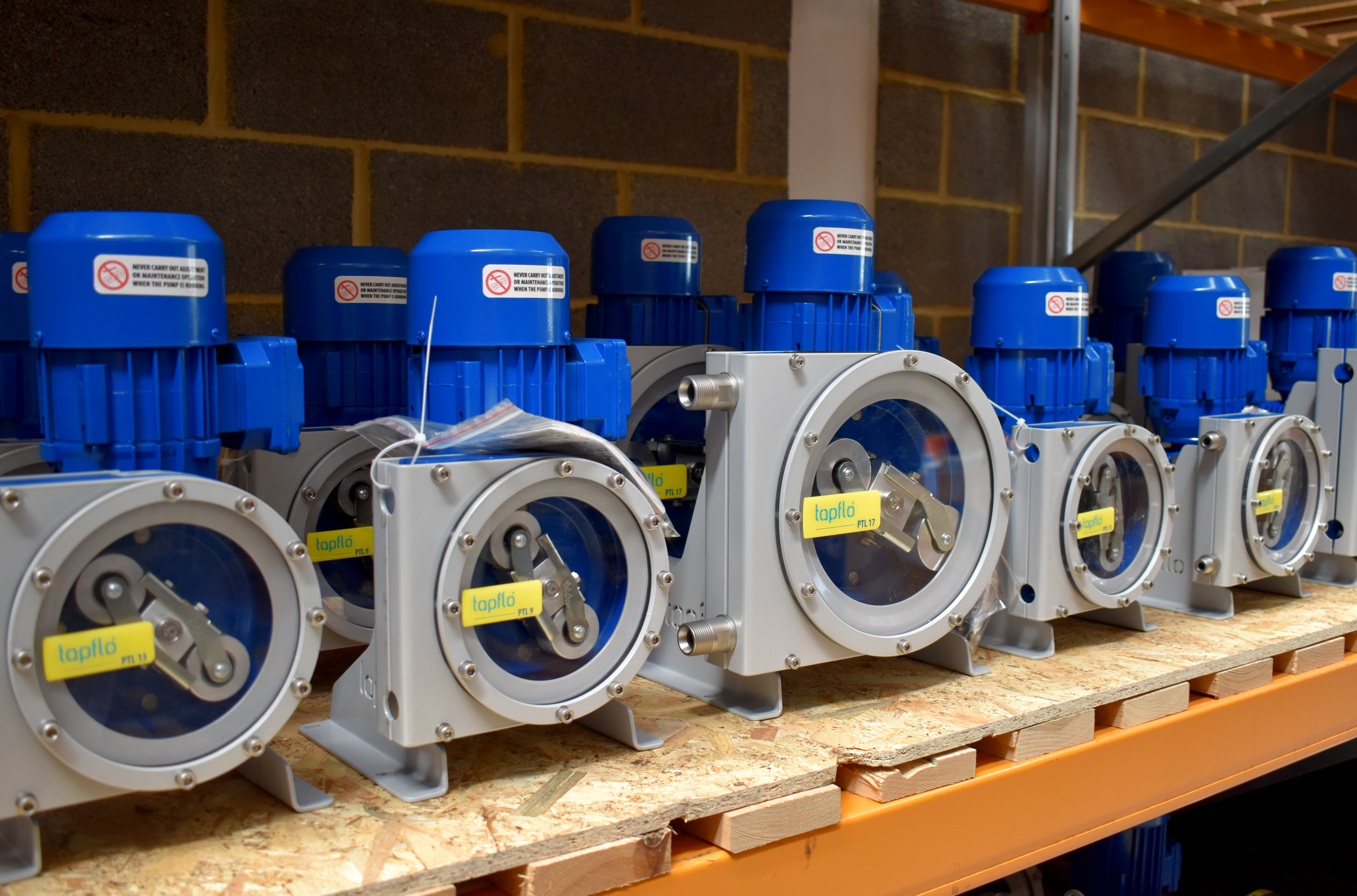
The hose is compressed and released thousands of times per hour by either:
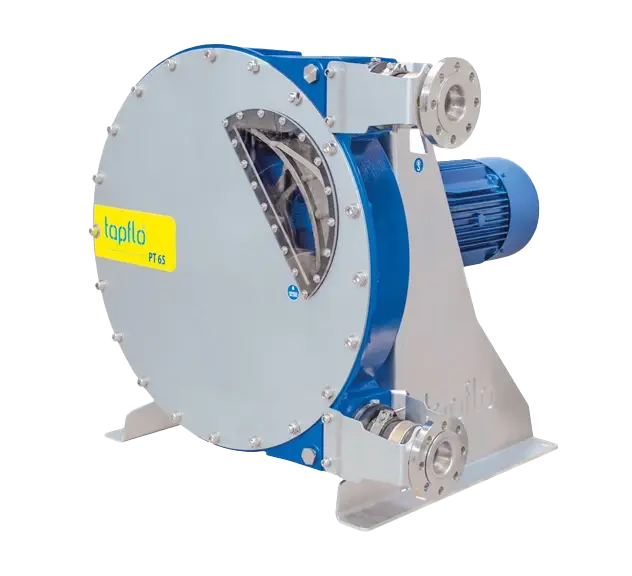
- Shoes: Rotating on a wheel, used in Tapflo’s high-pressure PT range (up to 15 Bar)
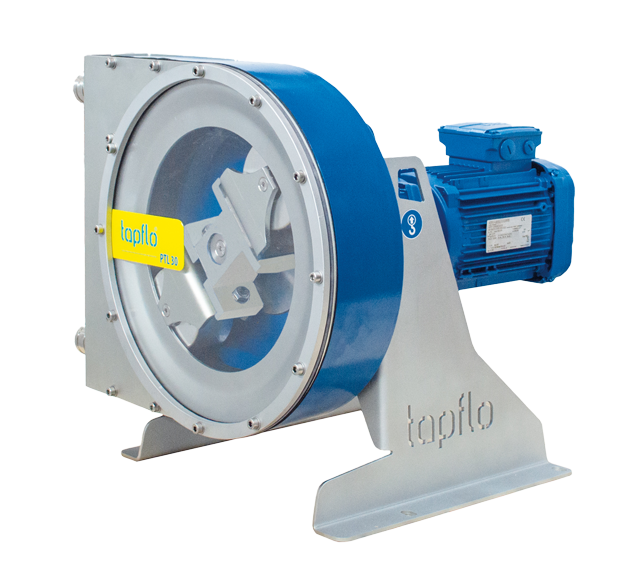
- Rollers: Used in Tapflo’s low-pressure PTL range (up to 4 Bar)
Each compression cycle flexes the hose wall. Over time, this flexing, combined with the abrasiveness, chemical makeup, and temperature of the fluid being pumped, determines how long the hose lasts. This is also why hose material selection matters as much as the maintenance schedule: the wrong material for the application will wear out faster, no matter how well the pump is looked after.
To learn more about the working principles of the shoe design vs roller design in the high and low pressure Peristaltic pumps, read our comprehensive guide.
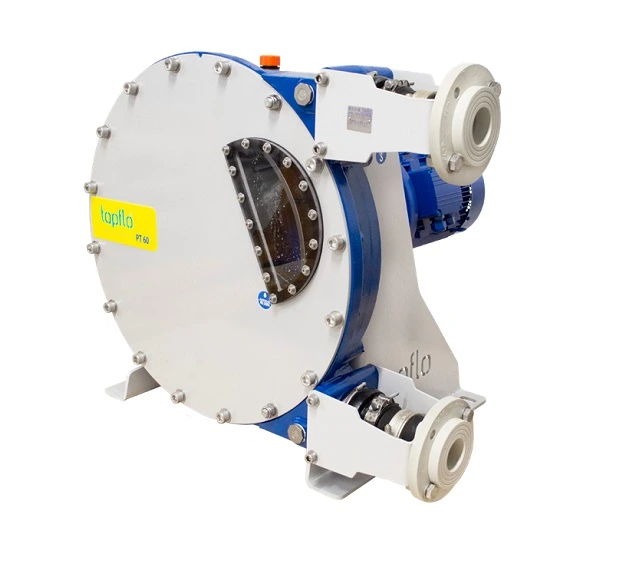
Peristaltic Pump Maintenance Checklist
Tapflo recommends the following routine, split into periodic and frequent checks. Qualified personnel should always carry this out with the power isolated.
Periodic maintenance:
- Check suction and discharge pressures against expected performance
- Inspect the gear-motor in line with the manufacturer’s instructions
- Replace gear oil in line with the manufacturer’s guidance
Frequent routine checks:
- Inspect all pump connections for leaks
- Check the tightness of all connection parts
- Carry out a full visual inspection of the pump and hose
On a new or reassembled pump: retighten all screwed connections after the first week of operation, using the correct torque setting. This step is easy to miss and one of the most common causes of early connection leaks on newly installed or serviced pumps.
Lubrication
PT (shoe design): requires constant glycerine lubrication to dissipate the heat generated by friction between the shoes and hose. Glycerine level should be part of routine checks, as running low causes avoidable heat-related hose wear.
PTL (roller design): uses a food-approved silicone lubricant grease, housed in an aluminium casing.
Peristaltic Pump Hose Materials Explained
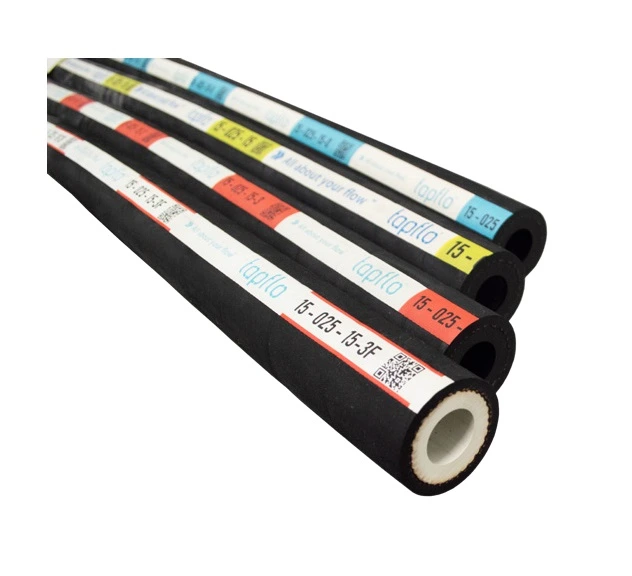
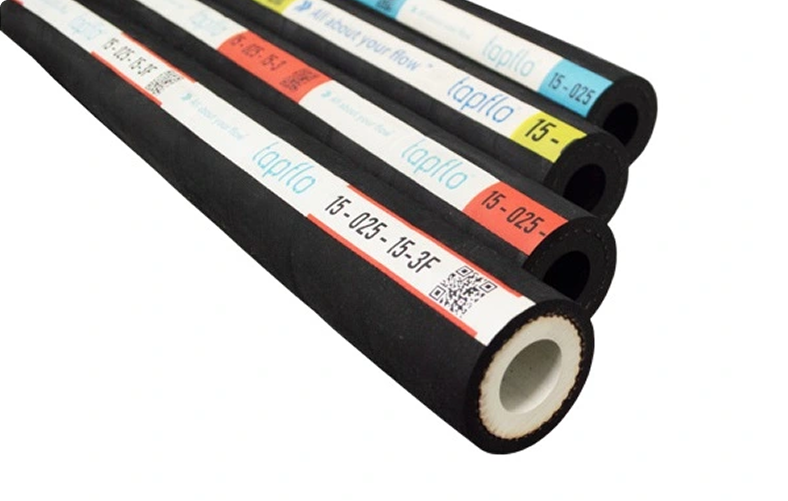
Hose material is selected to match the fluid. The PT or PTL pump can run with completely different hose materials depending on the application. Tapflo UK’s hose range includes:
| Material | Marking | Best suited to |
| NR – Natural Rubber | White | ATEX-Rated. Water treatment, certamins, mining, construction, chemicals, paint & paper, agriculture |
| NR FDA – Natural Rubber (FDA/CE 1935-2004 approved) | Black or white inside | Food, oils, paints pharmaceuticals & cosmetics, and alcohol concentrations up to 96% |
| NBR – Nitrile (Buna-N) | Yellow | Water treatment, mining, pharmaceuticals & cosmetics, paint, agriculture and chemicals |
| NBR FDA | Black or white inside | Fatty foods and dairy produce |
| EPDM | Red | ATEX-rated. High general chemical resistance |
| CSM (Hypalon) – Chlorosulfonated Polyethylene | Blue | Water treatment, mining, agriculture chromic, nitric and sulfuric acids |
| Silicone / Norprene | Dependent | Specialist food and pharmaceutical applications |
Choosing the wrong hose material for the fluid is one of the most common and most avoidable causes of short hose life. If you’re unsure which material suits your application, our pump selection guide covers the questions to work through, or you can speak to our team directly.
How Long Does a Peristaltic Pump Hose Last?
There’s no single figure that applies across every application; hose life depends on the combination of:
- Fluid abrasiveness and chemical compatibility with the hose material
- Operating pressure and viscosity
- Duty cycle (continuous, intermittent, or occasional) and running hours
- Whether the correct hose material has been matched to the application
Because of this, Tapflo UK has developed its own hose life expectancy calculator, which factors in your specific working parameters to estimate hose lifespan, so you can plan maintenance ahead of a scheduled PPM (planned preventative maintenance) date rather than reacting to an unexpected failure. Get in touch for a no-obligation hose life estimate tailored to your specific application.
Extending Hose Life: Practical Steps
A few accessories and habits make a measurable difference to hose life and reduce unplanned downtime:
- Pulsation dampeners (DPT range): Reduce pulsation, vibration and pipe hammering. Tapflo’s DPT dampener is built to cut this by up to 80%, reducing wear on the hose and wider pipe system.
- Hose leak detection (HLD): Stops the pump automatically if it detects a leak, limiting damage and downtime if a hose fails in service.
- Correct torque on reassembly: The single most common post-service fix needed within the first week of operation.
- Matching hose material to fluid: revisit this if the process fluid, concentration, or temperature changes. A hose selected for the original application may not suit a changed one.
Repairs and Servicing
If a hose needs replacing, or a pump needs servicing outside routine maintenance, Tapflo UK provides pump repair and servicing in addition to new pump supply.