




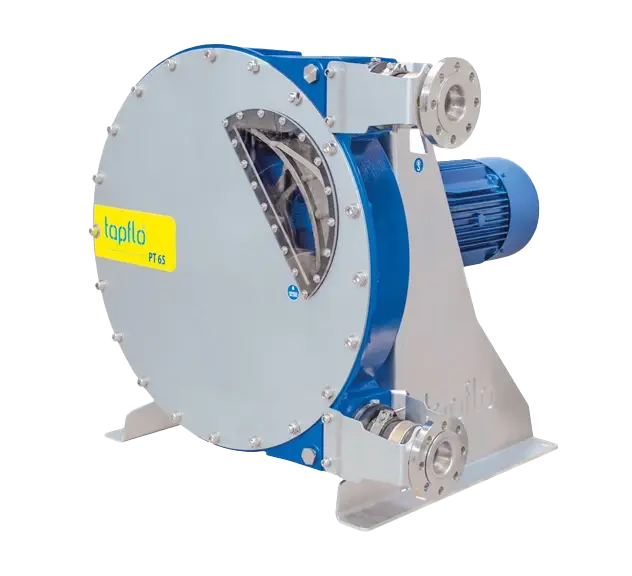
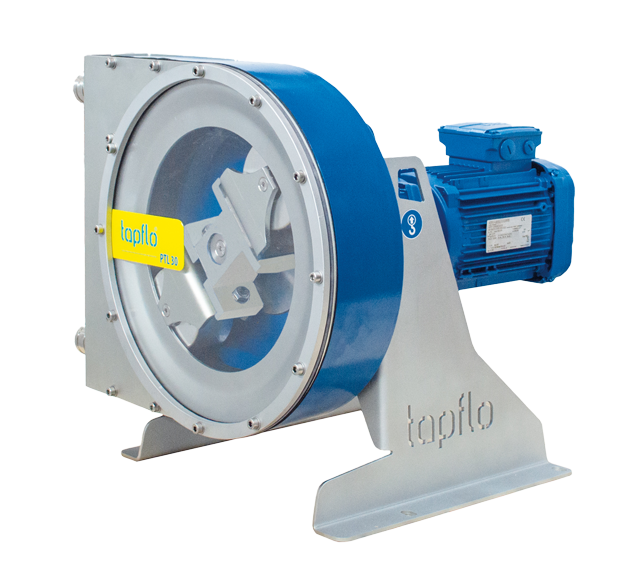
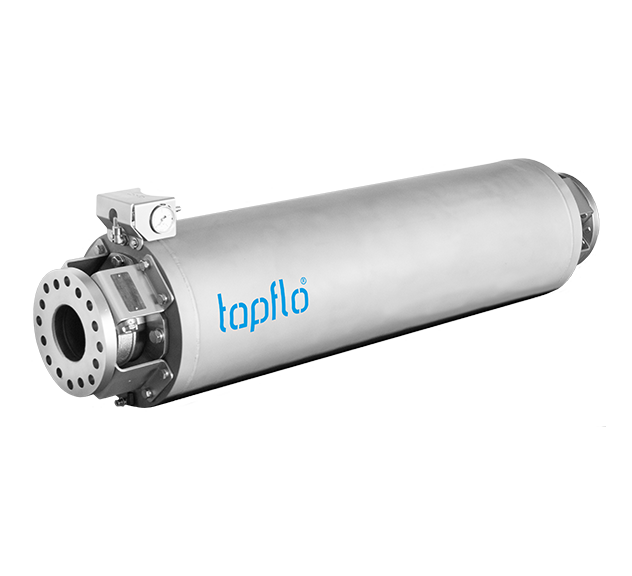
A Peristaltic Pump, also known as a Hose Pump, is one of the few pumps that is hygienic by construction rather than by add-on certification. Only the hose contacts the product, and it has no mechanical seal, valve, or internal crevice where bacteria can collect. Hygienic-specific ranges are built with FDA- or EC1935/2004-compliant hoses and sanitary clamp connections, and getting hose material and CIP compatibility right determines whether a hygienic installation performs.
Why Peristaltic Pumps Suit Hygienic Applications
The pumping mechanism (rollers or shoes on a rotor) squeezes the outside of the tube rather than being immersed in the fluid. That means no wetted seals, bearings, glands, or valves contact the product.
Compare that to a centrifugal or lobe pump, where a mechanical seal sits right where the shaft penetrates the casing: even a well-specified double-flushed seal is a potential leak path and a crevice where product can sit.
The tube itself is smooth – there are no dead legs. Because the whole flow path is a single continuous piece of tubing, it drains freely when installed with a fall and can be validated end to end far more easily than a multi-component wetted assembly.
Learn more about how Peristaltic Pumps work – roller vs shoe design explained.
Other features that make Peristaltic Pumps hygienic:
- FDA Approved Hoses: FDA-approved (food/pharma grade) hoses use compounds specifically formulated and tested to meet FDA 21 CFR 177.2600, and often carry additional certifications like USP Class VI and NSF Standard 51. These compounds are selected to avoid leaching, taste/odour transfer, and bacterial harbourage, and their formulation is traceable/documented so a food or pharma manufacturer can prove compliance to auditors.
- No mechanical seals: The hose is the only wear part in the pump, so contamination and leakage risk is lower, and the pump is easier to clean.
- Gentle product handling: The compression-and-release action is low-shear, making it ideal for media such as shampoos, creams, pharmaceutical products, serum, and plasma.
- Dry-run suitability and self-priming: Because the pump can run dry without damage and re-prime itself, product lines can be fully purged.
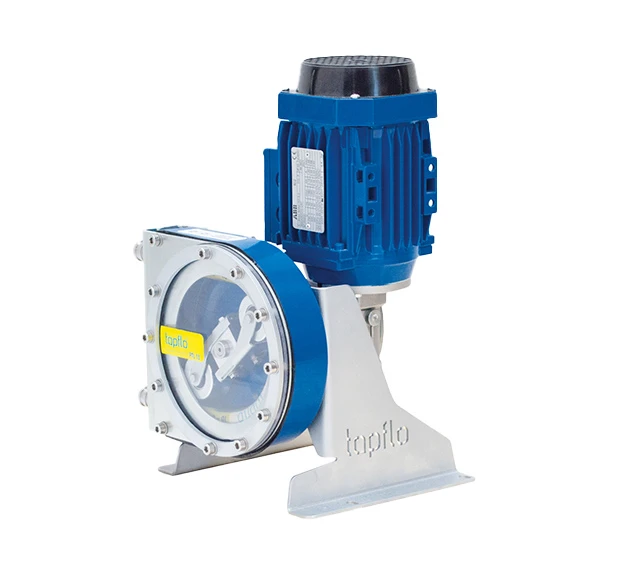
Hose Materials for Hygienic Applications
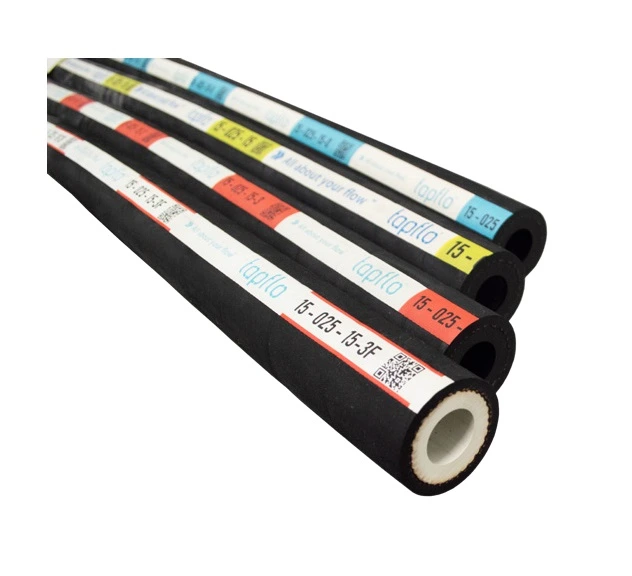
The hose is the only wetted component, so hose material selection is your hygienic pump specification. Tapflo supplies the following food-grade and hygienic hose materials.
| Hose Material | Typical Use | Suitability |
| NR FDA (Natural rubber FDA approved) | Food, oils, alcohol concentrations up to 96% | General purpose food grade elastomer |
| NBR FDA (Nitrile, FDA-approved) | Fatty foods, dairy, oils, greases | Good oil/fat resistance |
| EPDM FDA | Food & Beverage, Pharmaceutical & cosmetics | Suited to CIP chemical exposure |
| Silicone | Pharmaceutical, cosmetics, high purity food duty | Available on the PTL low pressure range |
| Neoprene | Food and Pharmaceutical transfer | Standard food-grade hose |
All food-grade hoses are supplied with full traceability and certification. Learn more about our full hose portfolio.
Why Certifications Matter
‘Food grade’ is not just a label. Hose compounds must be tested and certified against recognised. These standards include:
- FDA 21 CFR 177.2600: Governs rubber articles intended for repeated food contact, setting the permitted substances and extraction limits a compound must meet.
- EC 1935/2004: The EU framework for food-contact materials. Compounds are assessed against the regulations’ general requirements and the relevant European national guidance.
- EHEDG and 3-A Sanitary Standards: Hygienic equipment design standards that apply to the pump rather than the hose compound. EHEDG guideline 17 covers pumps specifically, and EHEDG certification requires cleanability testing and a design review; the 3-A symbol is awarded based on design and fabrication criteria without third-party testing.
- USP Class VI: A pharmaceutical/biocompatibility standard to be checked for pharmaceutical applications rather than just food-grade.
Cleaning: CIP and SIP
Because the flow path is a single hose, CIP is straightforward and thorough, with no internal components to create shadowed areas. Running the pump slowly also cleans both the compressed and open sections of hose.
The hose material determines the temperature limit, so SIP requirements may dictate the compound selection. The pump’s dry-running capability lets you fully purge the line before cleaning, reducing CIP volume and cycle time.
For SIP, confirm the hose’s temperature/hold-time rating and validated steam-cycle life, as repeated exposure can significantly shorten hose life.
Learn more about CIP/SIP processes and our compatible pumps/systems.

Common Hygienic Applications for Peristaltic Pumps
Common hygienic applications for Peristaltic Pumps include:
- Food & Beverage: Dairy, Sauces, Purees, Fats and Oils, and Shear-Sensitive Fluids.
- Pharmaceutical: Liquid Protein, Vaccines, Serum, Plasma and Chemicals
- Cosmetics: Shampoos, Creams, Lotions and viscous formulations such as Face Scrubs.
Peristaltic Hygienic Accessories
Accessories that support Peristaltic Pumps in hygienic applications include the following:
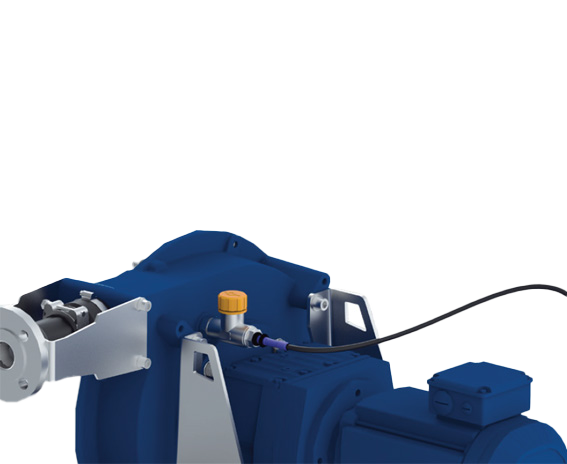
- Hose Leak Sensor: Detects hose failure as soon as it occurs, reducing product loss, contamination risk and unplanned downtime.
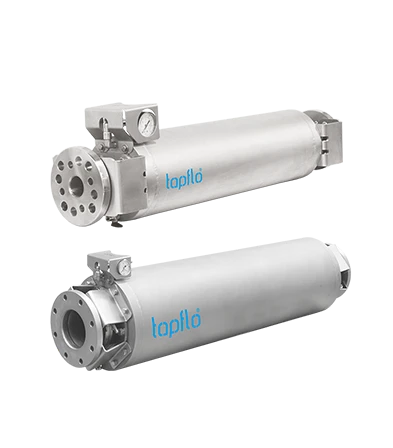
- DPT Pulsation Dampener: Peristaltic Pumps deliver an inherently pulsating flow. A dampener smooths it, reducing pulsation, vibration, and hammering in the pipework by up to 80%, protecting instrumentation, improving metering accuracy, and reducing fatigue on hygienic clamp joints.
Common Pump Selection Mistakes
Most problems with hygienic Peristaltic Pump installations trace back to the specification, not the pump. The recurring ones include:
- Running the Pump Too Fast: Hose life depends on the number of compressions, not hours run. Undersizing the pump and making up the duty with speed can halve hose life and increase changeover frequency on a hygienic line.
- Ignoring the Pressure Rating: A Positive Displacement Pump will generate whatever pressure the system resists, up to the hose limit. Correct hose rating and a pressure relief arrangement are part of the specification, not an accessory.
- Overlooking the Lubricant: The hoses are suspended in a lubricant bath, so a hose failure can carry lubricant to the product side. Specify food-grade lubricant and a hose leak sensor together for hygienic duty.
- Choosing the Hose on Product Compatibility Alone: The CIP regime, temperature and abrasion matter just as much. A compound that suits the product may not survive daily hot caustic cleaning.
- Forgetting the Connections: Hygienic duty needs sanitary clamp or hygienic threaded connections. Standard flanged or threaded ports reintroduce the crevices the pump design avoids.
- Sizing without Allowing for Pulsation: Metering accuracy and inline instrument readings suffer on a pulsating line, so budget for a dampener where dosing accuracy matters.