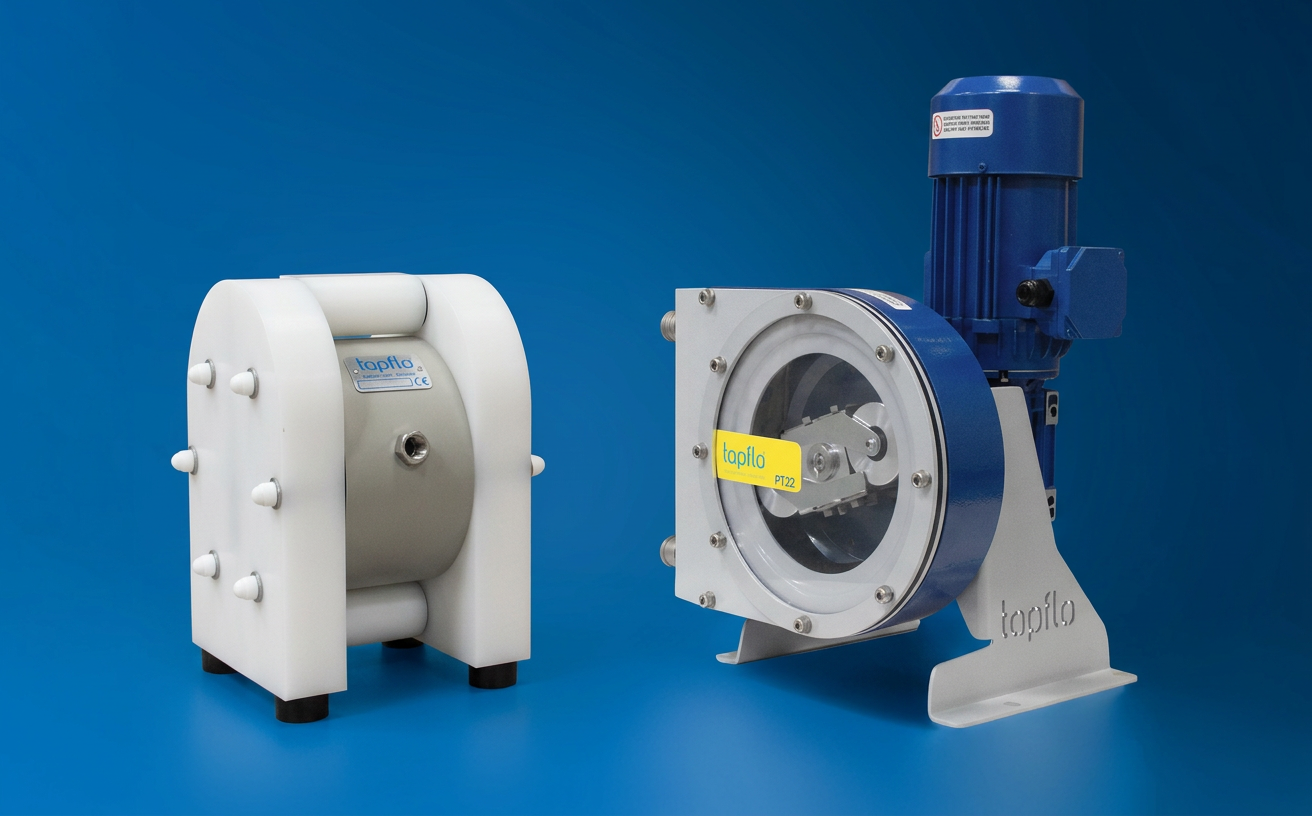





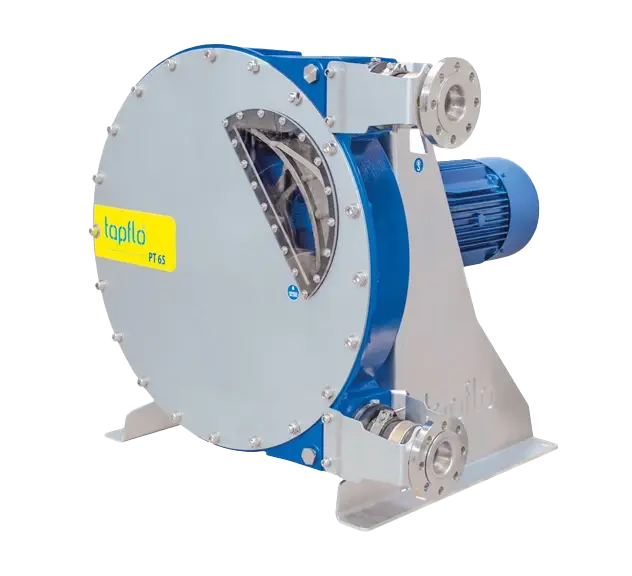
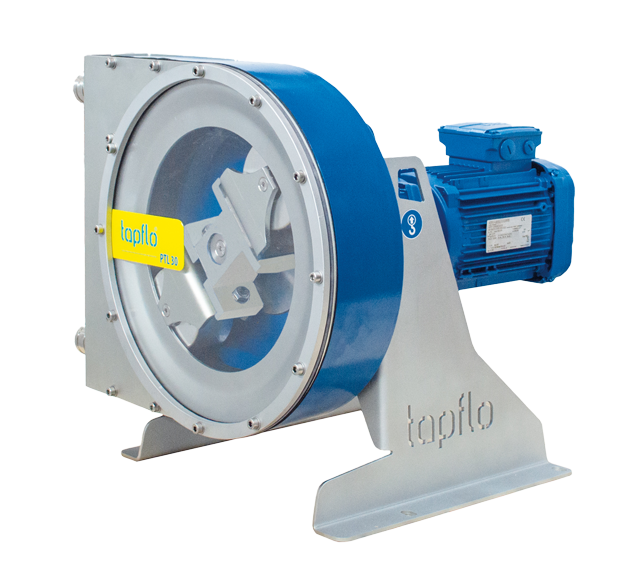
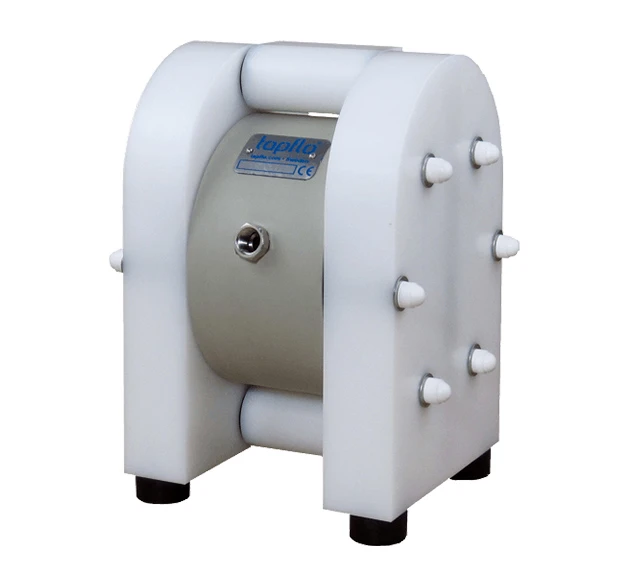
Peristaltic Pumps and Diaphragm Pumps both pump media effectively. Choose a Peristaltic Pump for thick, abrasive, or high-viscosity media (pastes, sludges, plating chemicals) – where the hose is the only wetted part and maintenance is minimal. Choose a Diaphragm Pump for high-flow, hygienic-certified applications such as dairy, beer and general industrial fluid handling, where higher flow rates and a wider range of chemical compatibility matter more than abrasion resistance.
How do Peristaltic and Diaphragm Pumps work?
What is a Peristaltic Pump?
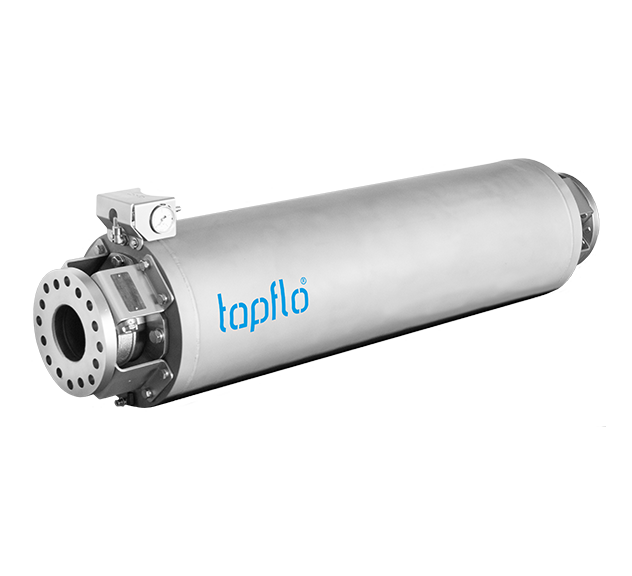
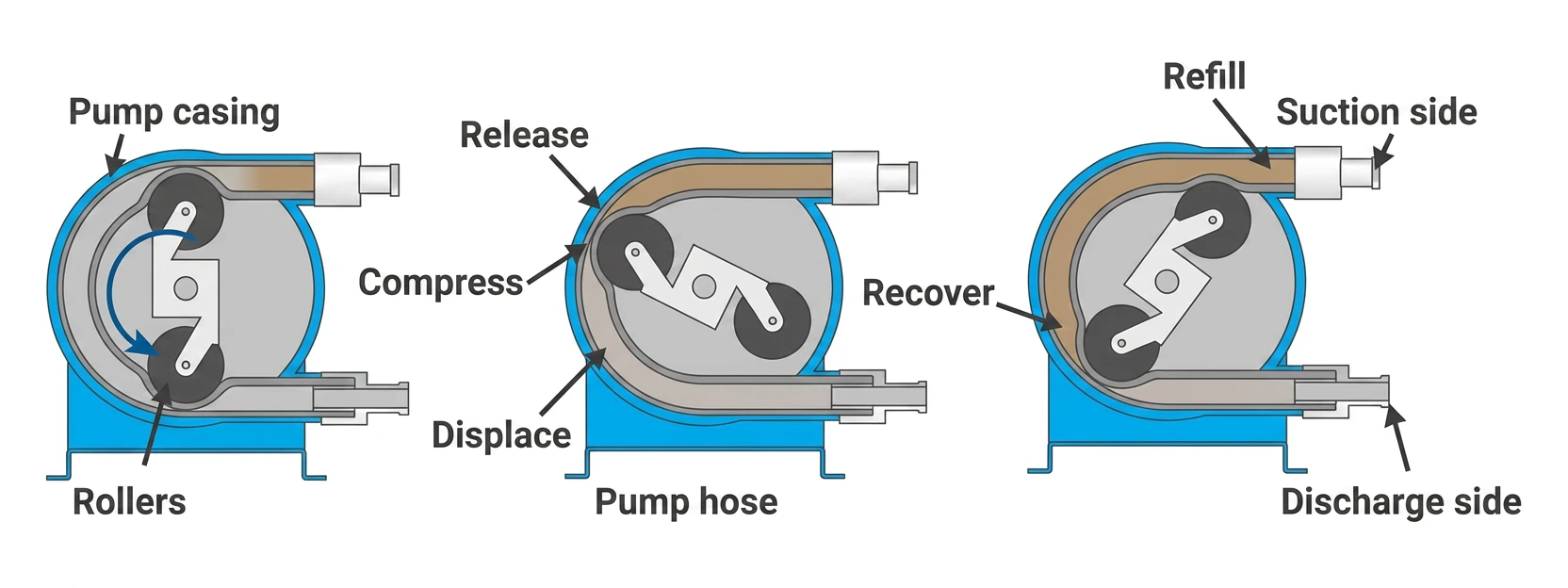
A Peristaltic Pump is a reciprocating pump where two shoes (high-pressure models) or rollers (low-pressure models) rotate on a wheel, compressing a hose against a track to move fluid through it. The hose is the only wetted part; there’s no seal to fail and no metal-to-fluid contact, which is why Peristaltic Pumps handle abrasive slurries and aggressive chemicals with minimal wear. For more detail, see our article ‘What is a Peristaltic Pump?’
What is a Diaphragm Pump?
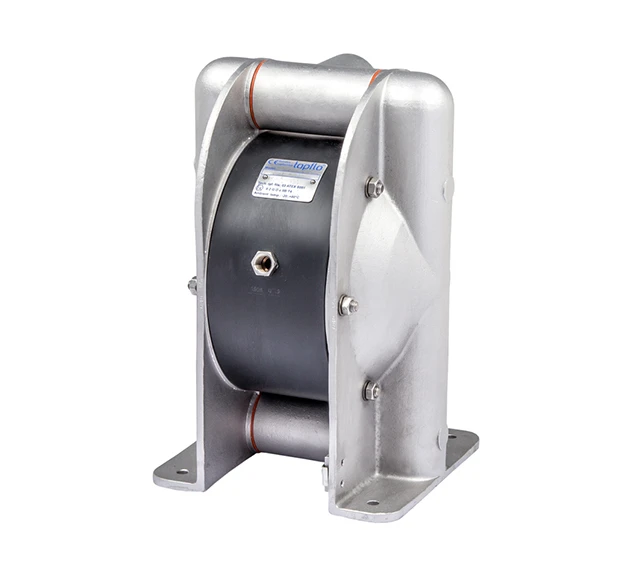
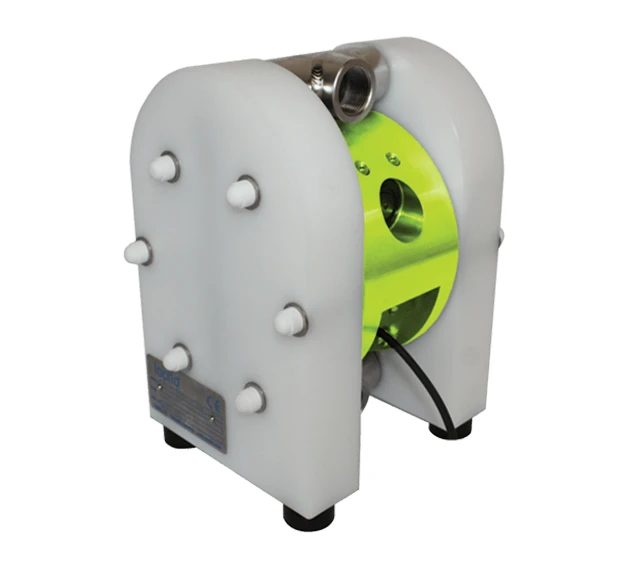
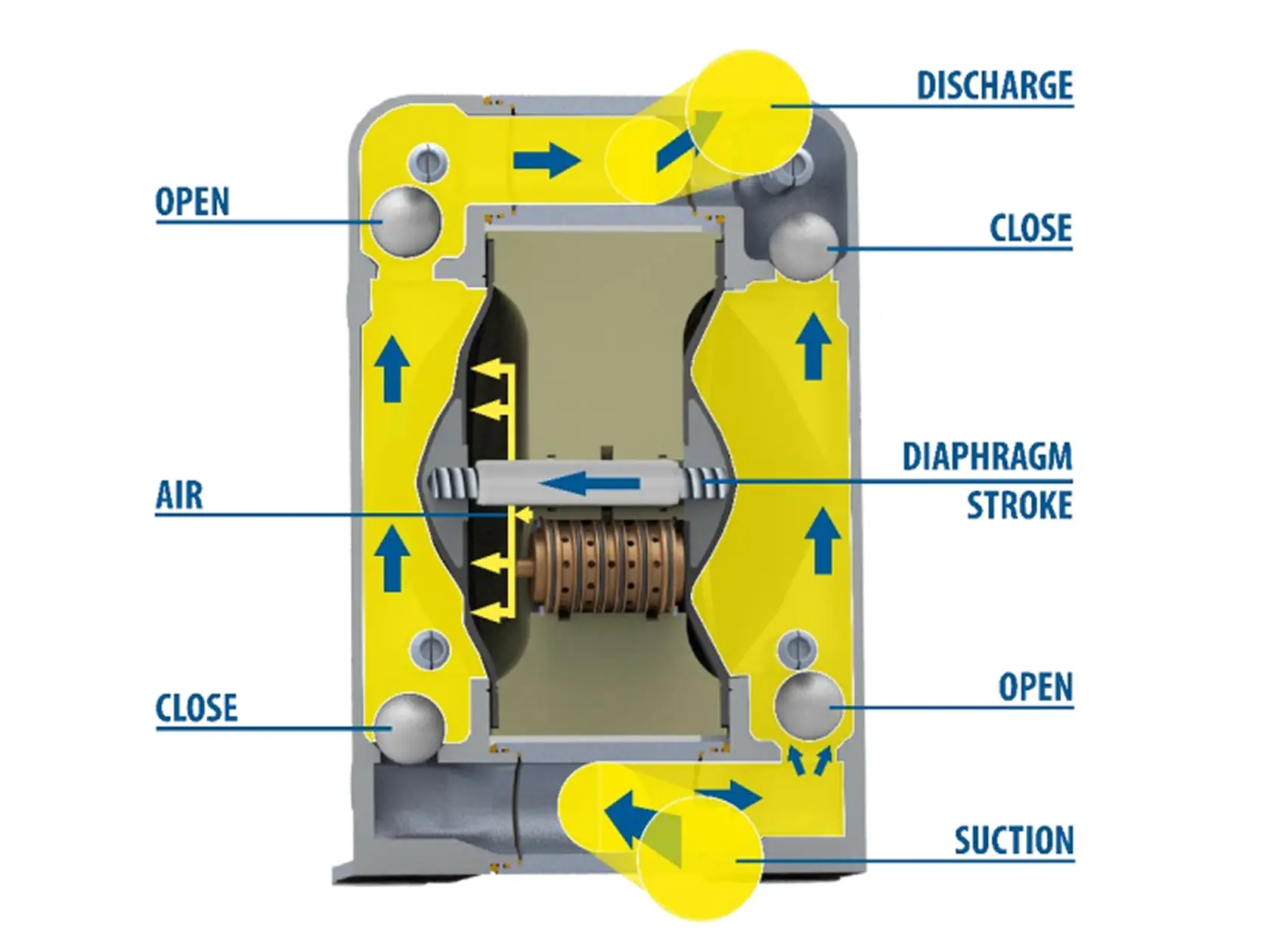
A Diaphragm Pump is a positive displacement pump that uses two diaphragms that move simultaneously. One creates suction while the other pushes fluid to the discharge, with the flow controlled by ball check valves. Diaphragm Pumps are air-operated (AOD), sealless, and handle a wide range of viscosities and chemically demanding fluids, depending on the diaphragm and valve materials.
Pump Specifications
| Specification | Peristaltic Pump | Diaphragm Pump |
| Max Outlet Pressure | Up to 15 Bar | 8 Bar (16 on TF series) |
| Max Flow Rate | Up to 60m³/h (5m³/h low-pressure) | Up to 820 l/min |
| Max Viscosity Handling | Up to 60,000cPs (12,000 low-pressure) | Up to 25,000cPs |
| Max Self-Priming Lift | Up to 9.8m | Up to 5m (8m wetted) |
| Dry Running | Can run dry without damage | Can run dry without damage for short periods |
Contamination Risk
Contact surface matters most in food & beverage, cosmetics, and pharmaceutical applications where hygienic standards are non-negotiable.
Peristaltic: The hose is the only wetted part, with no seals. The lowest-contact, easiest-to-clean option of the two, with nothing to disassemble for cleaning.
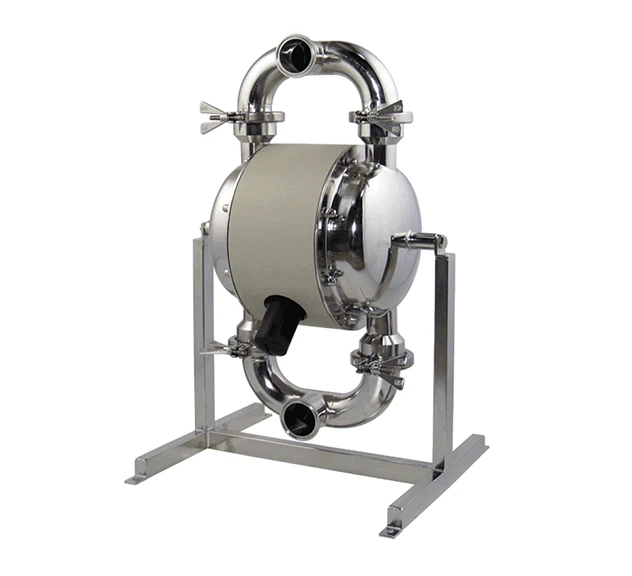
Diaphragm: The wetted parts are the two diaphragms plus the ball check valves; more contact points than a Peristaltic Pump, but still sealless, which keeps contamination risk low. The sanitary/aseptic range goes further, with electropolished stainless steel surfaces and full CIP/SIP compatibility, meeting the EHEDG and FDA/USP VI hygienic certification needed for demanding applications such as dairy, beer, and pharmaceutical processing.
Application Suitability
It’s important to know whether the pump you select is suitable for the application. Read below to find out the suitability of the pumps for the applications/industries:
| Peristaltic | Diaphragm | |
| ATEX-Suitability | The PXTL is an ATEX-rated model | There are ATEX-rated models available |
| Food & Beverage | Tomato sauce, mashed potatoes, pastes, oils, wine, eggs, cream, dairy | Dairy and beer (sanitary range) |
| Pharmaceutical & Cosmetics | Chemicals, vaccines, plasma, shampoos, serums | EHEDG Aseptic and USP VI approved for hygienic applications |
| Wastewater/Water Treatment | Lime cream, ferric chloride, sodium bisulphate, fluoride, polymers, coagulants, flocculants, sludge and foams | Flocculent fluids, sludges, water, pH-control dosing chemicals |
| Chemical | Acids, PVDF latex, alcohol, soap, solvents | Oil, drill lubrication |
| Pulp & Paper | Latex, kaolin, paper waste sludge, chemicals | Glue, adhesives, sodium silicate, resins |
| Paint & Print | Water-based paints, acrylics, pigments, inks | Ink, solvent-based liquids, resins, pigments, surface coating |
| Surface Treatment | Zinc, copper, nickel, tin, silver, gold plating, chromates, passivation | Surface coating transfer |
Running Costs and Maintenance
Peristaltic: Usually costs less to run. They’re electrically powered and require little maintenance; the only wear part is the hose, which can be changed quickly, giving you a ‘new’ pump suited to different media in minutes.
Diaphragm: Costs are slightly higher because they require compressed air (however, with LEAP models, this gap can be narrowed, as they require far less air than conventional models). Maintenance is also slightly higher because it requires stripping down internal components such as diaphragms, valves, balls, etc.
Pump Accessories
Accessories are important when customising the pump or meeting specific application needs. Tapflo currently offer the following as optional accessories.
Peristaltic Accessories: We can offer a range of hoses and fittings to suit different media and applications, plus a pulsation dampener to smooth the flow, which can be found in our Peristaltic Pump catalogue.
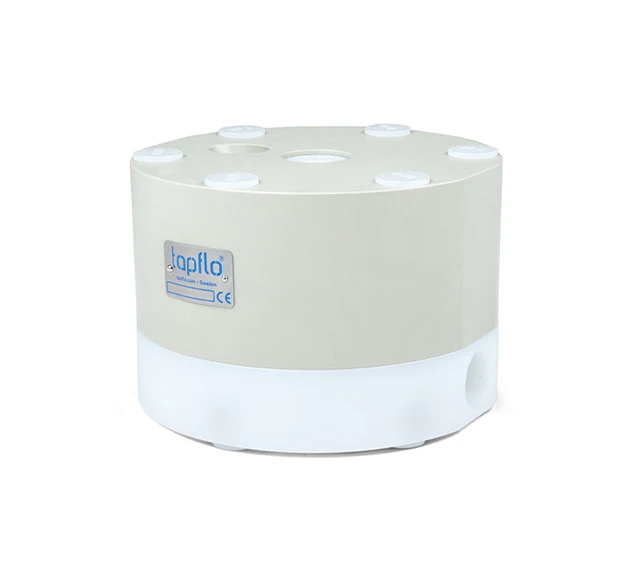
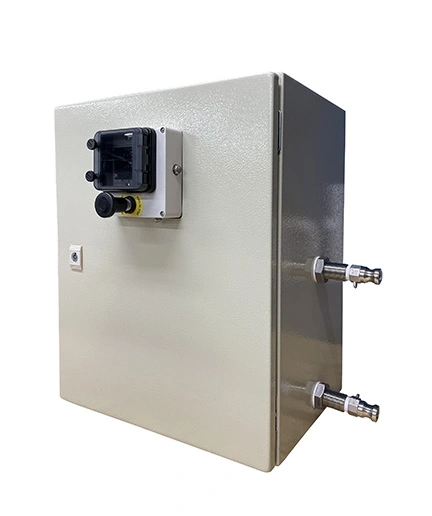
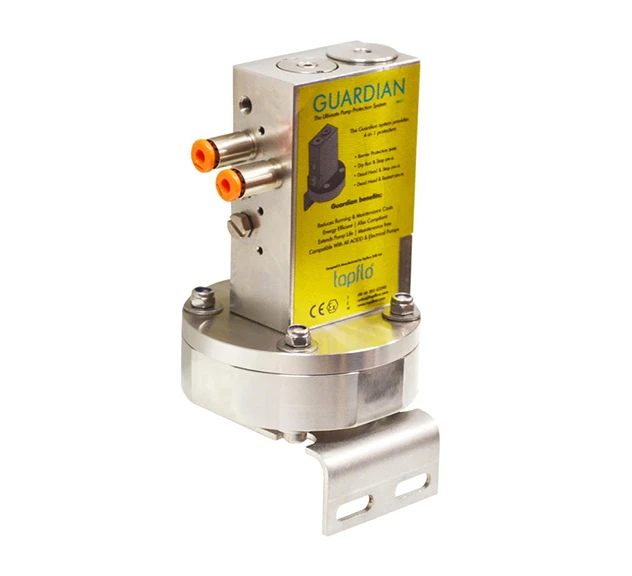
Diaphragm Accessories: Our range of accessories to improve your pump’s performance includes Pulsation Dampeners, Wall-Mount Decanting Units, Insulating Covers, Guardian Systems, Heating/Cooling Jackets, Pneumatic Controllers, Pump Life Counters, and Pressure Switches. You can see all our accessories in our catalogue.
Whether you need a hygienic or non-hygienic construction depends on your application, media viscosity and site requirements. Contact our pump specialists to find the right configuration for you.