





This blog provides an overview of air-operated diaphragm pumps, explaining how they work, their key advantages, and the wide range of fluids they can handle, from corrosive chemicals to viscous and solids-laden liquids. It also covers common applications, material options, and practical considerations for selecting the right diaphragm pump to ensure reliable and efficient operation.
What is a Diaphragm Pump?
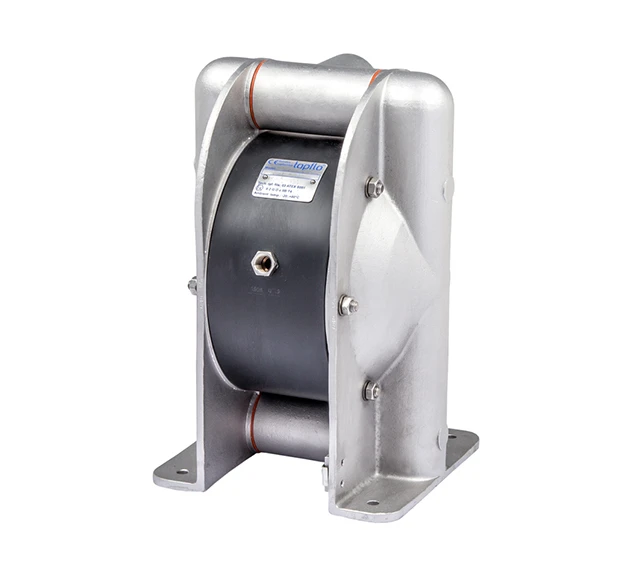
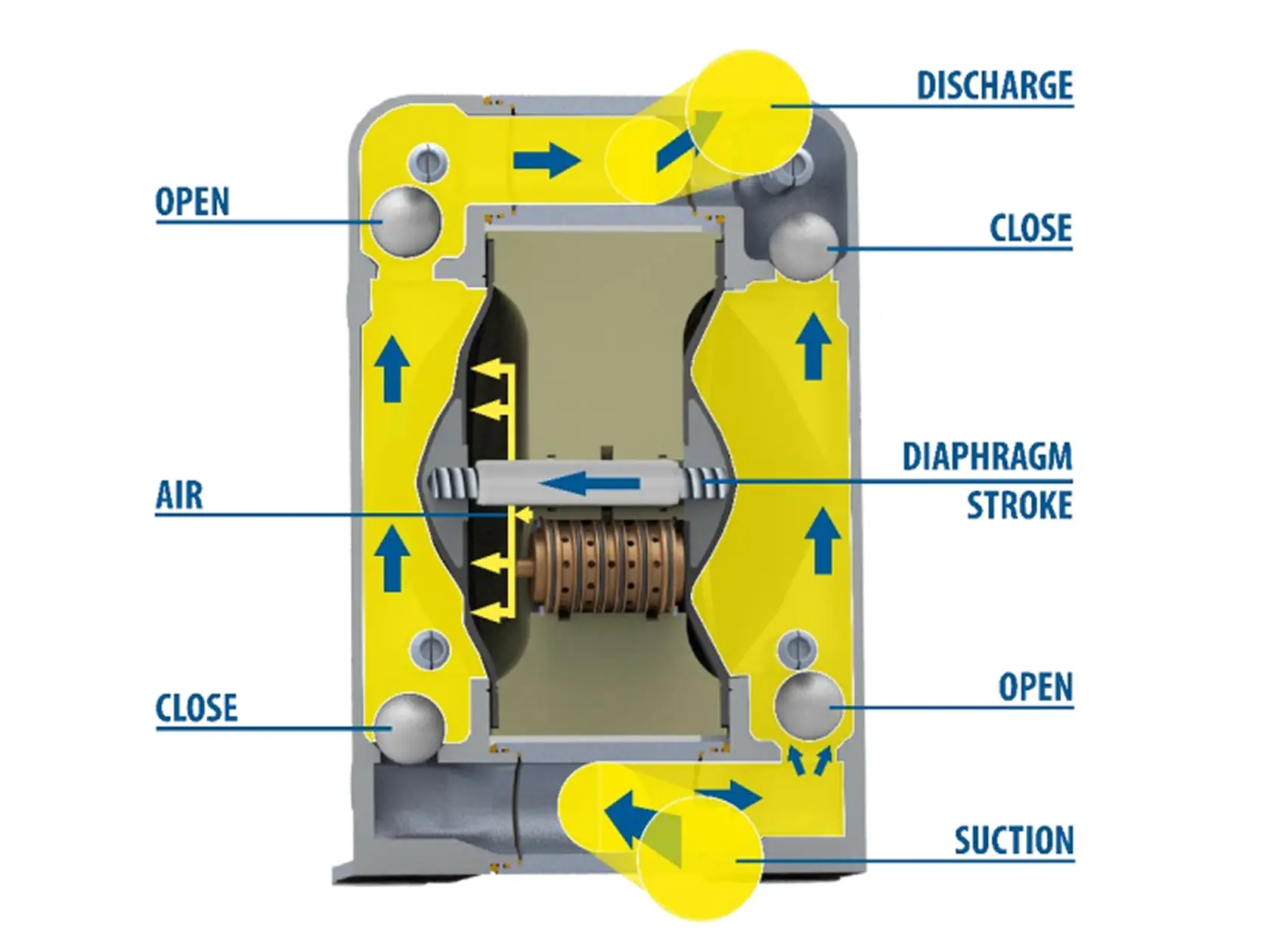
A Diaphragm Pump is a type of Positive Displacement Pump that uses a set of two internal diaphragms, either made from PTFE or rubber, that work simultaneously to create pressure to push fluid through the pump. The diaphragms operate the internal valves on the side of the pump, which help control flow direction and the amount of fluid transferred to the discharge outlet.
Diaphragm Pumps are among the most common and effective pumps on the market today, offering the ability to pump high volumes at low pressures and the robustness to withstand a variety of applications. Tapflo UK’s diaphragm pumps can self-prime up to 5m from a dry suction pipe or 8m from a wetted pipe.
The main types of Diaphragm Pumps Tapflo UK supplies include:
- Air-Operated Diaphragm Pumps: These pumps use compressed air to drive the diaphragms, making them suitable for applications where electricity may not be readily available (or in hazardous environments).
- Electric Diaphragm Pumps: These pumps are powered by electricity and are ideal for continuous and high-volume pumping tasks
- Hydraulic Diaphragm Pumps: Powered by hydraulic fluid, ideal for applications requiring high pressure and precision pumping.
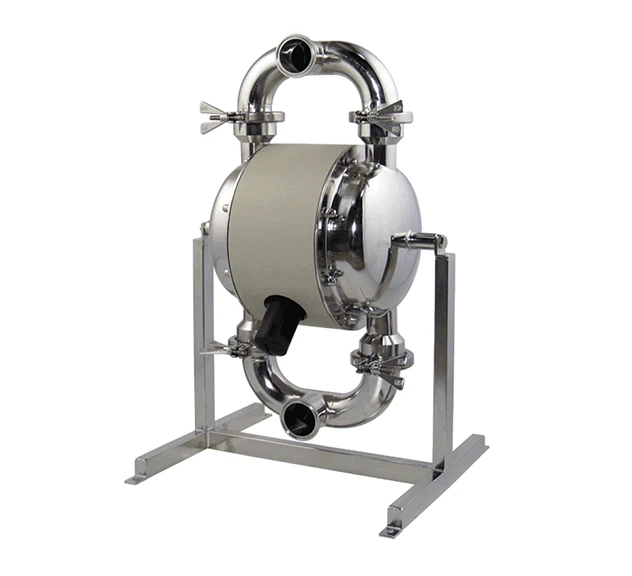
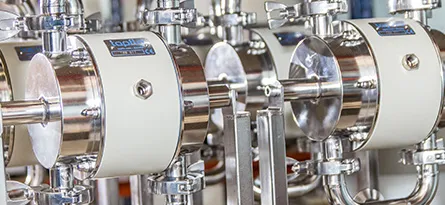
- Sanitary Diaphragm Pumps: Designed with materials and features compliant with sanitary standards, these pumps are ideal for the Food and Pharmaceutical industries where maintaining hygiene and product integrity is crucial.
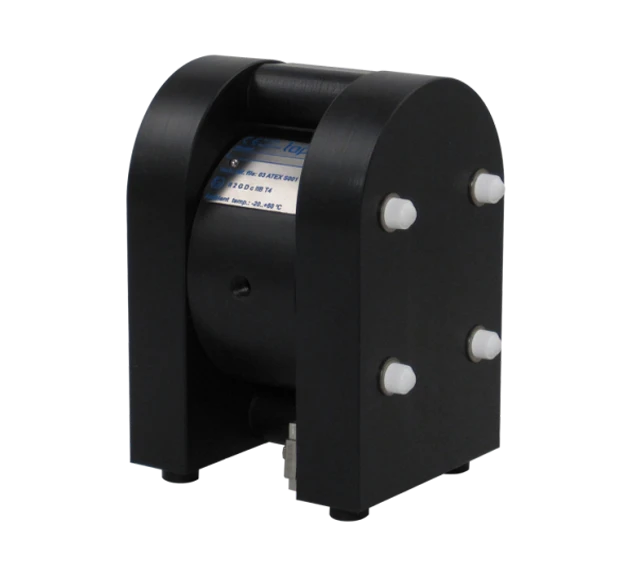
- ATEX-Rated Diaphragm Pumps: Designed to meet ATEX and other explosion-proof standards, these pumps are used in potentially hazardous environments where safety is a concern.
Advantages of Diaphragm Pumps
When it comes to Diaphragm Pumps, there are multiple key advantages, including:
- Self-Priming Capability: Meaning they can automatically create suction lift to draw fluid into the pump without external priming
- Can Run Dry Without Damage: Unlike many other pump technologies, Diaphragm Pumps can run dry without causing internal damage, reducing the risk of costly failures
- Versatile Fluid Handling: Ability to handle a wide range of fluids, including corrosive, abrasive, viscous and shear-sensitive materials.
- Wide Working Pressure Range: Capable of operating across a broad pressure range, giving flexibility across application demands.
- No Seals or Glands Required: They have no seals, packing, or glands, which are common wear and maintenance points in other pump types.
- Ability to Handle Solids: Able to handle fluids containing small solids or particulates.
- Consistent Flow and Pressure: They offer steady, pulse-free flow, making them ideal for applications that require precise, consistent fluid transfer rates and pressures.
- Wide Range of Material Options: Available in PE, PTFE, aluminium, cast iron and stainless steel AISI 316L, allowing the right pump construction to be matched to the chemical needs,
- Low Maintenance Costs: Possess a simple design and fewer wear parts, meaning lower maintenance costs and longer service intervals than others.
- Safe for Hygienic Applications: Can be designed with sanitary features, making them suitable for the Food & Beverage and Pharmaceutical industries where maintaining hygiene is critical.
- ATEX Options: Some models are available in explosion-proof configurations, meeting safety standards for use in potentially hazardous environments.
- 5-Year Guarantee: Across the whole range of Tapflo-manufactured pump products.
These advantages make Diaphragm Pumps a preferred choice for a wide range of industries and applications where reliable, versatile fluid handling is essential.
Diaphragm Pump Industries & Applications
Tapflo UK’s Air-Operated Diaphragm Pumps serve many applications and industries. Within our range, we cater to both the industrial and hygienic sectors
Common applications include:
- Food & Beverage
- Pulp & Paper
- Surface Coating
- Water Treatment
- Print, Paint & Varnish
- Petrochemical

Discover more information about the applications and industries for which our wide range of Diaphragm Pumps are suited.
Choosing the Right Diaphragm Pump
Selecting the right Diaphragm Pump for your operation involves considering several key factors, including fluid compatibility, flow rate, viscosity and many more. Find out what else you should consider before selecting your Diaphragm Pump to get the most of your application.
Our pump experts are always on hand to help you choose the right pump for your exact requirements.
Air Operated Diaphragm Pumps
Our wide range of Diaphragm Pump systems are available for a variety of applications and executions:
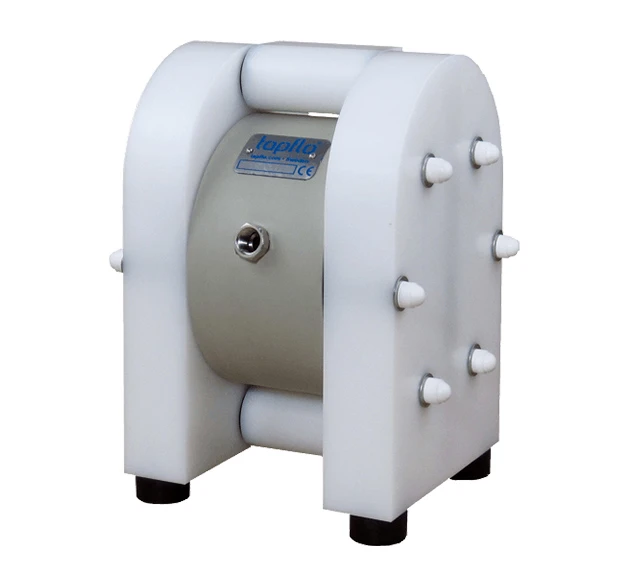
- Standard Diaphragm Pumps available in Metal, HDPE, PTFE or Sanitary
- Low Energy options to reduce your business’s energy consumption and reduce costs on compressed air
- Complete Tank solutions, ideal for transferring, dosing and storing fluids
- Mobile Decanting Units including AOD and pneumatic control and monitoring system
- ATEX certified Diaphragm Pumps for potentially hazardous environments
With many Air-Operated Diaphragm pumps on the market, there is an unnecessary amount of bolts and extra parts present in the pump system which can lead to more weak points and openings for leakages to occur. Tapflo prides itself on offering a simple and easy to operate Diaphragm Pump with up to 70% less parts compared to competitors on the market.
The side housings on the Tapflo diaphragm design features side housings that can be machined from solid block HDPE, PTFE, Cast Iron, Aluminium or Stainless Steel. This design ensures that the frame is stronger to withstand aggressive fluids and increases the life of our pumps.
Air Operated Diaphragm Pump Case Study Solution:
Tapflo UK provides customers with bespoke Diaphragm Pump solutions to suit their applications and industries. One, in particular, featured four Diaphragm Pumps, all T100s in HDPE, with stroke sensors. Take a look at our case study about how we provided an end-user with a suitable solution to pumping in a highly corrosive atmosphere.
Electric Diaphragm Pumps
Tapflo also offers Electric Diaphragm Pumps, providing the benefits of a standard Diaphragm Pump where compressed air isn’t available.
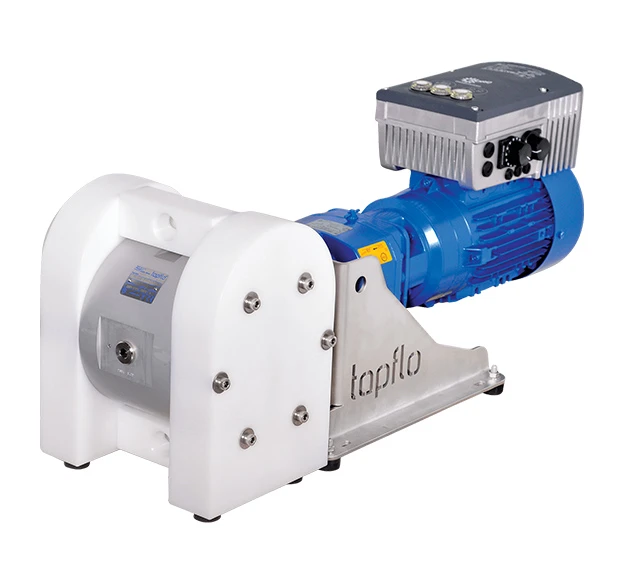
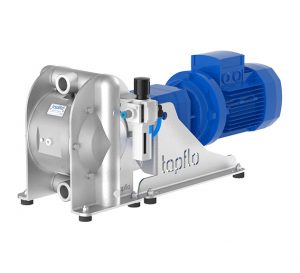
Tapflo’s Electrically Operated Diaphragm Pump (EODD) uses the same effective design principle as the air-operated range but replaces compressed air with a reciprocating force to drive the diaphragms. An eccentric shaft, cam and piston convert rotary motion into reciprocating movement, driving the diaphragms to create suction and discharge. As one diaphragm creates suction in one chamber, the other pressurises liquid and pushes it towards the discharge port.
EODD Pumps are available in hygienic, metal and HDPE/PTFE executions, making them suitable for a wide range of industries.
Find out more about Tapflo EODD Pumps.
Considerations When Purchasing an Air Operated Pump:
- Problem: Compressed air is an expensive way to power a pump, which can make these pumps costly to run.
- Solution: Using Low Energy Air Pump and compressed air
- Problem: Air-operated pumps can be noisy when running at high pressures.
- Solution: As LEAP technology can run at a lower flow, using less compressed air reduces noise pollution.
- Problem: Air flow from air pumps can be uneven.
- Solution: If your application requires a steady flow of air, ask the team about our Active Pulsation Dampener
Installation, Maintenance & Troubleshooting
Below is an installation example showing best practices when installing a Tapflo Air-Operated Diaphragm Pump. Please note that our air valves are constructed for oil-free air; lubricated air is not permitted and will damage the pump. However, if the air is very dry (laboratory air), you may lubricate it with water. The maximum allowed air pressure is 8 Bar and as a preventative measure, the air must be filtered to at least 5 microns or less.
These components should be included:
- Regulator to adjust the air pressure and therefore the discharge pressure generated by the pump
- Manometer to read the output pressure of the pump
- Needle valve to adjust the airflow to the pump and therefore the flow rate generated by the pump. This is especially useful when operating the pump in the lower ranges of its performance capabilities and for accurate control of flow rate
- Filter to ensure that the pump’s air valve doesn’t become contaminated
The following components are included in Tapflo’s Air treatment system:
- Gate valve for isolating compressed air supply
- Air Filter and Pressure Regulator w/ mounted Manometer
- Flexible Air Hose feeding to the pump Air Inlet
- Needle Valve for regulating the pump’s flow rate
- Flexible Suction Hose feeding to pump suction side to absorb any vibrations and water hammer effects
- Gate Valve fitted to the pump suction to enable isolation for maintenance
- Gate Valve fitted to the pump discharge to enable isolation for maintenance
- Coiled flexible piping fitted to the pump discharge to provide back pressure and also the required distance between the pump and flow gauge/meter to retain accuracy
- Flow gauge to provide an accurate readout of generated flow to ensure that the pump is working comfortably
Need to troubleshoot your Air-Operated Diaphragm Pump? Take a look at our Troubleshooting Guide for all you need to know!
Can a Diaphragm Pump Run Dry?
Diaphragm pumps have the added benefit of running dry without damaging the pump! However, as a general rule, dry running is not usually recommended for long periods, as it can increase wear on internal parts because there is no fluid in the pump to prime the internals.
To avoid unnecessary dry running, we recommend using a Guardian System. This accessory monitors the pump’s discharge pressure and stops the pump if the pressure falls below a set point. It’s a great alternative to having an operator manually shut off the pump when it’s finished running, and it can also be used for deadhead, stop/restart, and barrier protection.
Another way to avoid dry running your pump is to use a level control, which you can also buy from Tapflo UK and that works with any Diaphragm Pump. The level system monitors the level of media on the suction or discharge and can be set to either a high or low level, which will switch the pump off when the levels reach a set point, meaning an all-around easier solution for you!