




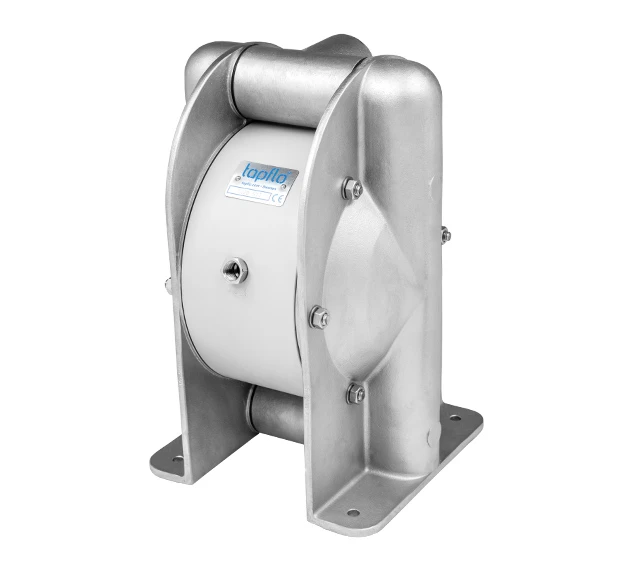
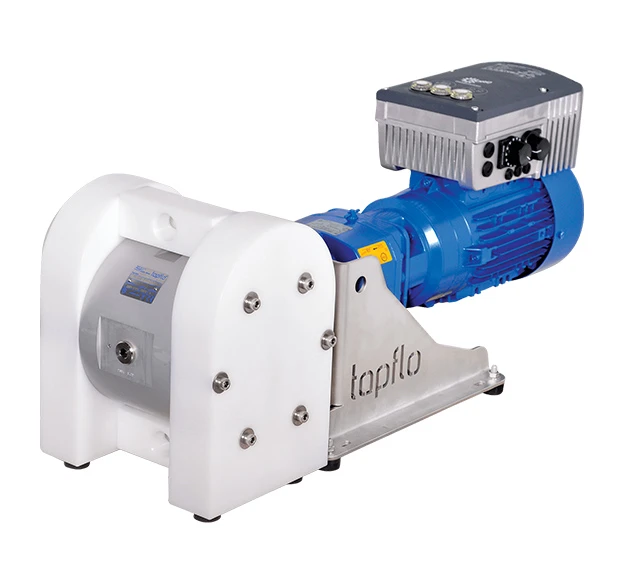
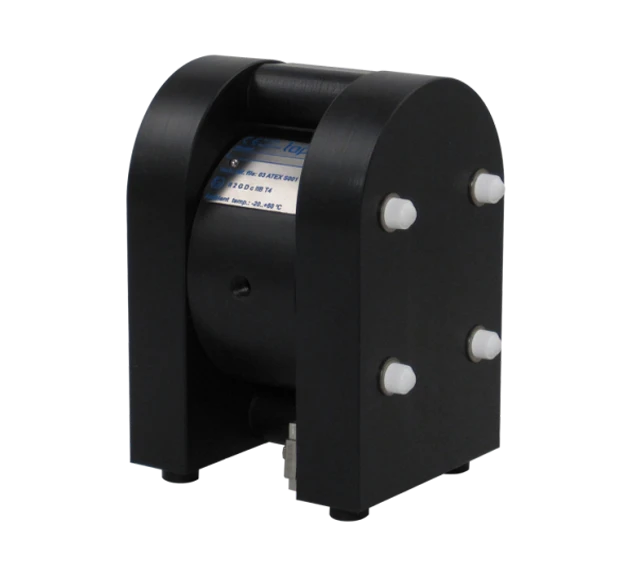
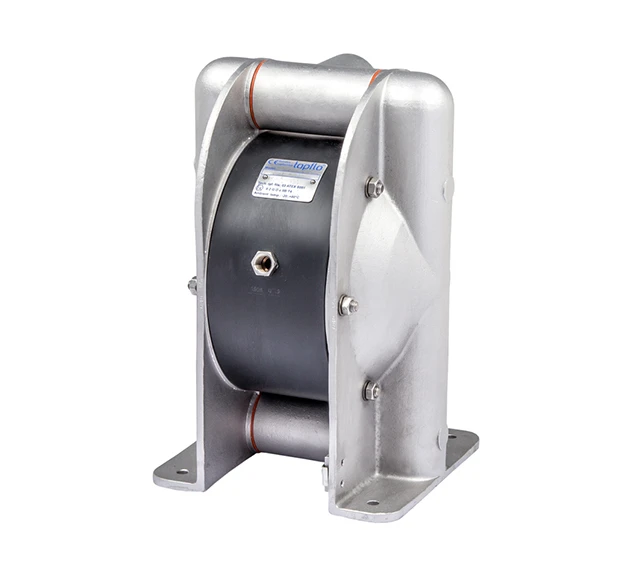
Choosing the right materials for a diaphragm pump is essential for chemical compatibility, durability and performance. Materials must suit the fluid, temperature, abrasiveness, and application requirements.
Diaphragm Materials include PTFE, which provides the broadest general chemical resistance; PE/HDPE offers strong chemical and wear resistance, while EPDM, NBR, and FKM suit different fluid types such as water/steam, oils, and hydrocarbons. Before specifying a pump, confirm factors such as chemical concentration, temperature, solids, hygiene requirements, hazardous-area classification, flow, and pressure with technical experts.
Why Material Selection Matters for Diaphragm Pumps
A Diaphragm Pump’s construction has three “wetted” areas that come into direct contact with the pumped fluid:
- The Pump Body/Housing (also called the wetted metal or thermoplastic parts)
- The Diaphragms
- The Valve Balls (or flap valves, on sanitary models)
Getting any one of these wrong can mean anything from reduced service life to a pump that fails within days. The right combination depends on the fluid’s chemical nature, temperature, whether abrasive solids are present, and whether the application is industrial or hygienic.
Diaphragm Pump Body Materials
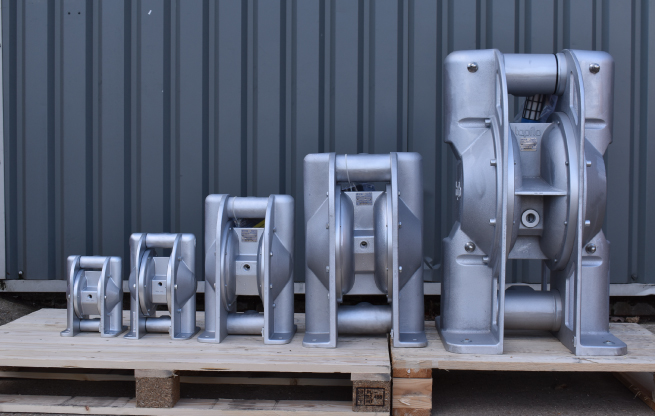
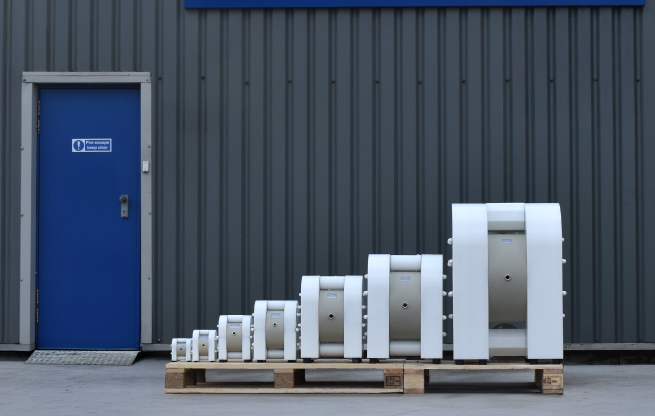
Tapflo UK’s Air-Operated Diaphragm Pumps are available with wetted bodies in the following materials:
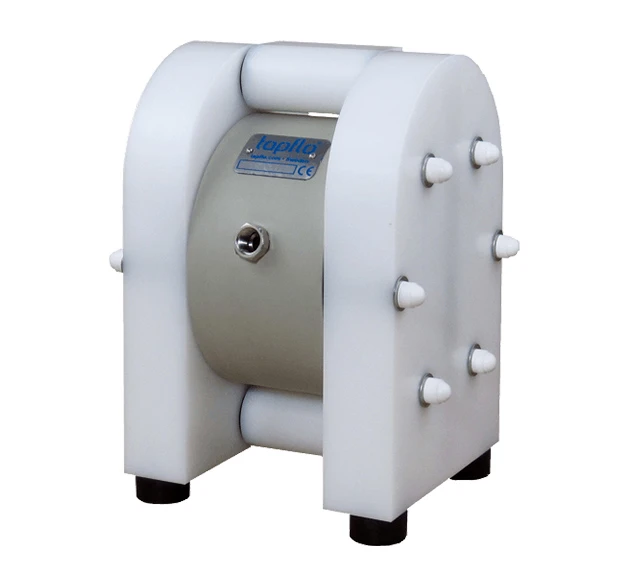
- Polyethylene (PE/HDPE): Resistant to most aggressive chemicals, including concentrated acids and alkalis, with wear resistance around 6–7 times better than polypropylene, making it well suited to abrasive slurries. Maximum liquid temperature is 70°C.
- PTFE: A thermoplastic with superior chemical resistance, capable of handling even the most aggressive acids. Maximum liquid temperature is 100°C (up to 110°C depending on pump series — check the specific datasheet).
- Aluminium & Cast Iron: Suited to pH-neutral fluids, thin or thick, including high solids content or abrasive liquids. Common across workshop, print & paint, and general industrial applications.
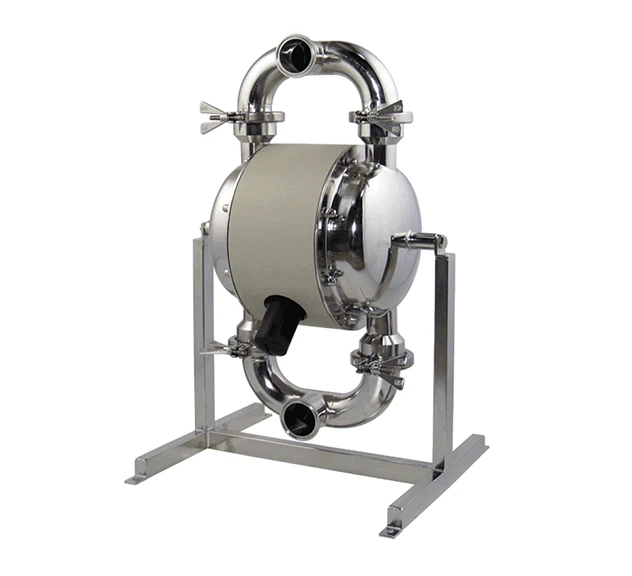
- Stainless Steel AISI 316: Cast using the lost-wax method for accuracy and finish, combining mechanical strength with resistance to aggressive liquids such as nitric acid and sodium hydroxide.
- PTFE-Coated Aluminium: Combines the mechanical benefits of aluminium with added chemical protection.
Typical Body Material Applications
| Material | Typical Industries | Example Fluids |
| Aluminium / Cast Iron | Workshop, Print & Paint, Mining & Construction, Ceramics | Oils, fats, solvents, glues, varnishes, inks, abrasives, glazes |
| Stainless Steel AISI 316 | Chemical, Food, Pharmaceutical | Aggressive liquids, nitric acid, sodium hydroxide |
| PE (HDPE) | Chemistry, Pulp & Paper, Surface Treatment, Electronics | Acids, alkalis, alcohols, solvents, sludges, resins |
| PTFE | Chemistry, Print & Paint, Surface Treatment | Aggressive acids, solvents, anodic sludge |
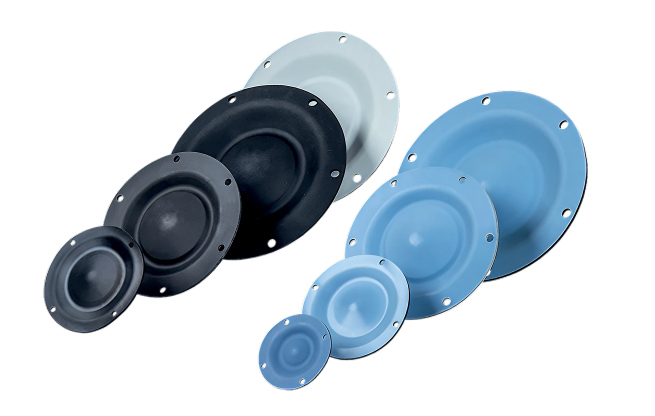
Diaphragm Materials & General Chemical Behaviour
The diaphragm flexes millions of times over the pump’s life, so its material must balance chemical resistance with flexibility and fatigue life. Tapflo’s diaphragms are available in:
- PTFE: Broad, near-universal chemical resistance, used where the fluid is highly aggressive or where cross-contamination must be avoided.
- PTFE TFM 1705B: A grade specifically developed for solvent applications.
- PTFE with white EPDM/food-grade back: Combines the chemical inertness of a PTFE wetted face with an EPDM backing layer, used in hygienic applications.
- EPDM (and white, food-grade EPDM): A synthetic rubber commonly used for CIP liquids and hot water/steam applications.
- NBR (nitrile rubber): A synthetic rubber commonly associated with oils and fats.
- FKM: A fluoroelastomer used across a wide temperature range.
General Elastomer Chemical Behaviour:
- EPDM is generally strong with water, steam, dilute acids and alkalis, but is not typically recommended for oils, fuels or hydrocarbon solvents.
- NBR is generally strong with oils, fats and hydrocarbons, but is not typically recommended for strong acids, ketones or ozone/weather exposure.
- FKM is generally resistant to a broad range of hydrocarbons, fuels and many chemicals across a wide temperature range, but is not typically recommended for ketones or ammonia.
- PTFE has the broadest general chemical resistance of the group but is more rigid, so it’s often paired with a rubber backing layer in composite diaphragm designs.
Valve Ball Materials:
Valve balls (or flap valves on sanitary ranges) direct fluid flow through the pump and are available in:
- EPDM
- NBR (nitrile rubber)
- PTFE / PTFE TFM 1635
- FKM
- PU (polyurethane)
- Ceramic
- AISI 316L stainless steel
Matching Materials To Your Fluid: What To Tell Us
When specifying a Diaphragm Pump, our team will typically ask about:
- The fluid itself — chemical name/concentration, temperature, and whether it contains solids or is abrasive
- Hygiene requirements — whether the application needs FDA, EHEDG or USP Class VI-certified materials
- Hazardous area classification — whether an ATEX-rated pump is required
- Flow rate and pressure requirements for the process
This is also where our pump experts add the most value — chemical compatibility charts are a useful starting point, but concentration, temperature and duty cycle can all shift the right answer, so it’s always worth confirming with us before specifying.