BY TYPE
BY APPLICATION
BY BRAND







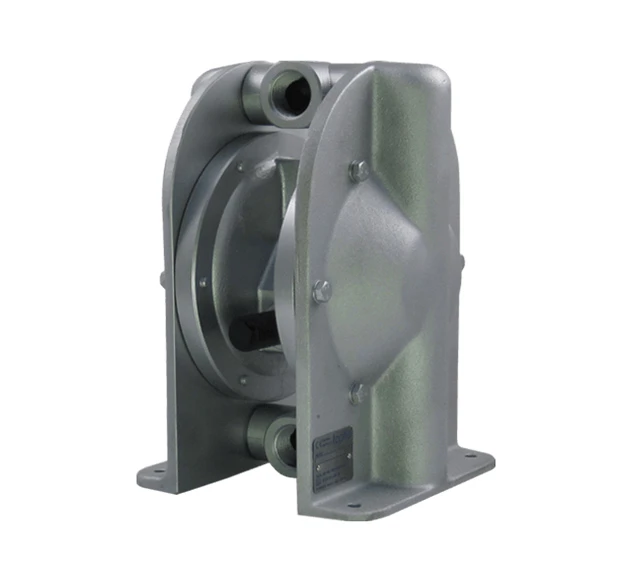
Cast Iron
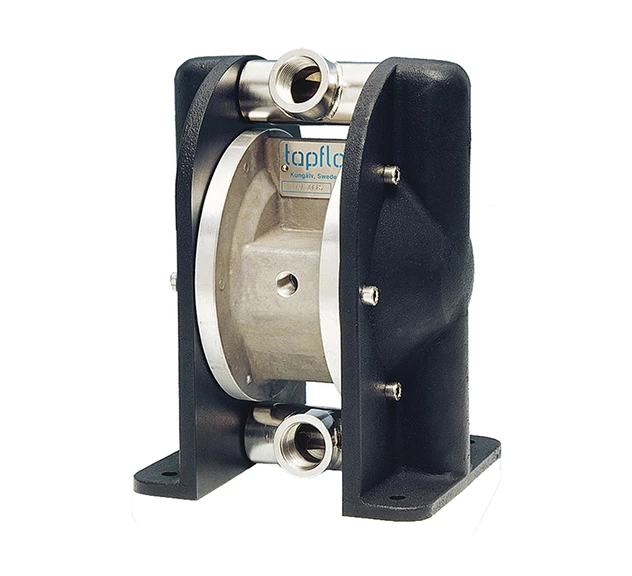
PTFE Coated
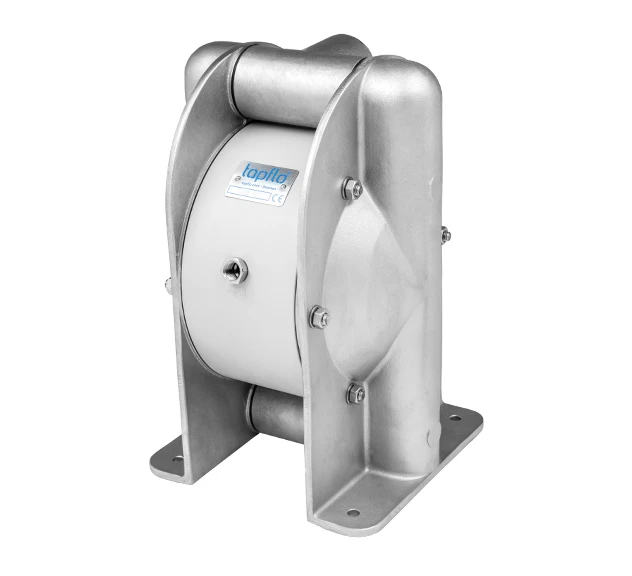
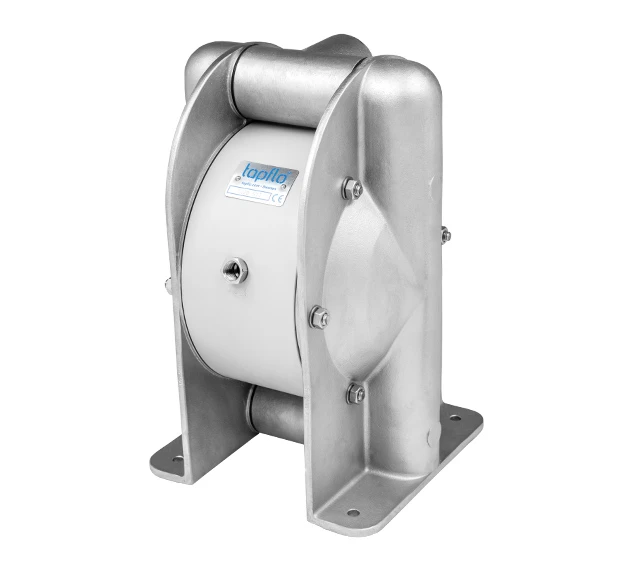
Stainless Steel
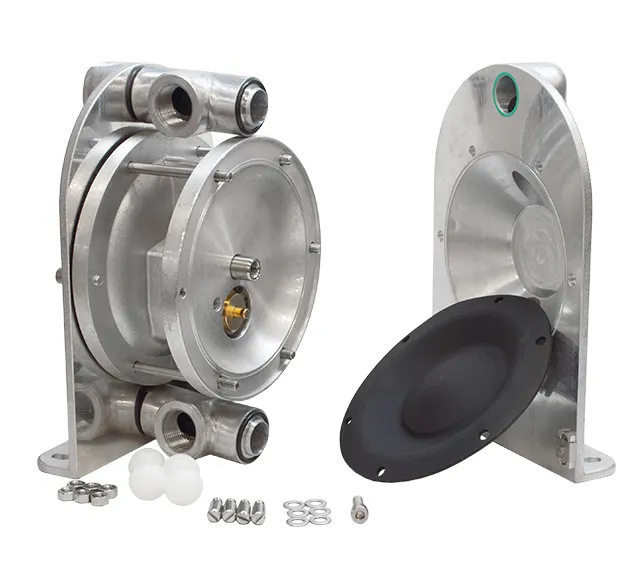
Exploded View
Europe’s Largest Diaphragm Pump Manufacturer
Our Metal Diaphragm Pump is available in Aluminium, Cast Iron, Stainless Steel AISI 316 & PTFE Coated Aluminium and is suitable for handling any liquid in the industrial sector, whether it is viscous up to 20,000 cPs, chemically aggressive or contains abrasive solids up to 15mm.
Additionally, our Diaphragm Pumps use no-nut, clean-face diaphragms and are built with 70% less parts compared to standard Diaphragm Pumps on the market today, ensuring easy maintenance and reduced downtime. For added versatility, these self-priming pumps are ATEX-available for use in hazardous environments.
Typical applications for our Metal Diaphragm Pump:
| Data | Pump Size T25 – T820 |
|---|---|
| Max Capacity (l/min) | 820 |
| Volume per stroke (ml) | 3,452 |
| Max Pressure (Bar) | 8 |
| Max Suction Lift Dry (m) | 5 |
| Max Suction Lift Wet (m) | 8 |
| Max Temp EPDM/NBR (°C) | 80 |
| Max Temp PTFE (°C) | 110 |
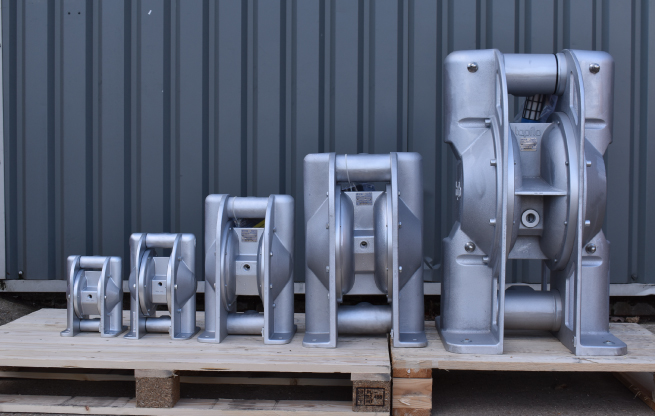
Our Metal Diaphragm Pumps feature a sealless design and can pump up to 20,000 cPs. Some further features include:
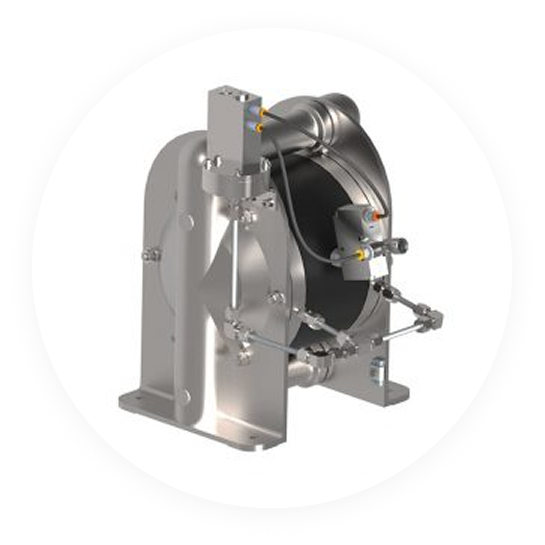
Designed with an additional set of diaphragms to reduce the risks of hazardous products being leaked into the air distribution system.
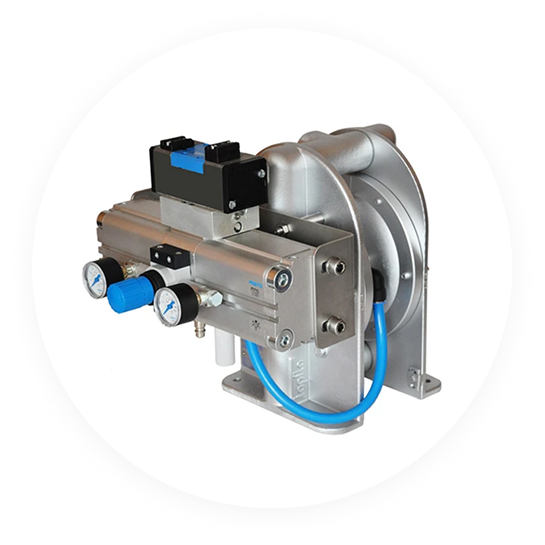
A pump station that can be mounted directly to the filter press, designed specifically for filter press feeding and straightforward pressing of slurries.
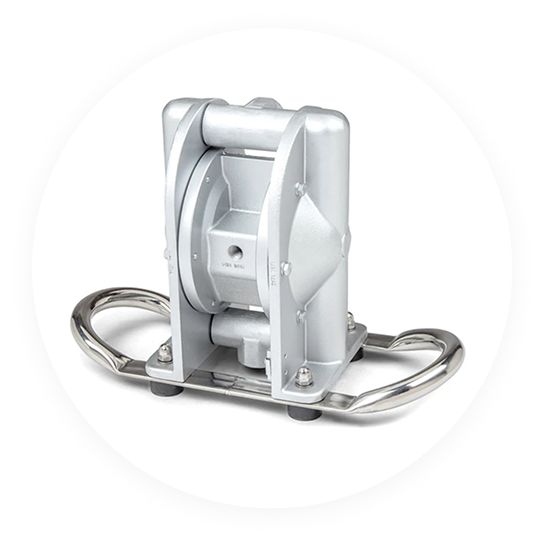
Easily inserted/removed from barrels, drums and IBCs. A mobile solution designed for emptying drums and containers, fitted with a drum tube up to 2m long.
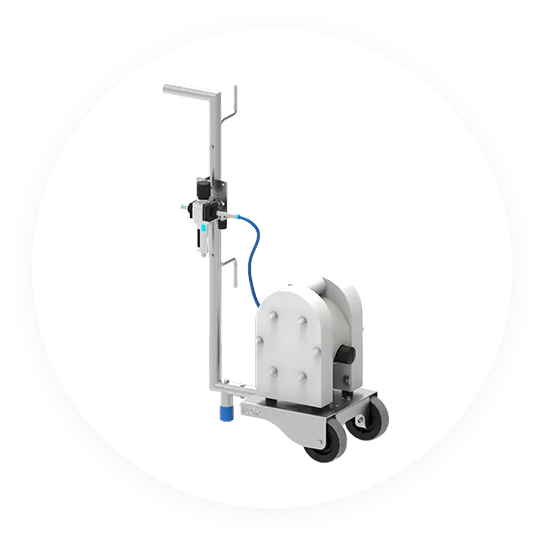
Manufactured from Stainless Steel, offering portability and versatility for various applications within the Hygienic and Industrial sectors.
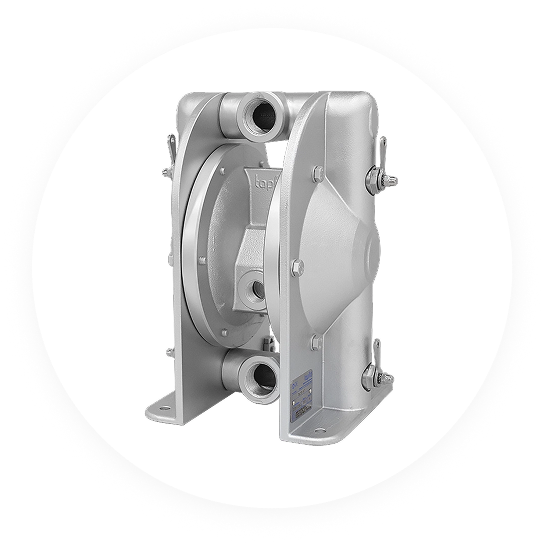
Cost-effective alternative to PE/PTFE pumps and is ideal for transferring mildly acidic or alkaline liquids where standard aluminium lacks sufficient chemical resistance.
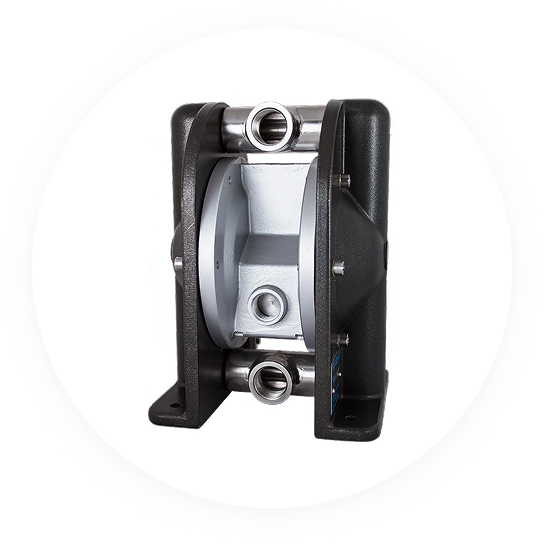
Provides a cost-effective alternative to PE/PTFE pumps and is ideal for transferring mildly acidic or alkaline liquids where standard aluminium lacks sufficient chemical resistance.
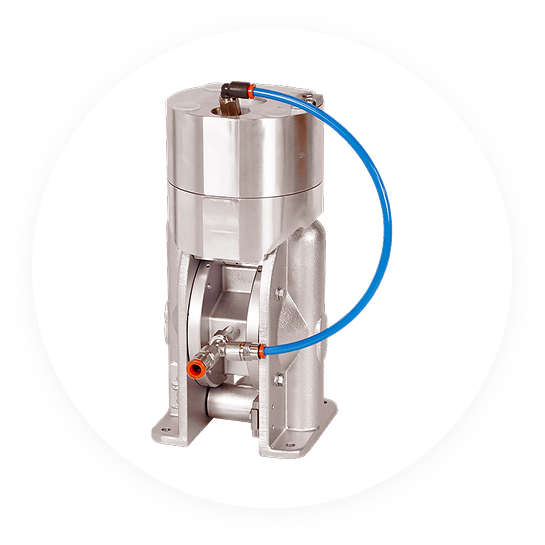
A compact solution for installations with limited space, reducing discharge pressure variations and eliminating flow pulsation by up to 98%.
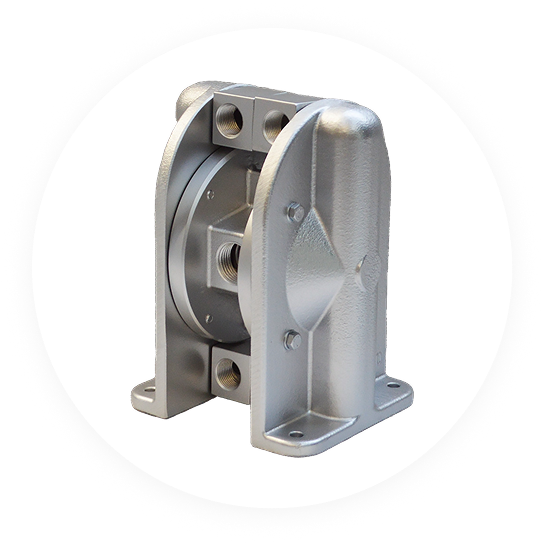
Can be configured with multiple porting options, enabling two pumps in one for blending, mixing, and recirculation applications. This simplifies pipework and design.
How a Diaphragm Pump works, key features, and how to select the correct pump for your application.
A custom AODD system to transfer solvent & water-based paints from mixing vessels to filling lines.
Solving containment & safety issues using Diaphragm Pumps and barrier protection.
Our Metal Diaphragm Pumps can be constructed using a range of materials such as Aluminium or Cast Iron, which are ideally suited to pH-neutral and abrasive fluids, while AISI 316 Stainless Steel offers greater mechanical strength and corrosion resistance. For operators seeking added protection in chemically active environments, PTFE-coated Aluminium is the preferred choice.
Yes. Certain materials are better suited to differing materials. As an example, Aluminium and Cast Iron Diaphragm Pumps excel at handling oils, lubricants, solvents, slurries, and industrial wastewater, while Stainless Steel is ideal for acids, alkalis, and solvents (such as nitric acid and sodium hydroxide), commonly found in chemical plants, ceramics, and printing industries.
Yes! All Tapflo Diaphragm Pump models are ATEX-available and can be constructed using conductive materials, earth lugs and conductive diaphragms. Additionally, the Stainless Steel variant features a conductive centre section.
No. Aluminium and Cast Iron are suitable for neutral to mildly aggressive media, while AISI 316 Stainless Steel is recommended for chemically aggressive or corrosive fluids. Additionally, PTFE-coated options offer added protection for borderline applications.
The Stainless Steel variants are lost wax cast, offering high dimensional precision and an excellent surface finish. Centre sections are PP (polypropylene) as standard (non-wetted) but can be supplied in conductive materials for ATEX versions.