BY TYPE
BY APPLICATION
BY BRAND







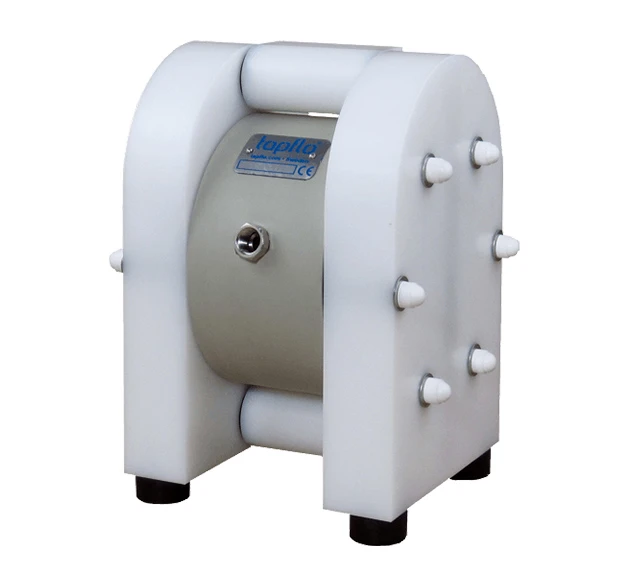
HDPE & PTFE Diaphragm Pump

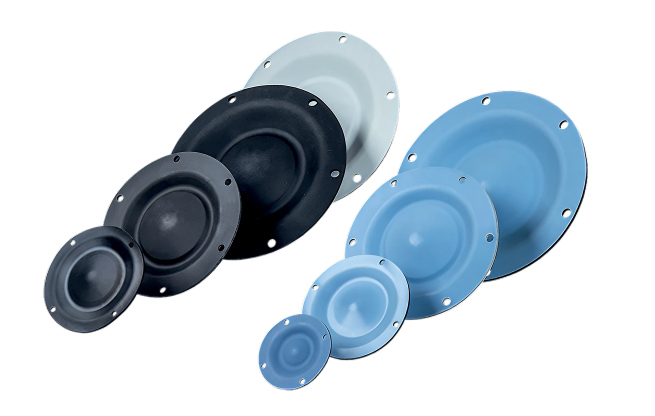
Internal Pump Parts
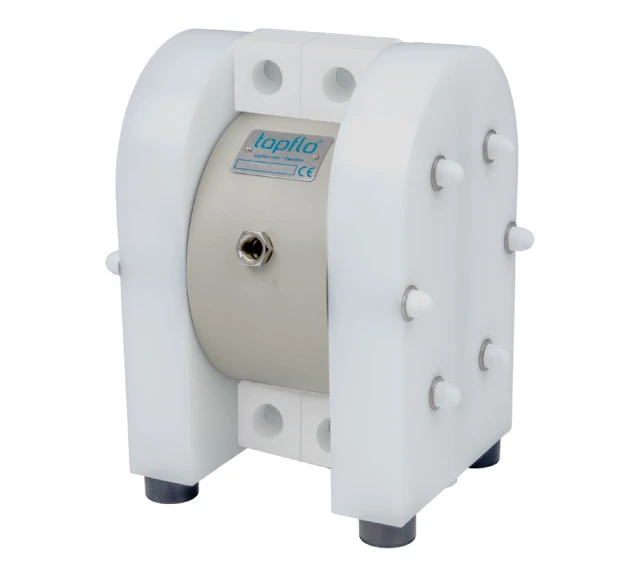
Twin Inlet Outlet
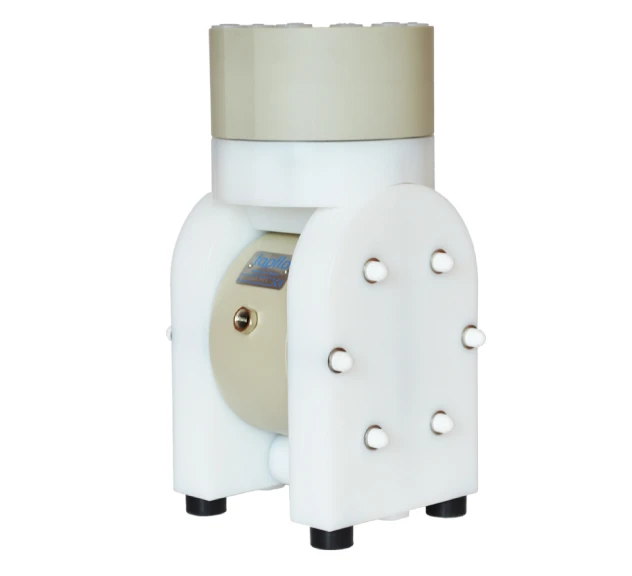
Built-on Dampener
Europe’s Largest Diaphragm Pump Manufacturer
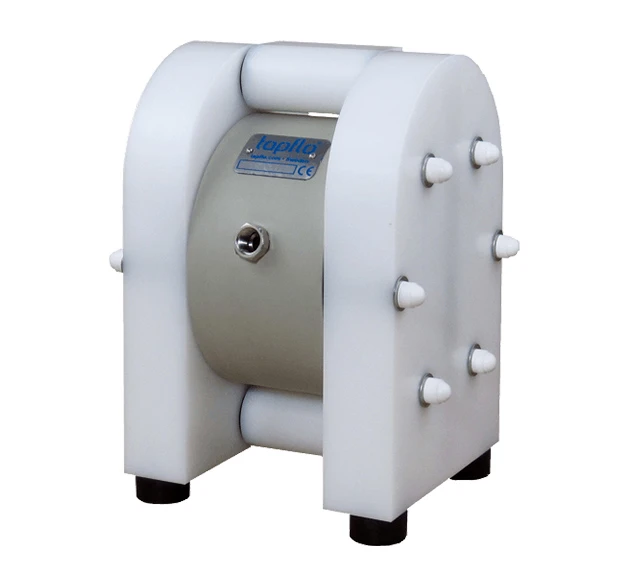
Our HDPE & PTFE Air Operated Diaphragm Pump is machined from solid block HDPE & PTFE, making it suitable for handling a wide range of fluids, including viscous and chemically aggressive liquids, as well as those containing abrasive solids.
These ATEX-available Diaphragm Pumps are self-priming up to 9m, and deliver discharge pressures up to 16 Bar.
Additionally, our Diaphragm Pumps are designed with no-nut, clean-face diaphragms, which means they feature approximately 70% fewer parts than standard Air Operated Diaphragm Pumps on the market today.
Typical applications for our HDPE & PTFE Air Operated Diaphragm Pump:
| Data | Pump Size TR9 – T800 |
|---|---|
| Max Capacity* (l/min) | 820 |
| Volume Per Stroke (ml) | 5,240 |
| Max Discharge Pressure (Bar) | 8 |
| Max Solids Size (ø in mm) | 8 |
| Max Suction Lift Dry (m) | 5 |
| Max Suction Lift Wet (m) | 9 |
| Max Temp HDPE (°C) | 70 |
| Max Temp PTFE (°C) | 100 |
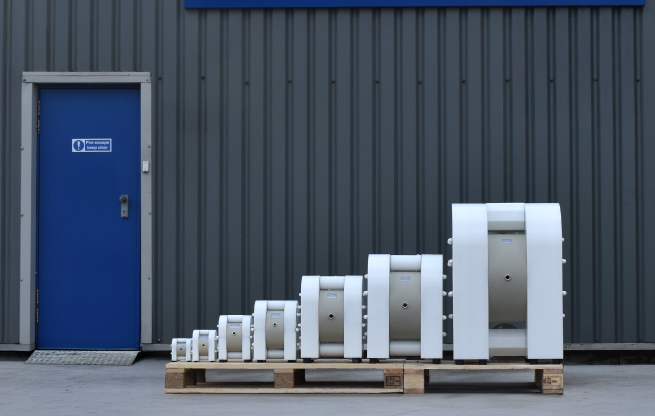
Our Diaphragm Pumps are machined from solid block HDPE or PTFE, providing excellent durability and resistance to aggressive chemicals.
All HDPE and PTFE pumps are available with our Low Energy technology for an environmentally friendly option.
Designed to be compact, robust, and reliable, our diaphragm pumps are easy to maintain, helping minimise service costs and process downtime.
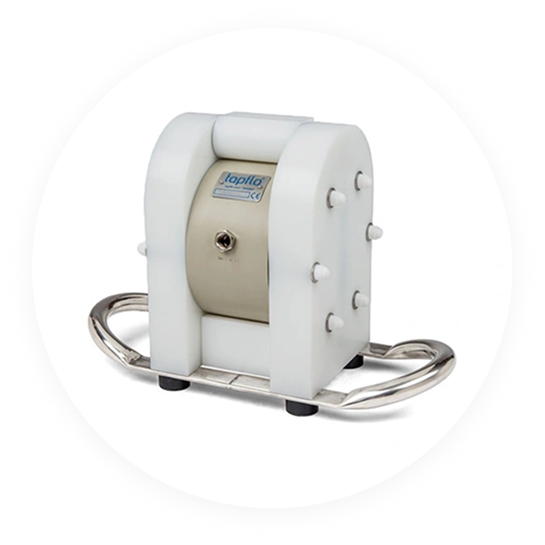
Easily inserted/removed from barrels, drums and IBCs. A mobile solution designed for emptying drums and containers, fitted with a drum tube up to 2m long.
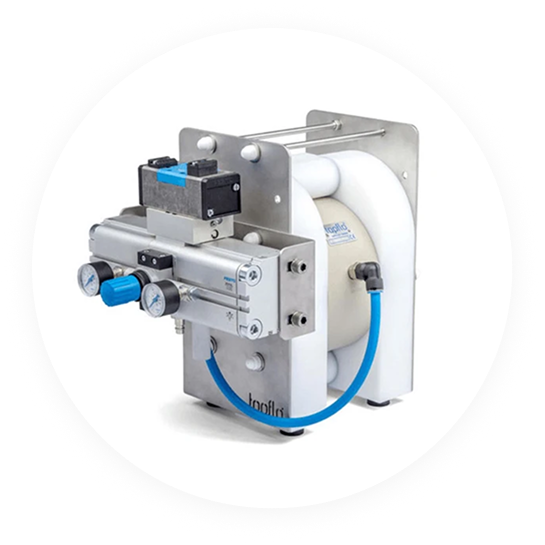
A pump station that can be mounted directly to the filter press, designed specifically for filter press feeding and straightforward pressing of slurries.
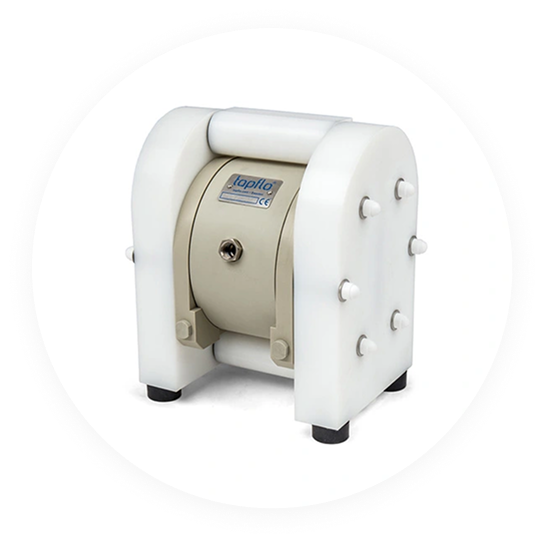
Designed with an additional set of diaphragms to reduce the risks of hazardous products being leaked into the air distribution system.
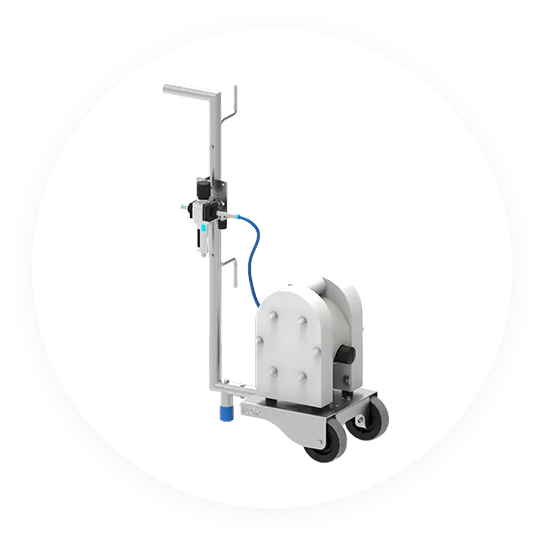
Manufactured from Stainless Steel, offering portability and versatility for various applications within the Hygienic and Industrial industries.
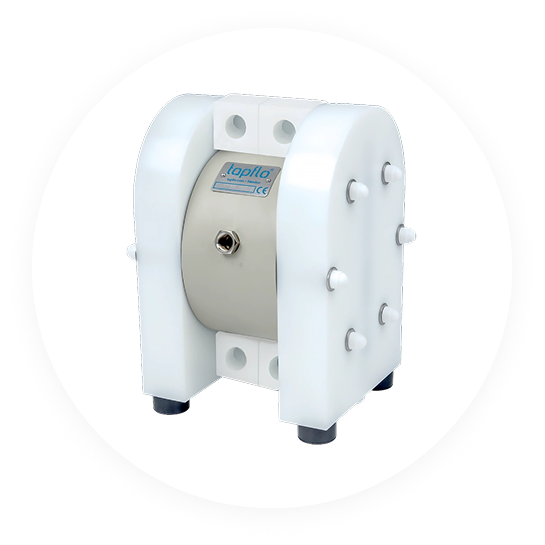
Multiple porting options enable two pumps in one for blending, mixing, and recirculation applications, simplifying pipework and design.
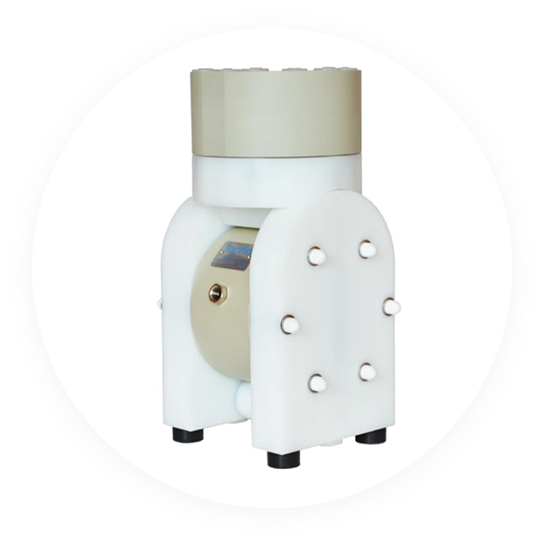
A compact solution for installations with limited space, reducing discharge pressure variations and eliminating flow pulsation by up to 98%.
How a Diaphragm Pump works, key features, and how to select the correct pump for your application.
ATEX rated, self-priming AODDs pumping oily silt and seawater 50 meters to a waiting tanker.
Transferring Methylene Chloride with Barrier Pumps and AODD protection accessories.
HDPE offers superior abrasion resistance (6-7 times that of Polypropylene), making it well-suited to slurries, abrasives, and solids-laden fluids. PTFE offers enhanced chemical resistance, especially to highly aggressive acids like concentrated nitric acid. PTFE is a better option for ultra-pure, corrosive, or high-temperature applications.
Yes. The HDPE construction offers high wear resistance for abrasive slurries, adhesives, and filled resins. Additionally, the solids-handling capabilities of this pump (up to 15mm in diameter on the T800 model) make it suitable for handling glue, dispersions, pigments, and metal hydroxides.
Absolutely. Both HDPE and PTFE offer broad chemical compatibility for acids, alkalis, solvents, alcohols, and emulsions, including concentrated or oxidising agents.
Yes. ATEX-rated models are available for use in zones 1 and 2. Conductive variants of the pump body and diaphragms ensure safe static discharge.
Connection sizes on this pump range between 1/4″ (TR09 model) up to 3″ (T800 model), with capacities ranging from 11 l/min up to 820 l/min.
These pumps are typically used in the Chemical Processing, Electronics, Surface Treatment, Pulp & Paper, Water Treatment, and Paint & Print sectors, to name a few, and are particularly well-suited to transferring corrosive, viscous & solids-laden media.