lead forensics image

Twin Screw Pumps

Designed for smooth & pulsation-free flow, offering gentle product transfer of high & low viscosity liquids.
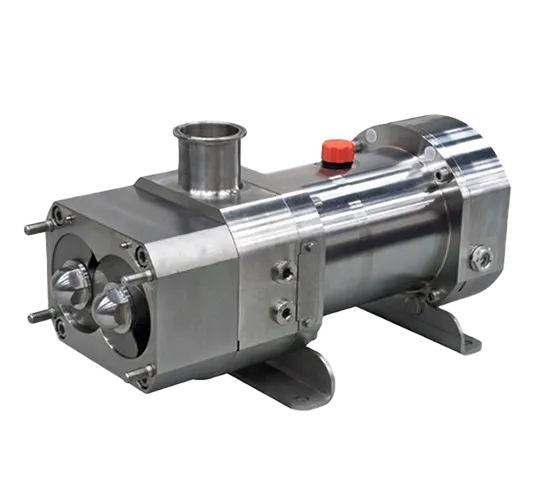

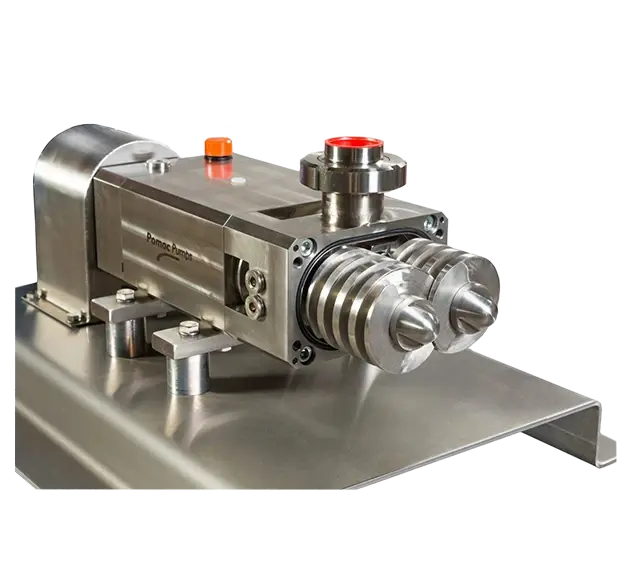
a Pomac twin screw pump
see more information
a Pomac twin screw pump

filter

Results 1-1 of 1
Results 1-1 of 1

Features & Advantages of Twin Screw Pumps

  • Low pulsation – For smooth, consistent pumping
  • Versatile – Handles both low and high viscosity fluids and supports many applications
  • CIP & SIP – Supports both CIP and SIP functions
  • Durable – With wear-resistant mechanical seals and non-contacting running screws that have high wear resistance
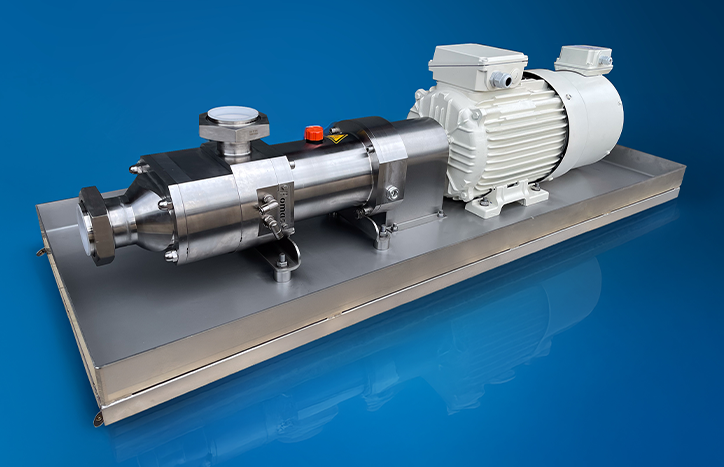
A pomac twin screw pump on a blue background

Learn more about Twin Screw Pumps

What is a Twin Screw Pump?

What are the advantages of Twin Screw Pumps?

What are the common applications and industries for Twin Screw Pumps?

What to consider when selecting a Twin Screw Pump

What impeller materials are available for the Twin Screw Pumps?

What maintenance is required to keep your Twin Screw Pump running?

What is a Twin Screw Pump?

Twin Screw Pumps excel in efficiently transferring a specific volume of fluid based on the screws’ speed and pitch. The unique design of this pump features two screws that create closed chambers that move axially, generating a vacuum at the suction point and pressure at the discharge point. This double-chamber design provides a smooth, pulsation-free flow suited to both high and low-viscosity fluids.

What are the advantages of Twin Screw Pumps?

Our pumps conform to the highest industry standards, with EHEDG and 3A-compliant executions for enhanced sanitation. Some key benefits of using Twin Screw Pumps are:


  • Support CIP/SIP functions
  • Non-contacting running screws that exhibit remarkable wear resistance
  • Enhanced durability and reduced maintenance requirements
  • They gently deflect fluid in the direction of rotation allowing for gentle product transfer
  • Low pulsation characteristics
  • Wear-resistant mechanical seals
  • Exceptional priming capabilities
  • Low NPSH values to mitigate cavitation risks
  • Handles low and high-viscosity fluids including those entrained with air
  • Supports suction, feeding, filling, supply, flushing, dosing, loading, and offloading applications
  • Well-suited to handling solids
  • Multiple sealing options available including lip seals, single or double mechanical seals
  • ATEX-approved options available for hazardous environments

What are the common applications and industries for Twin Screw Pumps?

Common applications and industries include:


  • Food & Beverage
  • Cosmetics
  • Pharmaceutical
  • Chemical

What to consider when selecting a Twin Screw Pump

To choose the appropriate Twin Screw Pump for your application, ask yourself the following questions:


  • What media will be pumped? Consider the chemical composition of the media you will be pumping – is it chemically neutral or corrosive, shear sensitive etc.
  • What is the viscosity of the media you intend to pump? Consider viscosity limitations, shear sensitivity etc.
  • Do you need to pump fluids containing solids?
  • Is your environment or fluid explosive?
  • Do you require CIP/SIP?
  • Do you require self-priming capabilities?
  • Will your pump be stationary, or do you need it to be portable?

What impeller materials are available for the Twin Screw Pumps?

  • Stainless Steel: Excellent corrosion resistance
  • Cast Iron: Cost-effective, good corrosion resistance


Some of our materials offer an ATEX option on request for explosive applications and environments.

What maintenance is required to keep your Twin Screw Pump running?

Some things that can help your pump perform in good working order are:


  • Visual inspections of the pump’s components to spot any wear or damage
  • Check the pump’s noise levels; excessive noise may indicate wear problems to gears and bearings, dragging of screws on the pump casing, or cavitation
  • If a flushing system is present, check the pressure and flow
  • If a heating/cooling system is present, ensure temperature capabilities are at optimal levels
  • Oil level in the gearbox


Depending on the size of your pump and the fluid you are pumping, a more detailed maintenance schedule may be required.