BY TYPE
BY APPLICATION
BY BRAND






Tapflo UK is the exclusive UK distributor for Pomac Pumps
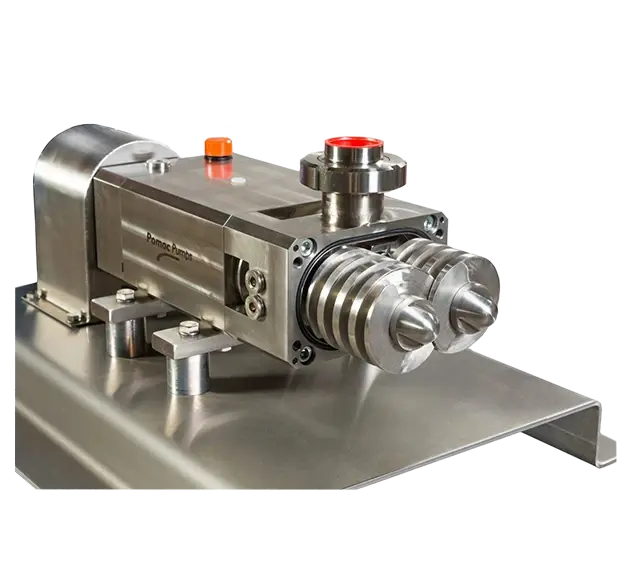
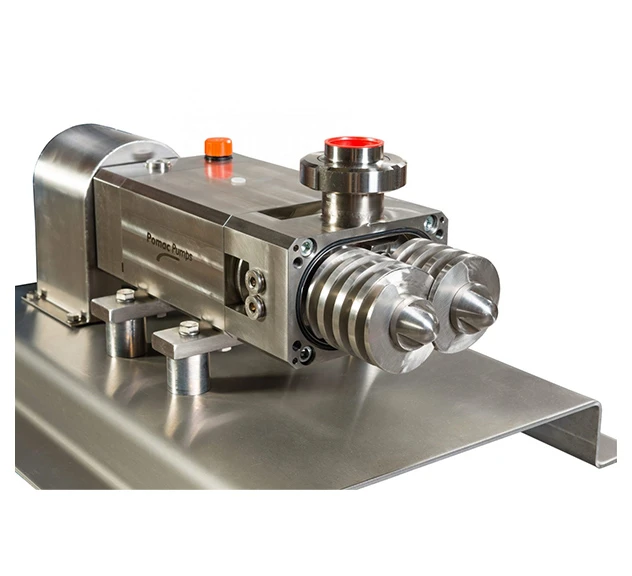
The PDSP Sanitary Twin Screw Pump has been designed to meet the highest sanitation standards required in the Food, Pharmaceutical and Cosmetics industries. This EHEDG-compliant Sanitary Pump from Pomac Pumps is constructed from high-grade cast Stainless Steel with a surface finish of <0.8 Ra and can be upgraded to <0.5 Ra on request.
Offering various sealing options and elastomer materials, this Twin Screw Pump combines the strengths of Lobe, Peristaltic, Centrifugal and Circumferential Piston Pumps to ensure precision, versatility and reliability for your operational needs.
Typical applications include:
| Specification | PDSP2 | PDSP3 |
|---|---|---|
| Max Flow Rate (m³/hr) | 40 | 90 |
| Max Pressure (Bar) | 16 | 16 |
| Max Temperature (°c) | 135 | 135 |
| Free Passage (mm) | 20 | 30 |
| Max Viscosity (cPs) | 1,000,000 | 1,000,000 |
| Max Speed (rev/min) | 3600 | 3600 |
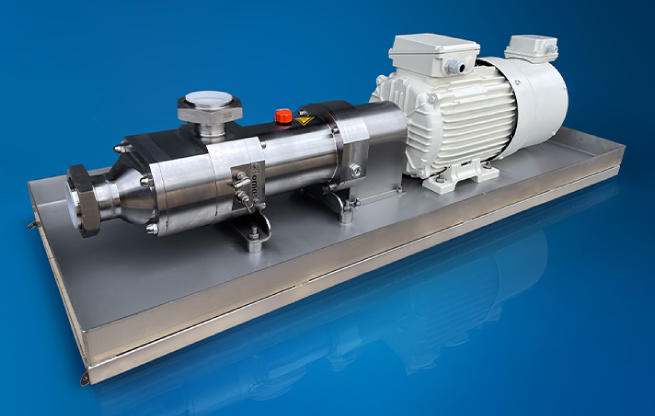
The pump shafts are made of Duplex Stainless Steel 1.4462 to increase strength and rigidity. Multiple seal and elastomer options are available to suit a wide range of applications.
Mechanical seals available:
For low pressure, the flushing system must have a capacity of 0.25 l/min @ 0.5 mwc. For pressurised flushes, the pressure must be 2 bar higher than the system pressure.
How they work
Twin Screws are a type of Rotary Positive Displacement Pump available with a double screw. Its operation is based on the counter-rotation of 2 screws or rotors in the pump casing. Both screws are mounted on their own shafts, which are supported by bearing cartridges directly on the pump casing. One of the pump shafts is externally driven, and an internal gear assembly drives the other shaft in the opposing direction. The screws rotate synchronously in opposing directions without touching.
When the screws rotate and pass the suction port, the volume between them increases, creating a vacuum that draws the liquid into the suction port and the pump casing. During the rotation of the screws, a fixed amount of fluid is conveyed through the pump. As the screws approach the discharge port, the volume between them decreases, creating a pressure build-up and causing the fluid to flow out of the discharge port.