CIP Systems Built to Your Specifications
Designed around your operational needs, our Clean in Place (CIP) systems automate internal equipment cleaning to deliver consistent hygiene, optimised efficiency, and full compliance.
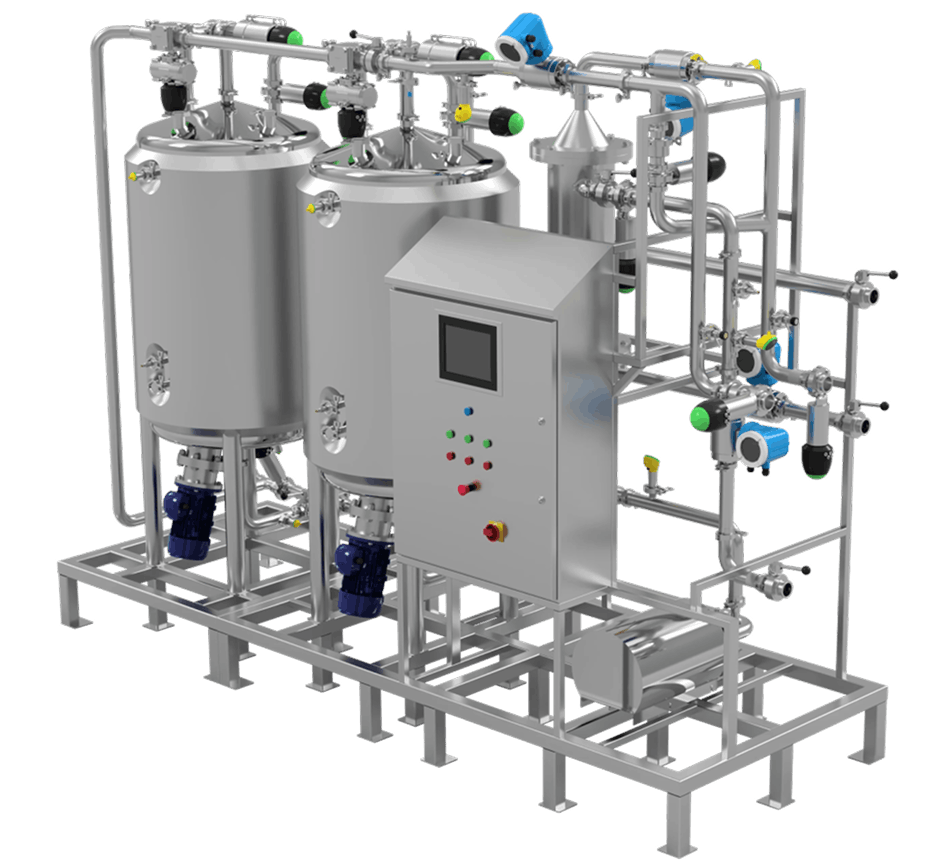





Designed around your operational needs, our Clean in Place (CIP) systems automate internal equipment cleaning to deliver consistent hygiene, optimised efficiency, and full compliance.
Clean in Place (CIP) involves the circulation of cleaning agents through tanks, pipes, and other equipment to remove residues and contaminants. This method offers several critical advantages:
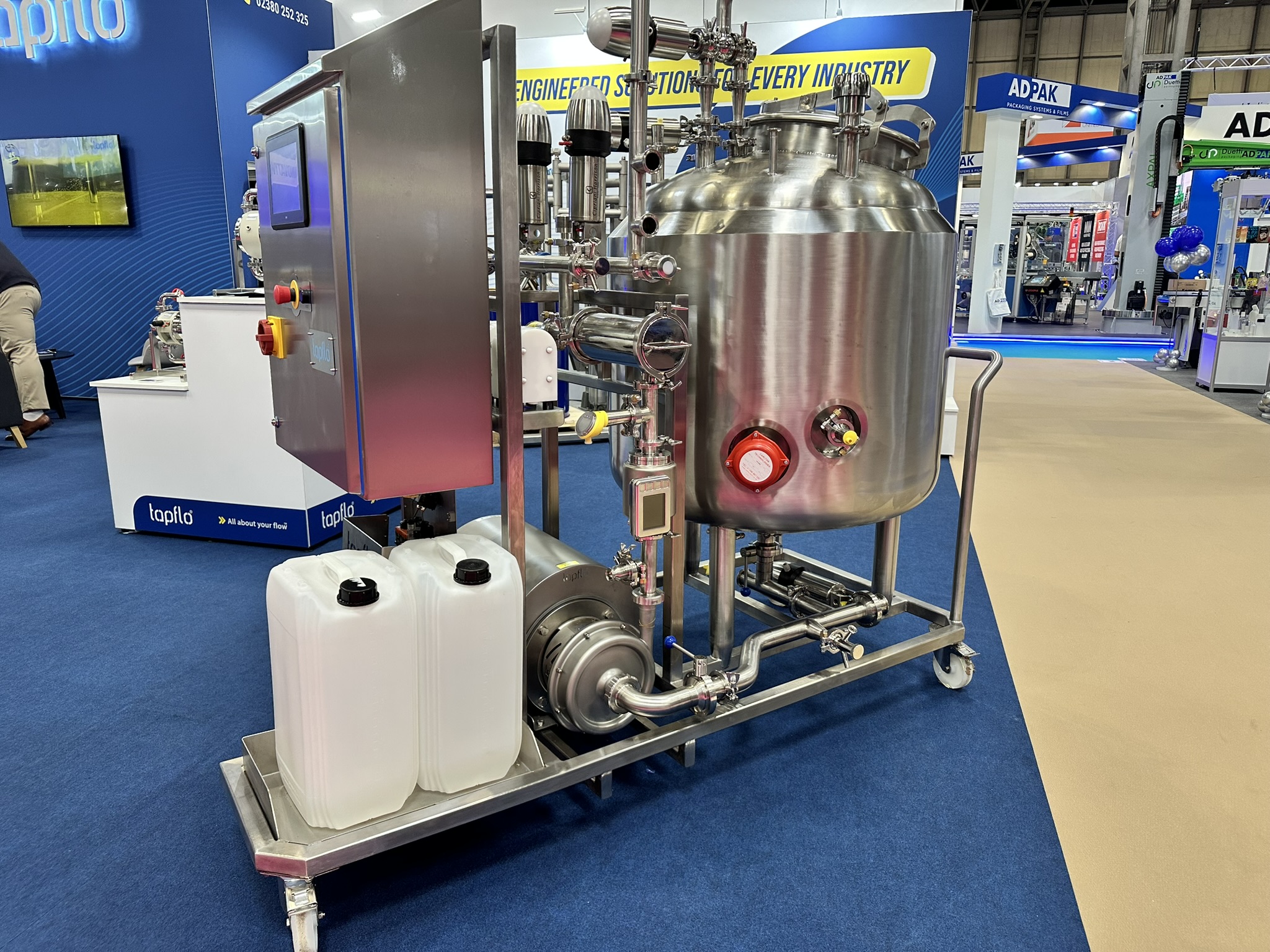
Compact, portable solution designed for smaller operations and flexible cleaning needs.
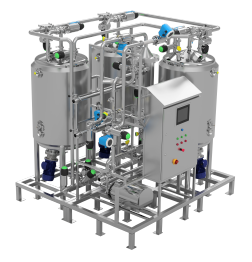
Scalable, flexible and quick to install, ideal for evolving process environments.
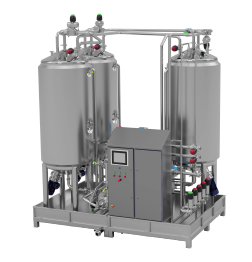
Advanced recovery and reuse capabilities for high-volume, hygiene-critical operations.
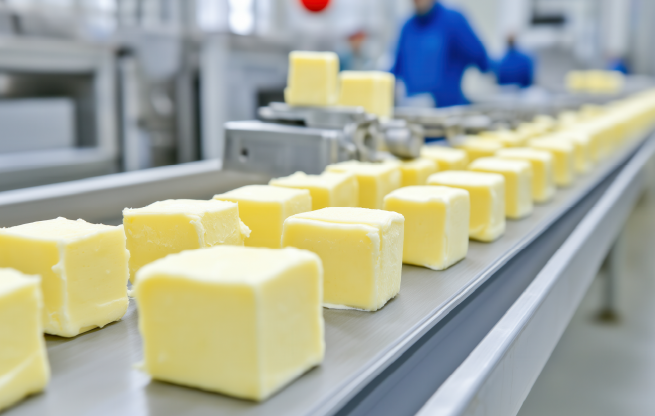
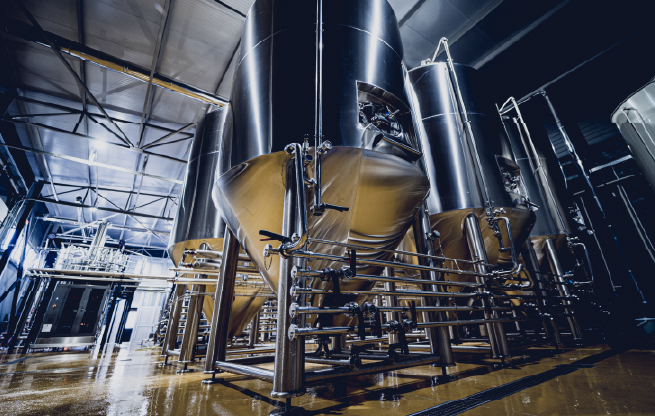
Our CIP Systems can be used for a variety of applications and sectors, including:
Don’t see your application? Get in touch to discuss your requirements and we can spec the correct system for you.
Pre-Rinse | with recovered water
Temp | Ambient °C
Duration | 5 – 10 min
Alkali Clean | 2% Caustic Solution
Temp | 70–80°C
Duration | 10–20 min
Inter-Rinse | with Water
Temp | Ambient °C
Duration | 5 – 20 min
Acid Clean | 1% Phosphoric Acid
Temp | 50–70°C
Duration | 2-10 min
Inter-Rinse | with Water
Temp | Ambient °C
Duration | 5–20 min
Final Rinse | Quality (Purified) Water
Temp | Ambient °C
Duration | 5–20 min
Air Purge | Sterile Air
Temp | 20–30°C
Duration | 3–15 min
Reduces human intervention and increases consistency
Options for reusing water and chemicals for lower running costs
Traceability for validation and audits
Aligns with FDA, HACCP and cGMP standards
CIP (Clean in Place) Systems are automated cleaning solutions that remove residues and contaminants from internal surfaces of process equipment without requiring dismantling. These systems are critical for ensuring:
CIP Systems circulate cleaning agents (water, alkaline or acidic solutions) through pipes, tanks, and equipment. A typical CIP programme consists of pre-rinse, cleaning cycles (alkali/acid), intermediate rinses, a final rinse, and an air purge to ensure all residues are removed.
Industries that commonly use CIP Systems are:
CIP Systems must comply with industry-specific regulations, including:
Yes, CIP Systems excel in food-grade industries by addressing various residue types: