





Glue and adhesives can be pumped effectively with diaphragm or lobe pumps, chosen based on viscosity and application needs. Key considerations are preventing the glue from setting inside the pump and ensuring flooded suction, since lobe pumps handle far higher viscosities than diaphragm pumps.
Is it possible to pump glue?
Yes, Glue and other adhesives can be pumped.
The correct pump depends primarily on the adhesive’s viscosity, temperature, solids content, required flow rate and whether the process requires suction or discharge pressure.
For many industrial glue applications, there are four main types of pumps that can pump glue. However, our recommendation for the best-suited pumps to handle a variety of viscosities is the positive-displacement Diaphragm and Lobe pumps.
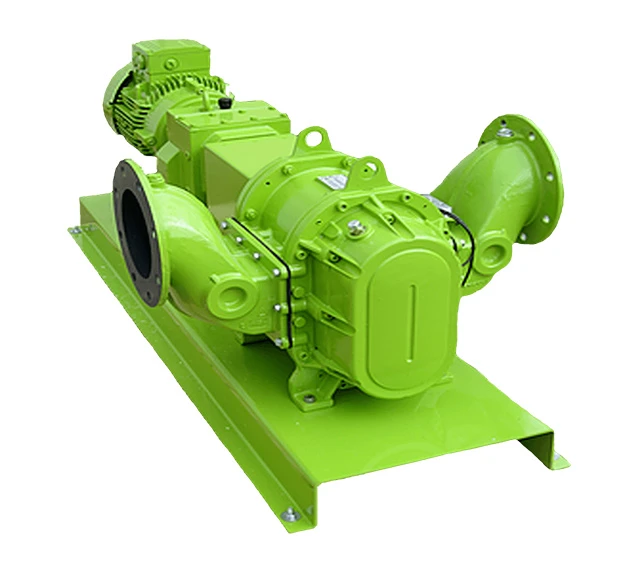
The two main types of pumping technology that Tapflo would recommend as a Glue Pump are Diaphragm Pumps or Lobe Pumps. Both are positive-displacement pumps and offer distinct benefits.
Adhesive and glue examples include; PVA, dextrin, hot melt, acrylic adhesives, polyurethane, silicone adhesives, epoxy adhesives, solvent- and water-based glues
| Pump type | Best suited to | Main consideration |
|---|---|---|
| Diaphragm | Low–medium viscosity adhesives | Simple, robust, good chemical resistance |
| Rotary lobe | High-viscosity adhesives | Better suited to very viscous products |
| Gear | Certain high-viscosity applications | Adhesive curing can create seal/maintenance issues |
| Peristaltic | Sensitive/contained products | Hose/tube compatibility and wear |
What to consider when pumping glue
When pumping glue, there are two main points to remember:
- Don’t allow the glue to set in the pump, as it will jam the pump and require a full strip-down and clean. Glue normally sets when it’s exposed to oxygen for extended periods, or, in some cases, when the pump turns off with the chamber full.
- The thicker the product, the harder it is to prime. Ensuring that the pump is under a flooded-suction condition (i.e., the product will be forced by its own weight/gravity into the pump’s feed) helps achieve maximum flow.
What information do you need in order to select an appropriate glue pump?
- Adhesive type
- Viscosity (cPs)
- Temperature
- Flow rate
- Discharge pressure/head
- Suction lift or flooded suction
- Solids content
- Particle size
- pH
- Chemical composition
- Required pump materials
- Operating hours
- ATEX/hazardous-area requirements
- Whether the adhesive can cure/harden
- Cleaning/flushing requirements
What’s the Maximum Centipoise of Glue a Pump can Handle?
The maximum centipoise of glue you can pump depends on a few factors – installation and the pumping technology used.
The flow of a Diaphragm Pump will drop by up to 80% at 20,000 cPs, reducing the life of the working parts by up to 50%.
For a Glue Pump handling over 5,000 cPs, we would always recommend using a Lobe Pump, as these are suitable for products upwards of 500,000 cPs. – This is based on the way the pump works compared to a Diaphragm Pump.
| Adhesive viscosity | Pump consideration |
|---|---|
| <1,000 cPs | Diaphragm may be suitable |
| 1,000–5,000 cPs | Diaphragm or lobe depending on application |
| >5,000 cPs | Lobe pump should be considered |
| 5,000-10,000 cPs | Lobe Pump suitable. Diaphragm Pump could be considered with modifications or support equipment |
| 10,000+ cPs | Lobe pump suitable |
Glue Pump Case Study
Tapflo supplies major players within Glue production and application.
Here is a case study of a previous client we supplied an AOD to in order to successfully pump glue from a tank without any difficulties:
Application details:
- Product: Glue
- Viscosity: 2,000 CPS
- Temperature: Ambient
- Flow Rate: 110LPM
- Head Pressure: 2 Bar
- Pipe Size: 1 ½”
- Suction: Flooded from a 2000L Tank
Pump Specs:
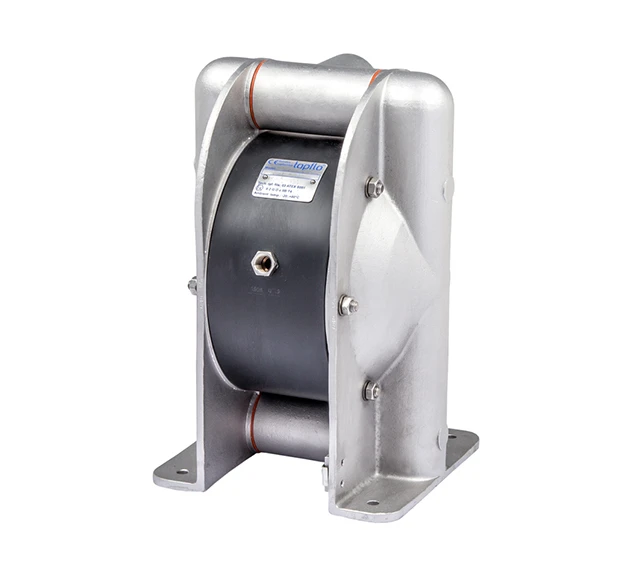
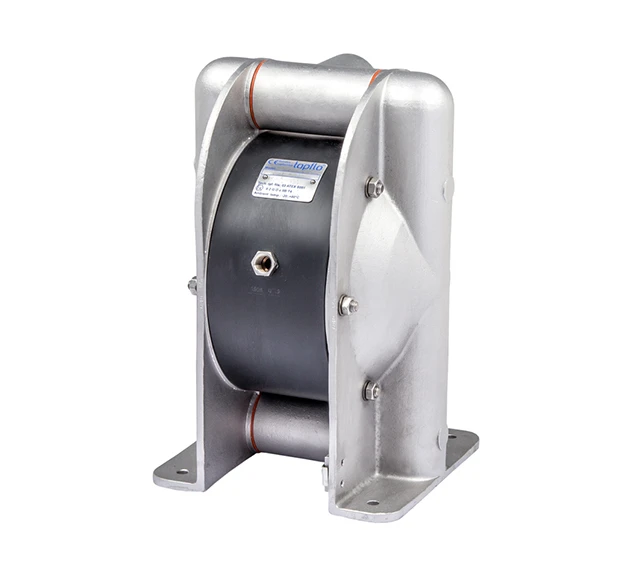
We selected the ATEX Metal Diaphragm Pump* as the viscosity wasn’t very high; the materials of the pump required to be metal with PTFE lining and an ATEX model was needed as the environment was potentially hazardous.
- Pump Model: TX220 XTTS – ATEX Metal Diaphragm Pump
- Description: 1 ½” Air Operated Diaphragm Pump in aluminium with PTFE lined internals.
| Part | Material |
| Housings PTFE | Coated Aluminium |
| In/outlets | Stainless Steel AISI 316L |
| Diaphragms | PTFE TFM |
| Valve Balls | Stainless Steel |
| Valve Seats | PTFE Coated Aluminium |
| Centre Block | Polypropylene |
| Air Valve | Brass/NBR |
This pump was selected for its PTFE-coated aluminium, which offers excellent non-stick properties whilst remaining cost-effective. Key features and benefits of this pump include:
- Self-Priming
- ATEX-certified
- Pressures up to 160m
- Solids handling up to 100mm
- Pneumatic and electric valve draining for enhanced operational flexibility
| Inlet Connection | 1 ½” BSP (female) |
| 3” BSP | ½” BSP (female) |
| Air Connection | ½ |
| Max Discharge Pressure | 8 Bar |
| Temperature Range | -20°C – 100°C |
| Weight | 38kg |
| Dimensions (LxWxH) | 270 x 280 x 422 |
The pump handled the glue successfully and efficiently throughout the process, delivering consistent performance without issues. The client was particularly pleased with the system’s overall efficiency and the pump’s ability to handle the adhesive without causing blockages, jamming, or damage to internal components. This demonstrated that the pump was well suited to the application, providing reliable operation while maintaining the integrity of the pump internals and minimising the risk of downtime or maintenance.
Get in touch today for advice on pumping glue or any other products
* View the product pages for more technical data, features and case studies of this pump.
FAQs
Is it possible to pump glue or adhesives?
Yes, it’s very possible to pump glue or adhesives.
Tapflo provides reliable pumps that excel at pumping sticky, viscous products like these.
What are the best pumps to pump glue or adhesives?
The best pumps suited to pumping glue and adhesives are Diaphragm and Lobe Pumps.
Depending on the viscosity and application requirements, the model you choose will vary.
Can pumps break when pumping sticky, viscous media?
Yes, products that are sticky, viscous, or harden when left out or at room temperature can congeal inside the pump, rendering it unusable until it is flushed out or parts are replaced. This is why choosing the right pump that can effectively remove all the media via the discharge port is important.
How can I find out the viscosity of my glue or adhesive?
If you are unsure of the viscosity of your media, contact our in-house experts, and we’ll be happy to assist as best we can. If this requires further testing, we can send a sample to a third party for testing to obtain the exact media properties.
What viscosity can a pump handle for glue?
A Diaphragm Pump can handle glue of approximately 20,000 CPS, whereas a Lobe Pump can handle glue with viscosities of around 500,000 CPS
How does viscosity affect glue pump performance?
The more viscous the glue, the higher the suction the pump will need to be and the more robust the materials, the more likely they are to pump the sticky, viscous substance more easily.
Latest Articles